Curtis.Castiglione@ROzebra.com
Why Your Car Won't Exceed 3,000 RPM
Imagine you are merging onto a busy highway. You press down on the gas pedal to match the speed of traffic, but suddenly, your car hits an "invisible wall." The tachometer needle climbs to 3,000 RPM and simply stops, or perhaps it starts bouncing erratically. No matter how hard you floor it, the engine refuses to give you more power.
It feels sluggish, heavy, and—frankly—a bit frightening when you are in the middle of a lane change. This phenomenon is a common frustration for many drivers. While it feels like your car is breaking down, it is often actually trying to save itself. As a technician, I see these acceleration issues frequently, and they are usually the result of your car's computer stepping in to prevent a small problem from becoming a total engine failure.

What Limits an Engine to 3,000 RPM?
When an engine refuses to rev past a certain point, it is usually because the vehicle's On-Board Diagnostics (OBD) system has triggered something called limp mode (or "limp home mode").
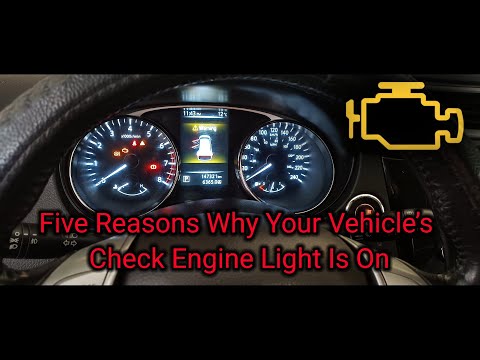
Think of limp mode as security software for your mechanical components. When the Engine Control Unit (ECU) detects a sensor reading that is outside of safe operating parameters, it restricts engine performance to prevent catastrophic internal damage. By capping the RPMs and reducing power, the computer ensures you can still "limp" the car to a mechanic without blowing the engine or destroying the transmission. This is almost always accompanied by a check engine light on your dashboard.
Common Causes of Engine Performance Restrictions
There is not just one single part that causes this issue; rather, several systems must work in harmony to allow your car to accelerate. When one fails, the computer cuts the power.
- Mass Airflow Sensor (MAF): This sensor measures the amount of air entering the engine so the computer can inject the right amount of fuel. If it is dirty or failing, the engine loses its ability to calculate the combustion mixture, leading the computer to play it safe by cutting power.
- Throttle Body Issues: The throttle body is the butterfly valve that opens when you press the gas. If the electronic sensors detect a mechanical hesitation or if the valve is gummed up with carbon, the car will limit RPMs to prevent unintended acceleration.
- Fuel System Failures: If your fuel pump is weak or your fuel filter is clogged, the engine may have enough gas to idle, but it cannot get enough volume to support higher RPMs. It is essentially starving for energy.
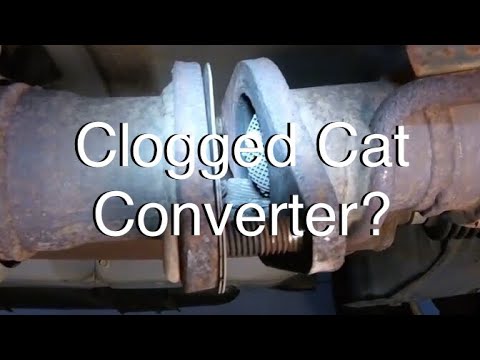
- Clogged Catalytic Converter: On the exhaust side, a restricted catalytic converter is a common mechanical cause. If the exhaust cannot exit the engine freely, backpressure builds up, literally choking the engine and preventing it from revving higher.
- Ignition System Misfires: Faulty ignition coils or worn-out spark plugs can cause a misfire. A severe misfire prompts the computer to limit performance to protect the cylinders and the expensive catalytic converter from unburned fuel.
- Transmission Problems: Sometimes the issue isn't the engine at all. If a transmission sensor fails or internal pressure drops, the car may limit RPMs to prevent the gearbox from overheating or slipping.

How to Diagnose the Issue
The first step in any modern diagnosis is to use an OBD-II scanner to read the trouble codes stored in your car's computer. Even if the check engine light is not currently flashing, there is likely a "pending code" that will point toward the specific system failing.
For a DIY approach, you can check for obvious signs like a loose air intake hose or a heavily soiled air filter. However, because limp mode can be triggered by dozens of different sensors, a professional diagnostic tool is usually required to see real-time data—such as fuel pressure regulators or MAF readings—to pinpoint the exact culprit.

Is It Safe to Continue Driving?
Strictly speaking, you should not continue driving a car that is stuck in limp mode for anything other than getting it off the road or to a repair shop. Because the engine is not operating efficiently, you risk stalling in traffic or being unable to accelerate out of a dangerous situation. Furthermore, if the issue is a clogged catalytic converter or a fuel system failure, driving long distances can lead to overheating and extremely expensive engine damage.
Typical Repair Costs
The cost to fix the issue varies wildly depending on the root cause:
- Low Range ($100 – $300): Cleaning or replacing a mass airflow sensor or a simple air filter.
- Mid Range ($200 – $600): Replacing ignition coils, spark plugs, or a fuel filter.
- High Range ($1,000 – $2,500+): Replacing a clogged catalytic converter or addressing internal transmission problems.
Frequently Asked Questions
Can a bad battery cause limp mode? Yes. Modern cars are highly sensitive to voltage. If your battery or alternator is failing, the computer may receive "noisy" electronic data and trigger a safety mode.
Will resetting the check engine light fix the problem? No. Clearing the code might temporarily take the car out of limp mode, but as soon as the computer detects the fault again, the 3,000 RPM limit will return. You must fix the underlying cause.
Conclusion
If your car won't go over 3,000 RPM, it is a clear signal that the vehicle's computer has detected a potential for major damage. Whether it is a simple sensor issue or a more serious blockage in the exhaust, ignoring the problem will only lead to more expensive repairs down the road. Consult with a qualified technician to pull the diagnostic codes and get your engine performance back to where it should be.
Disclaimer: Causes and repair procedures vary significantly by vehicle make and model. Always consult your owner's manual or a certified mechanic for your specific vehicle.



No Comments Yet
Be the first to comment on this article.