Curtis.Castiglione@ROzebra.com

Why a Good Work Light Is Essential for Car Repair
Why a Good Work Light Is One of the Most Important Tools in an Automotive Shop
When people think about working on cars, they usually imagine heavy-duty automotive tools like pneumatic impact wrenches, hydraulic floor jacks, or massive rolling toolboxes filled with chrome-plated sockets. While those are certainly part of the job, there is one piece of garage equipment that often gets overlooked until the moment it is missing: a high-quality work light.
Whether you are a seasoned DIYer or someone just starting to learn how to change their own oil, you will quickly realize that modern vehicles are designed with very tight tolerances and deep, dark recesses. Without proper illumination, even a simple task can become frustrating and potentially dangerous. The reason why a good work light is one of the most important tools in an automotive shop becomes clear the moment you drop a small bolt into a dark engine bay or try to identify a specific wire color under a cramped dashboard. You simply cannot fix what you cannot see.
What Is an Automotive Work Light?
An automotive work light is a specialized illumination device designed to survive the harsh environment of a vehicle repair shop. Unlike a standard household flashlight, these car tools are built to be hands-free, durable, and capable of providing a wide, even beam of light rather than a narrow, focused spot.
In the past, these were often called "trouble lights" or "drop lights." They usually consisted of a hot incandescent bulb protected by a simple wire cage and connected to a long, cumbersome power cord. Today, modern versions have evolved into sophisticated pieces of automotive equipment, primarily using LED (Light Emitting Diode) technology to provide brighter light with less heat and greater portability.
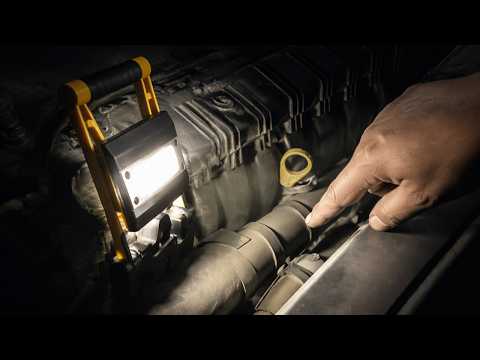
What Does a Work Light Do?
The primary function of a work light is to eliminate shadows and provide clarity in the areas of a vehicle where ambient shop light cannot reach. Most garages have overhead fluorescent or LED shop lights, but those lights are blocked the moment you pull a car inside and pop the hood. The hood itself creates a massive shadow over the engine bay, and the chassis creates a shadow underneath the vehicle.
A work light brings the illumination directly to the component you are servicing. It allows you to:
- See the difference between a 10mm and a 12mm bolt head, preventing you from stripping the fastener.
- Identify the color of a specific wire in a complex harness during electrical troubleshooting.
- Spot the subtle glistening of an oil leak on a dark engine block.
- Check for tiny cracks in rubber hoses or serpentine belts that would otherwise be hidden in the dark.
How Is a Work Light Used?
Using a work light effectively is all about positioning. Most professional automotive equipment in the lighting category features multiple ways to mount the device so that the technician can use both hands for the repair.
Common mounting methods include:
- Magnets: Many lights have high-strength magnets built into the base or back, allowing them to stick to a vehicle’s frame, hood, or suspension components.
- Hooks: Swiveling hooks allow the light to hang from radiator hoses, wiring looms, or the inner lip of the hood.
- Standing Bases: Some lights feature weighted or adjustable bases that allow them to sit on the floor or a workbench while aiming upward.
For example, if you are replacing a starter motor located at the bottom of the engine, you might magnetically attach a slim light bar to the frame rail. This directs the light upward, illuminating the bolts and electrical connectors while keeping the light source out of the way of your wrenches.
When Would You Need a Work Light?
You will find a need for a work light during almost every stage of vehicle maintenance. Here are a few real-world scenarios where they are indispensable mechanic tools:
Under the Dashboard
If you are replacing a cabin air filter or a blown fuse, the footwell of a car is notoriously dark. A small, portable LED light is the only way to see the plastic clips and connectors without straining your eyes or risking breaking a component because you were prying blindly.
Brake Inspections
When you pull a wheel off to check brake pad wear, the wheel well creates a cave-like environment. A work light helps you see the thickness of the pad material and the condition of the rubber brake lines, which may have tiny cracks that only show up under direct light.
Engine Diagnostics
Searching for a vacuum leak or a cracked belt requires clear visibility. Shadows can hide small defects in rubber hoses that are only visible under direct, bright light. This is where car diagnostic tools and good lighting work together to solve a problem.
Underneath the Vehicle
During an oil change or exhaust repair, the entire underside of the car is in shadow. A wide-beam work light placed on the ground or stuck to the chassis makes the job safer and faster, ensuring you see the drain plug and filter clearly.

Types of Work Lights
Understanding the different variations of these garage tools can help you choose the right one for your needs.
- LED Light Bars: These are long, thin lights that often have hooks on both ends to stretch across the underside of an open hood. They provide a massive amount of light across the entire engine bay.
- Handheld Wand Lights: These are slim and designed to fit into tight spaces, such as the narrow gap between the radiator and the front of the engine.
- Pivoting Pocket Lights: Small and highly portable, these are great for quick inspections. They often fit into a pocket like a pen but feature a folding head to angle the light exactly where you need it.
- Corded vs. Cordless: Corded lights provide infinite runtime but can be a tripping hazard. Rechargeable cordless lights offer maximum freedom, which is why they are popular DIY automotive tools, though you must remember to charge them between jobs.
What Should You Look for When Choosing One?
When shopping for vehicle repair tools in the lighting category, consider these factors:
- Brightness (Lumens): Lumens measure the total amount of visible light. Look for a light that offers adjustable brightness. While 1,000 lumens is great for lighting up a whole undercarriage, it might be blindingly bright when working inches away from your face under a dashboard.
- Battery Life: For cordless models, ensure the battery can last at least 3 to 4 hours on a medium setting.
- Durability: Automotive work is messy. A good light should be "impact resistant" to survive drops on concrete and have an IP rating (Ingress Protection) that suggests it can handle being splashed with oil, coolant, or water.
- Color Accuracy: Some cheap LEDs have a blue or purple tint that makes it hard to distinguish wire colors. Look for lights that advertise high CRI (Color Rendering Index) if you do a lot of electrical work.
DIY vs. Professional Use
For a casual DIYer, a single, versatile handheld LED light with a magnetic base is usually enough to handle weekend oil changes and basic repairs. However, professionals often own three or four different types of lights. A pro might use an under-hood light bar for general illumination and a smaller stick light for peering into specific areas like transmission tunnels or deep inside wheel wells. Professional-grade lights also tend to have replaceable batteries and lenses, extending the life of the tool in a high-use environment.
Common Mistakes When Using a Work Light
The most common mistake is "blinding yourself." If you position the light so it shines directly into your eyes or reflects off a shiny chrome surface back at you, your pupils will constrict, making the dark areas look even darker. Always aim the light at the workpiece from an angle to reduce glare.
Another mistake is neglecting to clean the lens. In a shop environment, grease and fingerprints quickly coat the light, significantly reducing its output. A quick wipe with a clean rag can make a 500-lumen light look twice as bright.
Safety Considerations
While modern LED lights stay much cooler than old-fashioned halogen bulbs, they can still generate heat, especially at high brightness levels. Never leave a high-powered light face-down on a flammable surface like a car seat or a pile of oily rags.
If you are using a corded light, be mindful of where the wire is draped. Cords can get caught in rotating cooling fans or melt if they touch a hot exhaust manifold. Additionally, if you are using a magnetic light near the battery, be careful not to bridge the gap between the positive and negative terminals with the metal body of the light, as this can cause a dangerous short circuit.

Frequently Asked Questions
Can I just use the flashlight on my smartphone? While a phone light works in a pinch, it is not an ideal car tool. Phones are difficult to position hands-free, they are easily damaged by grease and chemicals, and the light output is usually too weak for complex repairs. Plus, dropping your phone on a concrete floor is a much more expensive mistake than dropping a work light.
How many lumens do I actually need? For general automotive work, a light that outputs between 200 and 500 lumens is usually perfect for close-up tasks. For lighting up the entire underside of a truck or a large engine bay, you might want something closer to 1,000 lumens.
Are rechargeable lights better than battery-powered ones? Built-in rechargeable lithium-ion batteries are generally better for the environment and more cost-effective over time than constantly replacing disposable AA or AAA batteries. They also tend to provide more consistent brightness throughout the charge cycle.
Conclusion
A work light might not be the most glamorous tool in your collection, but it is undoubtedly one of the most functional. By turning a dark, confusing engine bay into a well-lit workspace, it reduces stress, prevents mistakes, and makes the entire DIY experience more enjoyable. Whether you are performing a complex engine tear-down or just checking your fluid levels, understanding why a good work light is one of the most important tools in an automotive shop will help you work more efficiently. Growing your collection of automotive tools should always include a focus on high-quality illumination to ensure every job is done with precision and safety.



No Comments Yet
Be the first to comment on this article.