Curtis.Castiglione@ROzebra.com

Where Is the Best Place to Sit at a Race Track?
For a fan, the best seat at a race track is usually the one closest to the concessions or the largest video screen. But for an amateur racer or track-day enthusiast, choosing a place to watch is about reconnaissance.
Whether you are scouting a new venue before your first event, supporting friends, or trying to figure out why the leaders are two seconds faster than you, where you sit determines what you learn. To get faster, you need to stop watching the race and start analyzing the physics. There isn't one "perfect" seat; the best spot depends entirely on which part of your driving or car setup you are trying to improve.
1. The Heavy Braking Zone: Learning to Overtake
If you find yourself stuck behind slower traffic during races, find a seat at the end of the longest straightaway. This is where the heaviest braking occurs and where the most overtaking happens.

What to watch for:
- Braking Markers: Look for the distance boards (300, 200, 100). Identify exactly where the front-runners transition from full throttle to "threshold braking."
- Trail Braking: Watch how the fastest drivers carry brake pressure into the turn. If the car rotates smoothly toward the apex as they release the pedal, they are mastering trail braking.
- Car Pitch: Observe the "nose dive." If a car’s front end crashes down or the rear becomes unsettled under braking, it is a sign they might need stiffer front springs or a different brake bias.
- Passing Lines: Notice that the passing driver often takes a tighter, "defensive" line. Watch how they manage to stay on the track despite the shallower entry angle.
2. Technical Complexes: Diagnosing Handling Issues
If your car feels "lazy" in the turns or you are struggling with mid-corner balance, head to a series of mid-speed S-curves or a technical complex.
What to watch for:
- Understeer vs. Oversteer: Watch the front tires. If the driver is adding more steering lock but the car continues straight (plowing), that is understeer. If the rear end kicks out and the driver has to counter-steer, that is oversteer.
- Weight Transfer: Watch how the car settles between transitions. Does it "flop" from side to side, or is it composed? This tells you a lot about shock valving and anti-roll bar stiffness.
- Camber at Work: From a head-on view in a corner, look at the outside front tire. Is the tire tread flat against the pavement, or is it rolling onto the sidewall? This is the best way to visualize if a car needs more negative camber to maintain a proper contact patch.
3. The "Money" Corner: Mastering Exit Speed
The most important corner at any track is the one that leads onto the longest straight. Your speed exiting this turn dictates your top speed for the next several thousand feet.
What to watch for:
- The Apex: Identify where the fastest drivers are clipping the inside of the turn. Are they hitting it early or late?
- Throttle Application: Listen to the engines. The winners are usually the drivers who get back to full throttle first, even if they had to go into the corner slightly slower to get the car pointed straight sooner.
- Track-Out: Watch how much of the exit curbing the fast cars use. If they are not using every inch of the track on exit, they aren't carrying enough speed.
4. The High Ground: Understanding the Flow
On a large road course, the start/finish line is often the least informative place to sit. Instead, find the highest point—a grassy hill or a high grandstand—that offers a bird’s-eye view of multiple sections.
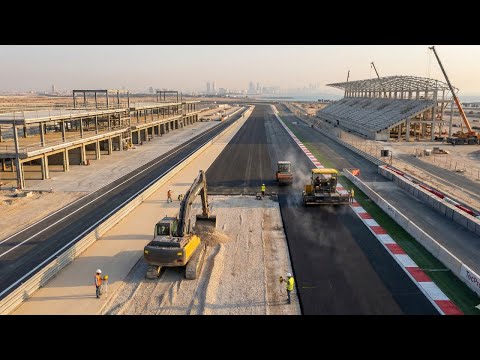
What to watch for:
- Connecting the Dots: Racing is not a series of isolated turns; it is a flow. From a high vantage point, you can see how a driver’s line in Turn 3 sets them up for a perfect entry into Turn 4.
- The Racing Line: You will notice a dark "groove" of rubber on the pavement. Watch who stays in it and who experiments with different lines to find better grip. This is especially useful if it starts to rain; experienced racers will often move off the rubbered-in line, which becomes slick like ice when wet.
5. The Paddock: The Technical Deep Dive
In grassroots racing, the "best seat" isn't a seat at all—it is a walk through the paddock. This is where you see the practical reality of how a winning car is built and maintained.

What to look for in the paddock:
- Tire Wear: Look at the tires of the winning cars. Is the wear even? Are the edges "cording" (showing metal wires)? This tells you about their alignment and tire pressure strategy.
- Brake Setup: Check out their cooling ducts. Are they running complex fans or just simple hoses? What brand of pads are they using?
- The Spares Pile: See what parts successful teams bring. If they all have spare wheel bearings and tie rods, those are likely common failure points for that specific chassis.
Practical Checklist for the "Spectating Racer"
Don't just sit there—be active in your observation. Bring these items to turn a day at the track into a data-gathering session:
- Stopwatch or Lap Timer: Don't trust your eyes. Time the cars that look fast. Often, the smoothest cars are the fastest, while the cars sliding around are actually losing time.
- Binoculars: Use them to see tire deformation and driver head movement in distant corners. Where is the driver looking? They should be looking far ahead to the next apex.
- Notebook: Note down the weather conditions and track temperature. Grip levels change drastically between a 60 degree morning and a 90 degree afternoon.
- Watch the Corner Workers: If the flaggers are consistently reaching for the debris or oil flag in one spot, take note—that is a part of the track that might be breaking up or getting slick.
Conclusion
Don't automatically assume the most expensive seat is the best one. At grassroots events, moving around is the best way to improve your own driving. Watch several sessions from different locations, take notes on what the leaders are doing differently, and then go back to the paddock and look at their cars. The best seat is whichever one gives you the information you need to shave a half-second off your own lap time.



No Comments Yet
Be the first to comment on this article.