Curtis.Castiglione@ROzebra.com
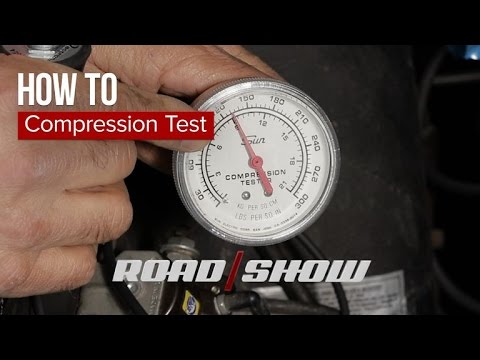
What Is a Compression Tester?
If you have ever worked on a car that runs poorly, shakes at idle, or simply refuses to start, you may have reached a point where you feel like you are guessing. You might change the spark plugs or the fuel filter, only to find the problem persists. This is where a compression tester becomes one of the most valuable car diagnostic tools in your arsenal. It is a device designed to give you a "health check" of the internal, mechanical state of your engine without requiring you to take the entire thing apart.
A compression tester moves the conversation from guesswork to data. By connecting it to your engine, you can see exactly how much pressure each cylinder is generating, telling you if the heart of your engine is physically capable of doing its job.
What Is a Compression Tester?
At its core, a compression tester is a specialized pressure gauge. In the world of automotive tools, it is categorized as a diagnostic device. It consists of a dial that measures pressure—usually in pounds per square inch (PSI) or Bar—and a high-pressure hose. The end of the hose features threads that match the size of a standard spark plug hole.

When an internal combustion engine runs, pistons move up and down inside cylinders. As a piston moves up on the "compression stroke," it squeezes a mixture of air and fuel into a tiny space. If the cylinder is well-sealed, this creates a high amount of pressure. If there is a leak, the pressure escapes. The compression tester captures and holds the highest amount of pressure reached during this process so you can read it on the dial.
What Does a Compression Tester Do?
The primary job of a compression tester is to verify the mechanical integrity of the engine's combustion chamber. For an engine to run efficiently, it must be air-tight during the compression stroke. If air escapes, the engine loses power and efficiency.
A compression tester identifies leaks in three main areas:
- The Valves: If the intake or exhaust valves are burned, bent, or not seating properly, air will leak out of the top of the cylinder during the compression stroke.
- The Piston Rings or Cylinder Walls: If the rings are worn out or the cylinder walls are scratched (scored), air will leak past the piston and into the oil pan (crankcase).
- The Head Gasket: If the gasket that seals the top of the engine to the bottom is "blown," pressure can leak into the cooling system or into an adjacent cylinder.
By using this tool, you can determine if a performance issue is caused by a mechanical failure inside the engine or an external issue like a bad sensor, a clogged fuel injector, or a failing ignition coil.
How Is a Compression Tester Used?
Using a compression tester is a straightforward process, but it requires following a specific sequence to get accurate results. While procedures vary by vehicle, the general workflow for most automotive equipment of this type is as follows:
First, the engine is typically warmed up to operating temperature so that the metal components have expanded to their normal running size. After shutting the engine off, you must disable the ignition system (to prevent sparks) and the fuel system (to prevent raw gasoline from spraying into the cylinders).
Next, you remove all the spark plugs. This allows the engine to spin freely and quickly during the test. You then thread the compression tester hose into the spark plug hole of the first cylinder, tightening it by hand.

While a helper sits in the driver's seat and holds the throttle pedal all the way to the floor (to let in maximum air), they crank the engine for about five to six "puffs" or revolutions. You will see the needle on the gauge jump up with each pulse. Once the needle stops climbing, you record the number, release the pressure using the valve on the tool, and move to the next cylinder.
When Would You Need a Compression Tester?
You would typically reach for these vehicle repair tools when you encounter symptoms that suggest a "dead" or weak cylinder. For example, if your truck has a steady vibration at stoplights (a misfire) and you have already replaced the spark plugs and wires, a compression test is the logical next step.
It is also useful in these real-world scenarios:
- Buying a Used Car: You want to ensure the engine isn't worn out or hiding a major mechanical flaw before you commit to the purchase.
- Blue Exhaust Smoke: This often indicates worn piston rings, which a compression tester can help verify.
- Engine "Freewheeling": If the engine sounds like it is cranking very quickly and unevenly, it often means there is no resistance because one or more cylinders have lost compression.
- Suspected Head Gasket Failure: If the engine is overheating or the oil looks like chocolate milk, the tester can help confirm if pressure is leaking between cylinders.
Types of Compression Testers
There are two main categories of compression testers that you will find when browsing mechanic tools: gasoline and diesel.
Gasoline Testers: These usually feature a gauge that goes up to about 300 PSI. They often come with several adapters to fit different spark plug thread sizes, such as 10mm, 12mm, or 14mm. "Screw-in" types are much more accurate and easier to use alone than "push-on" types that require you to hold a rubber tip against the hole while someone else cranks the engine.
Diesel Testers: These are much more heavy-duty. Because diesel engines operate at much higher compression, these gauges often read up to 1,000 PSI. They do not connect to spark plug holes; instead, they connect via the glow plug holes or fuel injector ports using specialized adapters.
What Should You Look for When Choosing One?
If you are looking to add this to your collection of garage tools, consider the following factors:
- Hose Quality: Look for a reinforced, high-pressure hose. If the hose expands under pressure like a balloon, your readings will be lower than they should be.
- Quick-Release Fittings: These allow you to thread the hose into a deep, cramped spark plug well first and then "click" the gauge onto the hose afterward.
- Pressure Release Valve: Ensure the tool has a button to bleed off the pressure so you can reset the gauge between cylinders without unscrewing the hose.
- Adapter Variety: Most modern cars use 14mm threads, but some smaller engines, motorcycles, or lawn equipment use 10mm or 12mm. A kit with multiple adapters is much more versatile for DIY automotive tools.

DIY vs. Professional Use
A compression tester is one of the few car diagnostic tools that is equally useful for a professional and a DIYer. For the home mechanic, it is an affordable way to avoid "parts cannon" diagnostics—the habit of throwing expensive new parts at a car hoping something fixes it.
While a professional might use more expensive professional automotive equipment, such as a "leak-down tester," for a more detailed analysis of where air is escaping, a standard compression tester is more than enough for a beginner to determine if an engine needs a major overhaul or just a simple tune-up.
Common Mistakes When Using a Compression Tester
The most common mistake is failing to have a fully charged battery. Since you are cranking the engine repeatedly, a weak battery will spin the engine slower on the last cylinder than it did on the first. This leads to inconsistent and "false low" readings.
Another mistake is forgetting to open the throttle. If the butterfly valve in the intake is closed, the engine cannot "breathe" in enough air to compress, which will result in a reading that is lower than the engine's actual capability.
Finally, do not focus only on the total number. While a high PSI is good, the consistency between cylinders is more important. If three cylinders read 150 PSI and one reads 110 PSI, that variation indicates a problem, even if 110 PSI seems like a functional number.
Safety Considerations
Safety is paramount when working with engine-related garage tools. Since you are cranking the engine, you must stay clear of the cooling fan, belts, and pulleys. Always ensure the vehicle is in Park (or Neutral for manuals) with the emergency brake firmly set.
Because you have removed the spark plugs, the ignition system will still try to send high-voltage electricity through the spark plug wires or coils. If these are not properly grounded or disabled, they can snap and shock you, or even ignite fuel vapors. Always disable the ignition and fuel systems according to your vehicle's specific service manual before beginning.
Frequently Asked Questions
Q: Can a compression test tell me if my timing belt is broken? A: Yes. If a timing belt or chain breaks, the valves will not close at the right time. This usually results in zero compression across all cylinders because the valves stay open when they should be closed.
Q: What is a "wet" compression test? A: If a cylinder has low compression, you can squirt a tablespoon of engine oil into the spark plug hole and re-test. If the pressure goes up, the oil is temporarily sealing worn piston rings. If the pressure stays the same, the leak is likely in the valves or the head gasket.
Q: Is 100 PSI a good reading for a car engine? A: Generally, no. While some small engines or very old designs might run on 100 PSI, most modern automotive engines should be between 125 and 175 PSI. The most important factor is that all cylinders are within 10 to 15 percent of each other.
Conclusion
A compression tester is a fundamental piece of automotive equipment that takes the mystery out of engine diagnostics. By measuring the physical pressure inside your cylinders, it helps you distinguish between a simple electrical glitch and a serious mechanical failure. Whether you are a beginner looking to understand your vehicle better or a DIY enthusiast trying to solve a stubborn misfire, this tool provides the evidence you need to make informed repair decisions. Rather than guessing, you can know for sure whether your engine has the "squeeze" it needs to stay on the road.



No Comments Yet
Be the first to comment on this article.