Curtis.Castiglione@ROzebra.com

Using Video Analysis for Amateur Racing Driver Development
In the heat of a race or a fast track-day session, your brain is operating at maximum capacity. Between managing traffic, hitting shift points, and monitoring gauges, your memory of a lap is often a blurred feeling rather than a factual record. This is why video is the single most cost-effective driver-development tool available to the amateur racer.
While a professional data logger can cost thousands, a basic action camera or a securely mounted smartphone can provide 90% of the information you need to find those missing seconds. Video analysis bridges the gap between what you think you are doing and what you are actually doing on the pavement.
Setting Up Your Virtual Coach
You do not need a cinematic rig to get faster. In fact, simpler is often better for grassroots racing.
The Gear
- Camera: An entry-level GoPro or a high-quality smartphone is plenty. High frame rates (60 FPS) are helpful for smoothness, but 1080p resolution is more than enough for analysis.
- Mounting: This is a safety issue. Most technical inspectors will reject a simple suction cup on the exterior of the car. Inside the cabin, use a high-quality suction cup on the windshield or, ideally, a roll-bar mount. Always use a secondary tether like a small steel cable or zip tie so the camera does not become a projectile if the mount fails.

The Best Angle
For driver development, the view from outside the car is rarely helpful. You need a behind-the-shoulder or center-cabin view. This allows you to see the track ahead while also capturing your hands on the steering wheel. Seeing your steering inputs allows you to diagnose handling issues like understeer or "sawing" at the wheel.
Analyzing Your Braking: The Dead Zone
The most common place amateur racers lose time is the transition between the gas pedal and the brake pedal.
- Spot the Coasting: When reviewing your footage, listen to the engine. Is there a moment where the revs drop but you haven’t yet heard the bite of the brakes? This is coasting. In a racing environment, you should generally be either on the gas or on the brakes. If you see a gap, you are leaving time on the table.
- Check Your Markers: Look for stationary objects like brake markers, a crack in the pavement, or a change in the fence. Compare your fastest lap to your slowest. You will often find that on your slow laps, you began braking ten feet earlier than necessary simply because you were not looking for your specific marker.
Steering Inputs and Car Balance
Your hands on the video will tell you exactly what the car's suspension is doing.
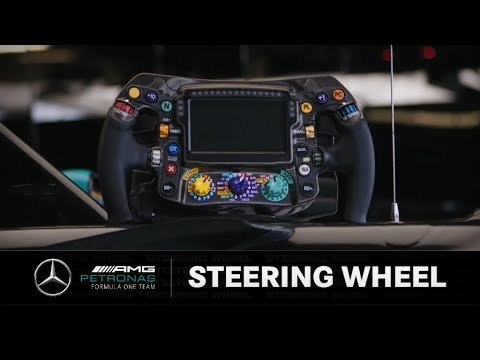
- Smoothness vs. Sawing: If you see your hands making constant, jerky corrections mid-corner, the car is unsettled. This "sawing" at the wheel usually means you have entered the corner too fast, pushing the front tires into understeer, or you are being too aggressive with the throttle, causing the rear to step out.
- Hand Position: Watch for "shuffling" or crossing your arms. In most race cars, your hands should stay at 9 and 3 o'clock. If you find yourself letting go of the wheel or reaching for the top of it, use the video to remind yourself to stay disciplined and keep your inputs controlled.
Corner Exits: Using the Whole Track
Amateur drivers often focus so much on the entry that they forget the exit. However, in racing, exit speed is king, especially before long straights.

- The Three-Foot Gap: Look at your car's position as you exit a corner. Are you leaving three or four feet of pavement between your tires and the outside curbing? If so, you are making the corner tighter than it needs to be. Using the full width of the track allows you to carry more speed through the turn.
- Throttle Application: When do you start accelerating? Ideally, you should be rolling onto the throttle as you clip the apex. If the video shows you waiting for the car to point straight before hitting the gas, you are losing several miles per hour at the end of the following straight.
The Comparison Method
Do not just watch your best lap on repeat. You learn more by looking at the mistakes and the differences between sessions.
- Compare Laps: Watch a lap where you felt slow alongside a lap where you felt fast. Ironically, many racers find their fastest laps actually look the most boring. They are smooth, quiet, and lack drama.
- YouTube Research: Look for onboard footage from experienced drivers in your specific racing class, such as Spec Miata or Lucky Dog. Watch their line—the path they take through the corners. Do they use more curbing than you? Do they shift at a different point? Use it as a map of what the track is capable of offering.
Practical Post-Track Workflow
To make video analysis a habit, you need a system. If you just have a folder full of unnamed files, you will never watch them.
- Label Immediately: At the end of the day, move files to a laptop or tablet. Label them with the date, the track, the session, and your best time.
- The One-Thing Rule: Write down one specific thing from the video to change in the next session. For example: Stay on the gas until the 3-marker in Turn 1.
- Keep an Archive: Save your footage from year to year. When you return to a track after six months, watching your old video is the fastest way to get your brain back up to speed before the first green flag.
Video Review Checklist
Before your next event, watch your previous footage and ask:
- Did I hit every apex, or was I consistently wide?
- Am I using all of the track on the exit?
- Is there a dead spot between throttle and braking?
- Am I hitting the rev limiter, or am I shifting too early?
- Are my hands calm, or am I sawing at the wheel?
- Am I looking ahead to the next turn, or just at the bumper of the car in front?
The bottom line is simple: You can spend thousands on a set of adjustable coilovers, or you can spend a small amount on a camera and twenty minutes reviewing your footage. For most amateur racers, the camera will find more speed than the parts every single time.



No Comments Yet
Be the first to comment on this article.