Curtis.Castiglione@ROzebra.com
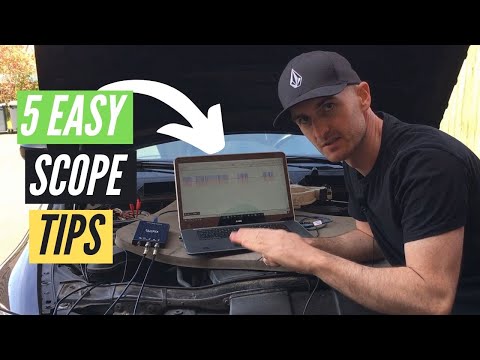
Understanding Diagnostic Oscilloscopes in Automotive Repair
If you have ever spent time in a modern repair shop or watched a high-end automotive repair video online, you may have seen a screen displaying wavy green or yellow lines that look like a heart monitor in a hospital. This device is a diagnostic oscilloscope, often referred to by technicians as a lab scope. While it might look like a piece of laboratory equipment, it is actually one of the most powerful car diagnostic tools available for solving complex electrical mysteries. For vehicle owners and DIY enthusiasts, understanding what is a diagnostic oscilloscope and why do mechanics use one is the first step toward moving beyond basic troubleshooting and into the world of advanced vehicle diagnostics.
Understanding What Is a Diagnostic Oscilloscope and Why Do Mechanics Use One
At its simplest level, a diagnostic oscilloscope is a high-speed graphing voltmeter. While a standard digital multimeter shows you a single number representing voltage at a specific moment, an oscilloscope measures electrical voltage over a very short period of time and displays it as a continuous line on a screen.
This line is called a waveform. If a multimeter provides a snapshot of what is happening in a wire, the oscilloscope provides a live movie. This distinction is crucial because, in a modern car or truck, electrical signals happen incredibly fast—sometimes thousands of times per second. By visualizing these signals, mechanics can see the actual behavior of a circuit rather than just an average value.
What Does a Diagnostic Oscilloscope Do?
The primary job of an oscilloscope is to show the shape of electricity. Most electrical components in a vehicle produce specific, predictable patterns. For example, fuel injectors produce a specific voltage spike and drop when they open and close. Crankshaft sensors create a series of pulses that tell the engine computer exactly where the pistons are located, while ignition coils show a distinct firing line when the spark plug ignites.

By looking at these waveforms, a technician can see if a part is failing before it completely breaks. It allows them to verify the health of a signal. If the wave looks jagged, messy, or has gaps where there should be steady pulses, the mechanic knows exactly which wire or component is causing the trouble. This level of detail is why it is considered one of the most advanced mechanic tools in a modern garage.
How Is a Diagnostic Oscilloscope Used?
Using an oscilloscope involves connecting specialized leads or probes to the vehicle's wiring. Most technicians use a technique called back-probing. This involves sliding a thin, needle-like probe into the back of a plastic weather-pack connector to touch the metal terminal without damaging the wire insulation.
The basic workflow usually involves these steps:
- Connect the Ground: One lead is connected to a clean ground source, usually the negative battery terminal or a solid metal part of the engine block.
- Connect the Signal Lead: The other lead, often called the channel, is connected to the signal wire of the sensor or actuator being tested.
- Adjust the Scale: The user adjusts the voltage (how tall the wave is) and the time (how fast the wave moves across the screen) to make the signal readable.
- Analyze the Waveform: The technician looks for deviations from a known good pattern.
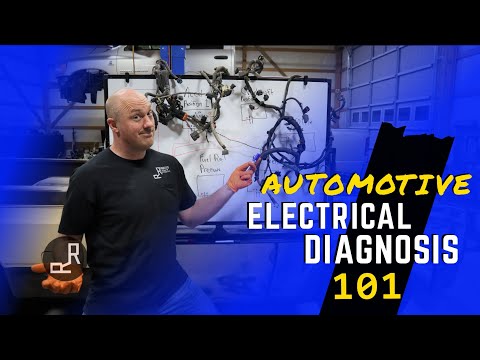
For example, if a technician is testing a spark plug wire, they can see the initial fire of the spark, how long the spark lasted, and how much energy was left over. This level of detail is impossible to get with standard garage tools.
When Would You Need a Diagnostic Oscilloscope?
You generally do not need a diagnostic oscilloscope for basic maintenance like changing oil, rotating tires, or replacing brake pads. However, it becomes vital when dealing with driveability issues that do not trigger a clear Check Engine light or trouble code.
Imagine a truck that occasionally stutters while driving at highway speeds, but the computer never stores a code. A mechanic might suspect a failing crankshaft sensor. A standard scan tool might show that the engine RPM looks steady because it averages the data. However, the diagnostic oscilloscope can reveal that every few seconds, the sensor signal drops out for a tiny fraction of a second. That tiny dropout is enough to make the engine stumble but too fast for the car's computer to register as a permanent fault.
Other common uses include:
- Verifying Engine Timing: By comparing the signals of the camshaft and crankshaft sensors at the same time, a mechanic can see if a timing chain has stretched or a gear has slipped without disassembling the engine.
- Testing Communication Networks: Modern cars use networks, called CAN bus, to let computers talk to each other. A scope can show if electrical noise is garbling these messages.
- Checking Component Integrity: It can identify a fuel injector with a sticking internal needle or a weak electrical coil that would otherwise test fine with a multimeter.
Types of Diagnostic Oscilloscopes
There are three main variations of this automotive equipment found in shops today:
- Handheld Scopes: These are portable, battery-powered units with a built-in screen. They are rugged and great for road tests where you need to see the data while someone else is driving.
- PC-Based Scopes: These consist of a hardware box that plugs into a laptop via USB. The laptop provides a large, high-resolution screen, making it much easier to see fine details in the waveforms.
- Tablet-Based Scopes: Many high-end professional scan tools now come with a built-in oscilloscope module, allowing the technician to switch between reading codes and looking at live waveforms on the same device.
What Should You Look for When Choosing One?
If you are a hobbyist looking at DIY automotive tools, you don't need the most expensive professional unit, but you should look for two key specifications:
- Channels: This refers to how many signals the scope can show at once. A two-channel scope allows you to compare two sensors. A four-channel scope is better because it allows you to see the relationship between multiple ignition coils or complex sensors simultaneously.
- Sample Rate: This is how many pictures the scope takes per second. For automotive use, you want a tool that can handle high speeds, especially if you plan to diagnose modern vehicle data networks.
DIY vs. Professional Use
For the average car owner, a diagnostic oscilloscope has a steep learning curve. It is not a plug and play tool like a code reader that simply tells you to replace a specific part. It requires the user to understand basic electrical theory and know what a good waveform is supposed to look like.
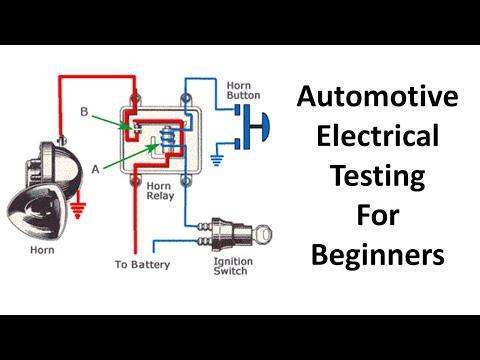
However, for a dedicated DIYer, it is one of the most rewarding vehicle repair tools to master. It moves you away from the parts cannon approach—where you keep replacing parts until the problem goes away—and toward a true, scientific diagnosis. It allows you to prove a part is bad before you spend money to replace it.
Common Mistakes When Using a Diagnostic Oscilloscope
- Poor Grounding: This is the most frequent error. If the ground lead is loose or attached to a painted surface, the waveform will look like static. This leads many beginners to think a sensor is bad when the connection is actually the problem.
- Improper Scaling: If the voltage scale is set too high, the signal looks like a flat line. If it is set too low, the signal will go off the top of the screen. Learning to frame the signal so it fits perfectly on the screen is a skill that takes practice.
- Misinterpreting Noise: Modern engine bays are full of electrical noise from alternators and ignition systems. A beginner might see this interference and assume there is a fault in the circuit they are testing.
Safety Considerations
When using any professional automotive equipment, safety is the priority.
- High Voltage: Most automotive circuits are 12 to 15 volts, which is generally safe to touch. However, ignition systems can produce 30,000 to 50,000 volts. Never use standard probes on a spark plug wire; you must use specialized inductive clamps designed for high voltage to avoid damaging the scope or receiving a dangerous shock.
- Moving Parts: Because an oscilloscope is often used while the engine is running, keep your leads and wires tucked away from cooling fans, serpentine belts, and hot exhaust manifolds. Always secure your equipment so it cannot fall into the engine.
Frequently Asked Questions
Does an oscilloscope replace a scan tool? No. A scan tool talks to the car's computer to see what it thinks is happening. An oscilloscope looks at the actual electricity. They are partner tools that work together. Use the scan tool to find the general area of trouble, and the scope to find the specific root cause.
Is it hard to learn how to read waveforms? It takes practice. Most technicians use online libraries of known good waveforms to compare against the vehicle they are working on. With time, you learn to recognize the signature of a healthy part just as a doctor recognizes a healthy heartbeat.
Can I use a regular electronics oscilloscope on a car? Technically yes, but automotive-specific scopes are better because they often include presets for car sensors and are built to handle the harsh electrical noise and voltage spikes found in an engine bay.
Conclusion
A diagnostic oscilloscope is the ultimate truth-teller in the world of automotive tools. While a multimeter gives you an average and a scan tool gives you an opinion, the scope shows you the reality of what is happening in a circuit. Whether you are a professional mechanic or a dedicated hobbyist, understanding what is a diagnostic oscilloscope and why do mechanics use one opens up a new world of diagnostic possibilities. By mastering this tool, you can fix complex problems with confidence, precision, and a deeper understanding of how your vehicle functions.



No Comments Yet
Be the first to comment on this article.