Curtis.Castiglione@ROzebra.com

Understanding 2017 Honda Accord Front-End Collision Damage and Repairs
By Curtis Castiglione
It is a common scenario: you are involved in a minor front-end collision in your 2017 Honda Accord. At the scene, the damage looks minimal—perhaps a scuffed plastic bumper and a slightly misaligned hood. Your insurance adjuster writes an initial estimate for a few hundred dollars. However, shortly after dropping the car off at the body shop, you receive a phone call stating the repair cost has increased significantly.
This is not necessarily a sign of a dishonest shop or an incompetent adjuster. It is the reality of modern collision repair. On a 2017 Accord, the plastic components are designed to absorb impact and return to their original shape, often hiding significant structural and mechanical damage underneath.

The Teardown and the Insurance Supplement
When an insurance adjuster looks at your car in a driveway, they are writing a visual estimate. They are generally restricted from speculating on hidden damage without physical proof. The real repair process begins with the teardown. Once the bumper cover is removed, the shop can see the inner components. When new damage is found, the shop submits a supplement.
A supplement is a formal request to the insurance company for additional parts, labor, or materials discovered after disassembly. This is a standard part of the repair lifecycle. For a 2017 Accord, supplements frequently involve the radiator support, headlight mounting tabs, and the hood latch assembly.
The Radiator Support: A Critical Structural Frame
The radiator support on a 2017 Honda Accord is more than just a bracket. It is a critical structural frame that serves as the anchor point for the headlights, the front bumper reinforcement, and the hood latch.
Why Radiator Support Damage Matters
- Alignment: If the support is pushed back even a few millimeters, your headlights and bumper will never sit flush. This results in uneven panel gaps that can affect the vehicle's resale value and aesthetic.
- Cooling System Stress: A bent support puts constant tension on the radiator and AC condenser, which can lead to premature leaks or the failure of cooling fans.
- Structural Integrity: The support is part of the energy-management system. If it is kinked or poorly repaired, it may not perform correctly in a subsequent accident.
Why Looks Closed Does Not Mean Safely Latched
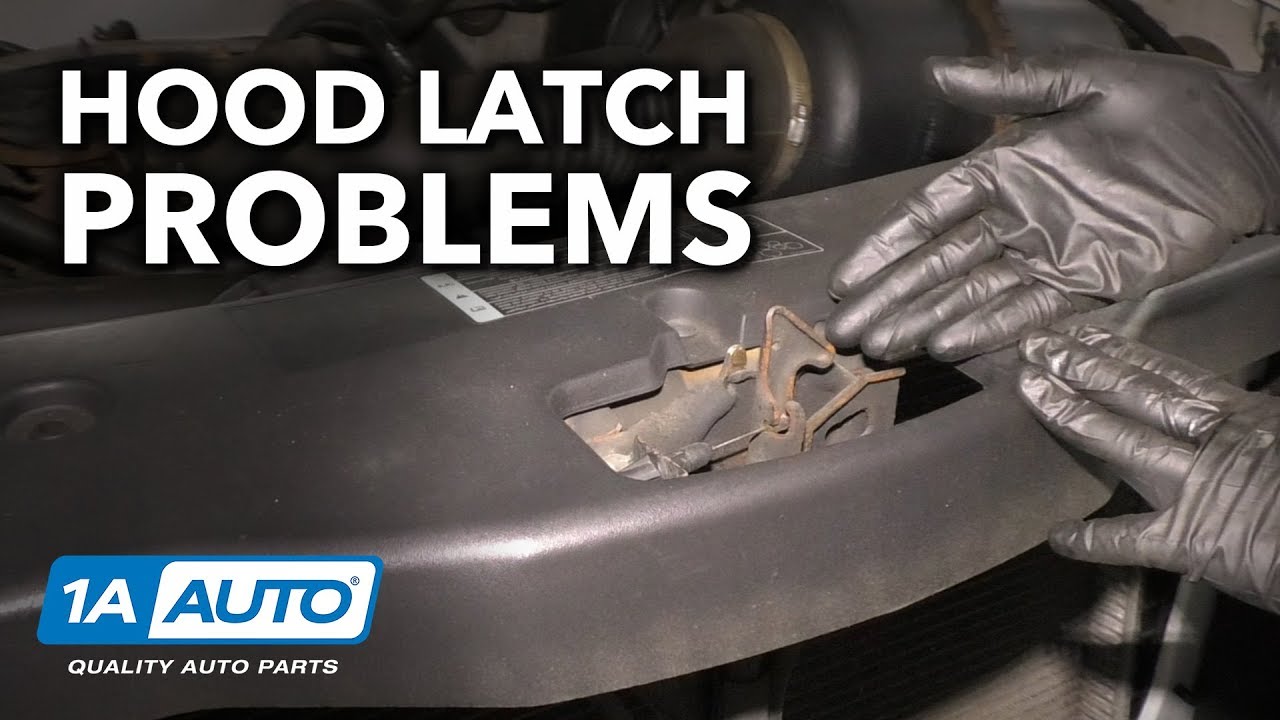
The most dangerous hidden defect in a front-end collision involves the hood latch and striker. On the 2017 Accord, the latch is bolted directly to the radiator support. If that support is shifted, the geometry between the latch and the hood striker (the loop on the hood) is compromised.
A hood has two stages of locking: the primary latch, which holds it flush, and the secondary safety catch, which prevents the hood from flying up if the primary fails. In a collision, the metal can distort such that the hood appears closed, but the secondary catch is not fully engaged. At highway speeds, wind pressure can force a compromised hood open, obscuring the driver's vision. A professional repair must include a verification of these functions according to manufacturer procedures.
Hidden Headlight Damage: Broken Mounting Tabs
You might look at your Accord's headlight and see a perfectly clear, unbroken lens. However, shops often find that the unit needs replacement regardless of the lens condition.
Modern headlights are secured by thin plastic mounting tabs. These tabs are designed to break during an impact to prevent the headlight from being pushed deeper into the engine bay. If these tabs are snapped, the headlight is no longer stable. Attempting to glue them or use washers is a sub-standard repair that leads to vibrating light beams and poor aim, which can reduce visibility and blind oncoming traffic.

Technology, Calibration, and Parts Selection
The 2017 Honda Accord often features Honda Sensing, a suite of safety technologies including radar and camera systems. These components are frequently located behind the front grille or bumper area.
- ADAS Calibration: Even a minor shift in the radiator support can necessitate a recalibration of the Advanced Driver Assistance Systems (ADAS). If the structural mounting points for these sensors are not perfectly aligned, the safety systems may fail to operate or provide false warnings.
- OEM vs. Aftermarket Parts: Your insurance policy may allow for aftermarket or recycled parts. However, for structural components like a radiator support, using an Original Equipment Manufacturer (OEM) part is often necessary to ensure that the hood latch and sensors line up perfectly. If a shop finds that an aftermarket part does not meet the necessary tolerances, they must document this for the insurance company.
Practical Steps for the Vehicle Owner
If you are researching repairs for a front-end collision on your Accord, consider these steps:
- Request a Full Teardown: Do not assume the initial estimate is final. Ask the shop to perform a full disassembly of the front end to identify hidden damage to the radiator support and cooling components.
- Verify Latch Integrity: Ask the technician if the hood latch and support structure were measured against factory specifications. A latch that clicks shut is not necessarily structurally sound.
- Ask About ADAS Calibration: If your vehicle is equipped with forward collision warning or lane-keep assist, ensure the repair plan includes a post-repair scan and necessary calibrations.
- Review the Supplement: If the cost of the repair increases, ask the shop to show you the damaged components that were hidden behind the bumper.
Insurance coverage, state laws, and repair requirements vary significantly. You should always consult with your insurance representative and a qualified collision repair professional to determine the best course of action. Safety and structural integrity must always take precedence over cosmetic appearance.



No Comments Yet
Be the first to comment on this article.