Curtis.Castiglione@ROzebra.com

Transmission Fluid Leak Repair Cost Guide
By Curtis Castiglione
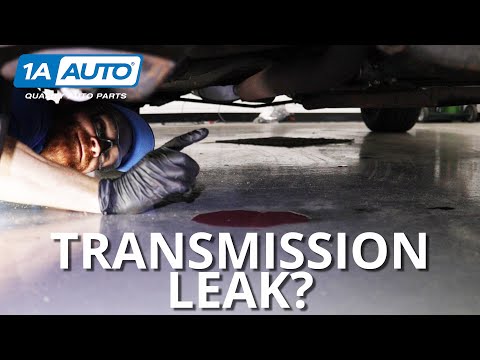
If you have noticed a reddish puddle on your driveway or a strange burning smell after a long drive, you are likely facing a transmission fluid leak. For most vehicle owners, the immediate question is: How much is this going to cost me, and what am I actually paying for?
Transmission fluid leak repair costs can range significantly. A simple fix, such as replacing a leaking transmission pan gasket or a cooling line, typically costs between $200 and $500. However, if the leak originates from an internal seal, such as the front pump seal or the torque converter, the repair cost can jump to $800 or even $2,500. This is because the entire transmission must be removed from the vehicle to access those components. Because costs vary based on your geographic location, vehicle year, make, model, and the shop's labor rate, it is vital to get a professional diagnosis before assuming the worst.
What Is a Transmission Fluid Leak Repair?
Transmission fluid is the lifeblood of your vehicle’s gearbox. Unlike engine oil, which primarily lubricates, transmission fluid acts as a hydraulic fluid to facilitate gear shifts, a coolant to pull heat away from internal components, and a lubricant to prevent metal-on-metal wear.
A transmission leak repair involves identifying where the fluid is escaping and replacing the failed component. Common leak points include:
- The Transmission Pan Gasket: The large flat seal at the bottom of the transmission that keeps fluid contained within the pan.
- Transmission Cooler Lines: Metal or rubber hoses that carry fluid to the radiator or a dedicated cooler to keep temperatures stable.
- Axle or Output Shaft Seals: These seals are located where the power exits the transmission to the wheels; they often wear out due to high rotational friction.
- The Front Pump Seal: Located behind the torque converter, deep inside the bell housing. This is one of the most labor-intensive seals to replace.
Average Transmission Fluid Leak Repair Cost
The total transmission fluid leak repair price is heavily weighted toward labor rather than parts. On average, most consumers pay between $300 and $1,200 for leak-related repairs.
Parts Cost
The parts themselves are often the least expensive part of the bill. A transmission pan gasket may cost only $20 to $60. A set of transmission cooler lines might run $50 to $150. Even a front pump seal is usually under $50. However, you must also factor in the cost of the fluid. Modern synthetic transmission fluids can cost between $10 and $25 per quart, and many vehicles require 6 to 12 quarts for a full service following a repair.
Labor Cost
Transmission labor cost is where the price can escalate. Most shops charge between $100 and $200 per hour. A pan gasket might take 1.5 to 2 hours of labor. In contrast, replacing a front pump seal requires removing the transmission, which can take 6 to 10 hours of labor depending on whether the vehicle is front-wheel drive, rear-wheel drive, or all-wheel drive.

What Can Make the Repair More Expensive?
The biggest factor in how much does a transmission fluid leak repair cost is accessibility. If a technician can reach the leak from under the car without removing major components, the price stays relatively low. If the transmission, subframe, or exhaust must be removed to reach a $20 seal, the labor costs will skyrocket.
Vehicle type also matters. All-wheel drive (AWD) and four-wheel drive (4WD) vehicles have additional components like transfer cases and extra driveshafts that must be disconnected, adding hours to the job. Furthermore, if the leak was caused by internal transmission damage or 'case porosity' (cracks in the metal housing), you may be looking at a full transmission rebuild or replacement rather than a simple leak repair.
Dealership vs. Independent Repair Shop
Where you take your vehicle significantly impacts the final bill.
- Dealerships: These generally have the highest labor rates but offer factory-trained technicians and Original Equipment Manufacturer (OEM) parts. If your vehicle is under warranty, this is your only stop.
- Independent Repair Shops: These typically offer lower labor rates and may use high-quality aftermarket parts to save you money. They are excellent for common leaks like pan gaskets or cooler lines.
- Specialty Transmission Shops: These shops focus exclusively on gearboxes. They are often the best choice for complex internal leaks because they have specialized tools and deep expertise in transmission teardowns.
- DIY Repair: This is possible for simple tasks like a pan gasket or a visible hose, but it requires specific tools, the ability to lift the vehicle safely, and a way to accurately check fluid levels. Many modern 'sealed' transmissions require a scan tool to verify the fluid temperature and level, making DIY much harder than it used to be.
Can You Drive With This Problem?
The answer to 'can I drive with a transmission leak' depends on the severity. If you see a few drops but the fluid level is still within the 'full' range on the dipstick, you can usually drive to a repair shop.
However, if the transmission is slipping (the engine revs but the car does not move properly), shifting harshly, or if the fluid is gushing out, do not drive the vehicle. Low fluid levels cause increased friction and heat, which can destroy the internal clutches and gears in a matter of miles. A $300 leak repair can quickly turn into a $4,000 transmission replacement if you ignore the symptoms.

How to Avoid Paying for Unnecessary Repairs
The most important step is to distinguish between a diagnosis and a repair. Never authorize a transmission rebuild just because there is a puddle on the ground. Ask for a 'leak trace.' Technicians often use a fluorescent dye and a UV light to find the exact origin of the leak.
Be wary of shops that suggest a 'transmission flush' to fix a leak. A flush will not fix a broken seal; in fact, the pressure from a flush can sometimes make an old, brittle seal leak even worse. Additionally, check your engine oil and power steering fluid. Because many automotive fluids are red or brown, a power steering leak is often mistaken for a transmission leak.
Questions to Ask the Repair Shop
Before you sign the repair order, ask these questions:
- Specifically, where is the leak originating?
- Is the fluid level currently low, and is there any sign of internal 'burnt' smelling fluid?
- Does the estimate include the cost of a new filter and a full fluid refill?
- Is this a 'sealed' transmission, and does the shop have the proper equipment to check the level after the repair?
- Is the leak coming from a pressurized line or a static gasket?
Bottom Line
Is a transmission fluid leak repair worth it? In almost every case, the answer is yes. Compared to the massive cost of a total transmission failure, spending a few hundred dollars to replace a gasket or a cooling line is a necessary investment in your vehicle’s longevity.
While the question of how much does a transmission fluid leak repair cost has a wide range of answers, being an informed consumer helps you navigate the process. By identifying the specific source of the leak and addressing it early, you can keep your car on the road and avoid the high price of a total transmission replacement.



No Comments Yet
Be the first to comment on this article.