Curtis.Castiglione@ROzebra.com
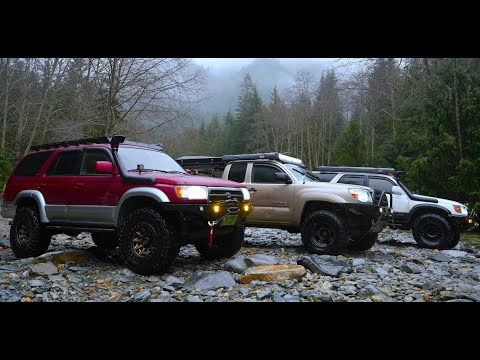
Toyota Suspension Evolution and Diagnostic Guide (2001–2026)
If you have owned a Toyota for any length of time, you likely appreciate the brand for its bulletproof reliability. However, even the most durable Camry, Tacoma, or Land Cruiser is still subject to the laws of physics. Over the last 25 years, Toyota suspension has evolved from simple mechanical springs to complex electronic systems. When things go wrong, your car will try to tell you through sounds and sensations.
As a technician, I spend my day listening to these complaints. Here is how to translate what your Toyota is feeling into a technical diagnosis and what it means for your next service visit.
1. The Boat Feeling: Excessive Bouncing
The most common complaint I hear from Toyota owners is that their vehicle feels like a boat on the open ocean. You hit a speed bump, and instead of the car settling immediately, it continues to bob up and down two or three times. Or, when you hit the brakes, the front of the car dives toward the pavement.
The Technician’s Diagnosis: Loss of Damping Whether you have a 2001 Corolla or a 2024 RAV4, your Toyota uses MacPherson struts or shock absorbers to control the energy stored in the coil springs. These units are filled with hydraulic fluid and pressurized gas.
- The Cause: Over thousands of miles, internal seals wear out or the fluid leaks. Without that hydraulic resistance, the spring is free to bounce uncontrollably.
- What to Look For: Look behind your wheel; if you see a dark, oily film on the body of the shock, the seal has failed.
- Advanced Systems: On newer models equipped with Adaptive Variable Suspension (AVS), a bouncy ride might indicate a failure in the electronic actuator that adjusts the valving. This is a safety issue, as excessive bouncing reduces tire contact with the road and increases your braking distance.

2. The Dreaded Clunk: Metal-on-Metal Pops
You might notice this specifically when you are turning into a driveway or driving over a gravel road. It sounds like two heavy pieces of metal hitting each other.
The Technician’s Diagnosis: Worn Ball Joints or Stabilizer Links On vehicles like the Tacoma or 4Runner, which use a double-wishbone front suspension, these noises often point to the pivot points.
- Ball Joints: These allow the wheel to move in multiple directions. When the protective rubber boot tears, grease escapes and dirt enters, grinding the metal ball into its socket. Eventually, the gap becomes large enough that the joint clunks within its housing.
- The Risk: In a worst-case scenario, a worn ball joint can separate entirely, causing the wheel to collapse.
- Stabilizer Bar Links: If the clunking happens mostly during side-to-side transitions, the small links connecting your stabilizer bar to the rest of the suspension are likely the culprit.
3. Vague Steering and Dynamic Pulling
For those driving newer Toyota New Global Architecture (TNGA) platform vehicles—like the 2018 and newer Camry or RAV4—you might experience a steering wheel that feels vague or a car that pulls to one side despite a recent alignment.
The Technician’s Diagnosis: Bushing Deflection Modern Toyotas use high-strength steel and very precise suspension geometry to improve handling. However, they rely heavily on rubber bushings to isolate the frame from road vibration.
If these bushings become cracked or mushy, your alignment shifts dynamically while you drive. You might align the car perfectly on a stationary rack, but the moment you hit the gas or a bump, the wheels shift out of place because the rubber can no longer hold the control arm steady.
4. The Leaning Truck: Sagging and Bottoming Out
If you own a Tundra or an older Tacoma, you might notice your truck looks like it is leaning to one side or sits lower in the rear than it used to.
The Technician’s Diagnosis: Leaf Spring Fatigue Most Toyota trucks use leaf springs in the rear to handle heavy payloads. Over years of towing and hauling, the steel leaves lose their arch and become flat or even inverted. This reduces your payload capacity and causes the suspension to bottom out on the bump stops, sending a jarring shock through the cabin.

5. Electronic Glitches: Warning Lights and Limp Mode
If you drive a high-trim Land Cruiser with the Kinetic Dynamic Suspension System (KDSS) or a new Tundra with Rear Load-Leveling Air Suspension, a dashboard warning light is your primary symptom.
The Technician’s Diagnosis: Sensor or Hydraulic Failure
- KDSS Issues: These systems use hydraulic pressure to manage stabilizer bars. A leak or a shutter valve failure can cause the vehicle to lean significantly to one side.
- Air Suspension: If the vehicle feels rock-hard or won't rise, a height sensor has likely corroded or the air compressor has failed. The electronics often lock the suspension into a limp mode to prevent further damage.
Summary Checklist for Owners
| Symptom | Likely Component | Severity |
|---|---|---|
| Bouncing after bumps | Struts / Shocks (Dampers) | Medium (Safety/Braking) |
| Clunking during turns | Ball Joints / Tie Rods | High (Structural Failure) |
| Vehicle leans to one side | Leaf Springs / KDSS System | Medium (Handling/Payload) |
| Dashboard Light | AVS / Air Suspension Sensors | Medium (System Inop) |
Technician’s Advice: Most suspension components wear out gradually, but they affect your ability to steer and stop in an emergency. If your Toyota is making noise or feeling like a boat, tell your mechanic exactly when you hear the noise. This helps us distinguish between a simple rubber bushing and a complex electronic damper, ensuring your Toyota stays on the road for another 25 years.



No Comments Yet
Be the first to comment on this article.