Curtis.Castiglione@ROzebra.com

Top Forgotten Donor Vehicles for Engine Swaps
When a builder begins a project, the natural instinct is to look for a donor vehicle that matches the dream: a crashed Mustang for a Ford project, a rotted-out Chevelle for a GM build, or a derelict Charger for a Mopar. However, the market has caught on. The price of traditional donor cars has skyrocketed, often making the engine swap the most expensive part of a restoration.
A better strategy is to look where the competition isn't. Heavy-duty trucks, motorhomes, commercial vans, and fleet vehicles have historically utilized the same engine families as legendary muscle cars, but for entirely different reasons. While a muscle car needs speed, a motorhome needs torque, and a delivery van needs durability.
By looking past the sheet metal and focusing on the engine family, you can find high-performance foundations in the most unlikely places.
The Heavy-Duty Powerhouse: Chrysler M-Series Motorhomes
If you are searching for a Chrysler RB-series big-block, the classifieds for Road Runners and Challengers will likely lead to sticker shock. Instead, turn your attention to 1970s-era Class A motorhomes, specifically those built on the Dodge M-series chassis, such as the Winnebago Brave or Indian.

The Prize: The 440-3 V8
Manufacturers used the 440-cubic-inch V8 in these lumbering giants because moving 10,000 pounds requires massive torque and sustained durability. However, the motorhome 440 is not a carbon copy of a 1969 Six Pack engine.
- The Configuration: Designated as the 440-3, these were built for a heavy duty cycle. They typically feature lower compression ratios (around 8.2:1) and unique cylinder heads (often the 452 casting) with reinforced valve seats and different water jackets to handle sustained heat.
- The Foundation: While the top-end may differ, the "bones" are excellent. You are getting a high-quality block, often a forged or high-strength cast crankshaft, and heavy-duty rods.
- The Transmission: These motorhomes almost exclusively used the 727 LoadFlite. This is a beefed-up version of the TorqueFlite 727, featuring extra clutch plates and a more robust valve body, making it an excellent donor for a performance street-strip application.
Practical Consideration: The 440-3 may have a specialized water pump housing and cooling system that won't clear car frame rails. When harvesting this engine, budget for a car-style water pump housing and a passenger-car oil pan to ensure it fits your chassis.
The Iron Giant: GM Express and Savana Vans
In the modern era of engine swapping, the GM LS-series engine is the gold standard. While many hunters look for a crashed Silverado or Sierra pickup, the Chevrolet Express and GMC Savana 2500 and 3500 series vans (specifically models from 2001 to 2007) are often superior donors.

The Prize: The LQ4 6.0L and the 4L80E
These commercial fleet vehicles were frequently equipped with the LQ4, a 6.0-liter Vortec V8 that is highly prized by turbocharging enthusiasts.
- The Engine: The LQ4 is an iron-block version of the LS-family engines. While it lacks the weight savings of the aluminum LS2, the cast-iron block provides superior structural integrity for high-boost applications. It also features 317 cylinder heads, which have flow characteristics similar to the highly coveted 243 heads found on the Corvette Z06, but with larger combustion chambers that naturally lower compression—ideal for forced induction.
- The Transmission: The most significant advantage of a 2500 or 3500 van is the 4L80E four-speed automatic transmission. The 4L80E is essentially an electronically controlled evolution of the legendary TH400. It is significantly stronger than the 4L60E found in half-ton trucks. For a builder planning a 600-to-800 horsepower project, the 4L80E is the only factory GM overdrive transmission capable of surviving without an expensive aftermarket rebuild.

Practical Consideration: Van intake manifolds are very tall and rarely fit under the hood of a car. However, the cost savings of the donor often leave room in the budget for a low-profile LS6 or car-style intake. These vans are frequently retired due to body rust, meaning the mechanical components are often still in serviceable condition.
The Front-End Revolution: The Ford Crown Victoria P71
For classic truck restorers, specifically those building 1950s through 1970s Ford F-100s, the 2003–2011 Ford Crown Victoria Police Interceptor (P71) has changed the landscape of restoration.
The Prize: The Modular Subframe and 8.8 Axle
Instead of just an engine, the Crown Vic provides an entire chassis modernization kit in one package.
- The Front Suspension: In 2003, Ford moved to an aluminum front crossmember. This unit is a self-contained assembly housing the suspension, rack-and-pinion steering, and engine mounts. Fabricators can unbolt this entire subframe and graft it onto an old truck frame, providing an immediate upgrade to modern handling and massive disc brakes.
- The Rear End: These fleet vehicles often come with the Ford 8.8-inch rear axle, frequently equipped with 3.27 or 3.55 gears and a limited-slip differential. These units are substantially stronger than the axles found in many classic cars.
- The Engine: While the 2-valve 4.6L Modular V8 isn't a high-horsepower monster, it is incredibly reliable. The Police Interceptor models also received heavy-duty cooling systems, external oil coolers, and more aggressive transmission shift points.
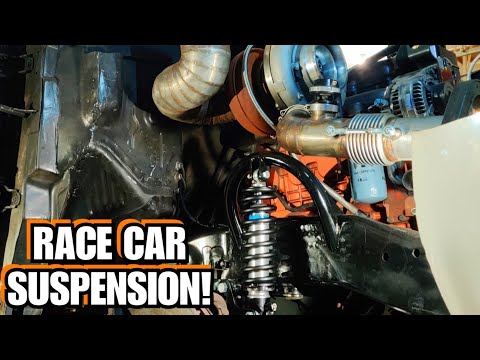
Practical Consideration: It is vital to distinguish between a civilian Grand Marquis and a Police Interceptor. While civilian models may have less interior wear, the police models have the heavy-duty cooling and suspension bits builders crave. Also, ensure the donor is a 2003 or newer model to get the aluminum crossmember; earlier models used a traditional integrated frame design.
The Successful Donor Hunting Strategy
The best donor isn't always the one with the cheapest purchase price; it is the one that provides the largest number of useful components for the project. When evaluating a potential vehicle, look beyond the engine block and consider the value of:
- Cooling Systems: Large radiators, transmission coolers, and high-shroud fans.
- Electrical: Engine Control Modules (ECMs), wiring harnesses, and high-output alternators.
- Accessories: Heavy-duty power steering pumps, starter motors, and accessory brackets.
- Driveline: Driveshaft components, U-joints, and heavy-duty axles.
By researching engine families rather than vehicle reputations, a savvy builder can find a high-performance foundation inside a vehicle that the rest of the world has forgotten. Before you spend thousands on a name-brand muscle car engine, look at the motorhome in the backyard or the work van at the municipal auction—the parts you need are likely hiding in plain sight.



No Comments Yet
Be the first to comment on this article.