Curtis.Castiglione@ROzebra.com
The Value of Complete Donor Vehicle Ecosystems
An engine swap rarely requires only an engine. This is a hard truth that becomes obvious about halfway through a project when you realize you are missing a specific bracket, a proprietary sensor, or a wiring pigtail that costs a fortune on the secondhand market.
The seasoned builder knows that the most successful swaps do not come from a long block found on a pallet; they come from a parts ecosystem. When you buy a complete donor vehicle—especially one that is overlooked because it is not considered cool—you are not just buying horsepower. You are buying the mounts, accessories, sensors, intake, fuel delivery, ignition, computer, wiring, cooling, and exhaust components that were engineered to work together.
By looking at unusual platforms like rotted motorhomes, delivery vans, and luxury sedans, you can find heavy-duty components and high-performance engineering hidden under mundane sheet metal.
Written by Curtis Castiglione
The Motorhome Gold Mine: The GM 8.1L and Allison 1000
When a hot-rodder envisions a Big Block Chevy, they usually think of a classic muscle car or a heavy-duty pickup. However, if you want the ultimate big-inch torque monster, look for a 2001 to 2009 Class A motorhome built on the Workhorse Custom Chassis.

- The Engine: The GM 8.1L Vortec (L18) V8. While many assume it is just a bored-out 454, the 8.1L is a distinct beast designed for industrial use. It features a different bore and stroke, 18-bolt cylinder heads, and a unique intake manifold.
- The Ecosystem: If you buy a bare 8.1L, you will spend months hunting for the specific accessory drive and sensors. Buying the motorhome gives you the massive high-output alternator, the heavy-duty oil cooler lines, and an ECU programmed specifically for high-load, high-torque applications.
- The Transmission: Most of these units are paired with the Allison 1000 5-speed or 6-speed transmission. This is a massive upgrade over the standard 4L80E for anyone building a dedicated tow rig or a heavy-duty off-road vehicle. By taking the whole RV, you get the Transmission Control Module (TCM) and the specific wiring harness that ensures the engine and Allison talk to each other correctly.
The Refined Brute: The Lexus LS400 as a Performance Donor
The 1990 to 2000 Lexus LS400 is often dismissed as a luxury cruiser for the older generation, but underneath its conservative styling lies the 1UZ-FE 4.0L V8. This engine was developed with a near-limitless budget during Toyota's pursuit of world-class luxury dominance.

- Racing Heritage: The 1UZ features six-bolt main bearings and a forged steel crankshaft. It is, essentially, a racing-grade bottom end disguised as a smooth commuter engine.
- The Sump Solution: In engine swapping, oil pan clearance is the primary deal-breaker. The LS400 provides a front-sump configuration. Depending on your project—such as swapping into a Toyota pickup versus a Nissan 240SX—you need to know if you require a front, mid, or rear sump. Sourcing these pans separately is expensive; buying the car gives you the pan, pickup tube, and dipstick assembly as part of the package.
- Electrical Sanity: Early Lexus electrical systems are complex. By owning the donor, you get the igniters, the Air Flow Meter (AFM), and the factory fuse box. This allows you to thin out the harness while keeping the original, reliable circuit architecture intact.
The Bread Truck Revolution: The Cummins 4BT
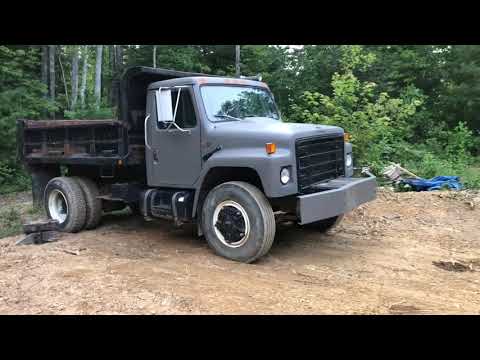
If you are looking to diesel-swap a Jeep, a Land Rover, or a classic Scout, the holy grail is often the Cummins 4BT. This 3.9L four-cylinder turbo-diesel was rarely found in consumer vehicles, but it was the standard powerplant for step vans and delivery trucks manufactured by Grumman-Olson or Freightliner.

- The Industrial Advantage: The 4BT is an industrial engine. When you find one in a delivery van, it often comes with an SAE number 3 or number 2 adapter housing. This critical piece of hardware allows the engine to mate to a variety of industrial and heavy-duty automotive transmissions, including GM TH400s or Ford four-speeds.
- Hydro-Boost Braking: Many of these vans use a Hydro-boost system. This uses hydraulic pressure from the power steering pump rather than engine vacuum to assist the brakes. For a builder working with a diesel engine (which produces no vacuum) or a high-cam gas engine (which produces low vacuum), the Hydro-boost unit from a donor van is a functional upgrade that would cost hundreds of dollars in the aftermarket.
Municipal Strength: The Ford Crown Victoria P71
The Ford Crown Victoria Police Interceptor (P71 or P7B) is the ultimate donor for frame-swap or subframe-swap truck projects.

- The 2003+ Aluminum Cradle: From 2003 to 2011, the Crown Vic featured a bolt-in aluminum front subframe. This cradle contains the rack-and-pinion steering, upper and lower control arms, and the engine mounts for the 4.6L Modular V8.
- The Pursuit Package: Police vehicles were built with supporting parts that civilian cars lacked. These include heavy-duty oil and power steering coolers, as well as an aluminum driveshaft that is lighter and stronger than the steel units found in the Mercury Grand Marquis.
- The Rear End: P71 units often come with 3.27 or 3.55 gear ratios and a Limited Slip Differential (LSD). Civilian versions usually have highway gears like the 2.73 and open differentials. This front end is popular for F-100 truck swaps because it provides modern disc brakes and rack-and-pinion steering in a single, cohesive unit that can be grafted onto an old truck frame in a weekend.
Practical Considerations for the Donor Buyer
When evaluating an unusual donor, do not assume that the same displacement means the same parts. You must look at the intended duty cycle of the vehicle.
- Camshafts and Heads: An engine from a motorhome or a delivery truck is tuned for low-end torque. A 454 from a 1988 Winnebago likely has peanut-port heads designed for intake velocity rather than high-RPM horsepower. It is perfect for a tow rig but poor for a drag car.
- Transmission Yokes: A transmission from a 3500-series work truck may have a bolt-on yoke (fixed) rather than a slip-yoke. This changes your driveshaft requirements significantly and may require additional fabrication.
- Accessory Drives: Industrial donors like ambulances often feature dual-alternator setups or high-idle controllers. While these are great for overlanding builds that require massive electrical power, they require specific wiring knowledge to integrate into a standard car or truck.
The Ecosystem is Key
The goal of the savvy builder is to look past the body of the vehicle. A rotted-out ambulance, a dented delivery van, or a faded luxury sedan is not just junk. It is a collection of parts that were engineered to work together by factory technicians.
When you keep the ecosystem together—the cooling system, the wiring, the sensors, and the transmission—your project has a much higher chance of running like a factory-built machine rather than a collection of mismatched parts. The small components are what quietly drain a project budget; when you buy the whole donor, those parts are essentially free.



No Comments Yet
Be the first to comment on this article.