Curtis.Castiglione@ROzebra.com
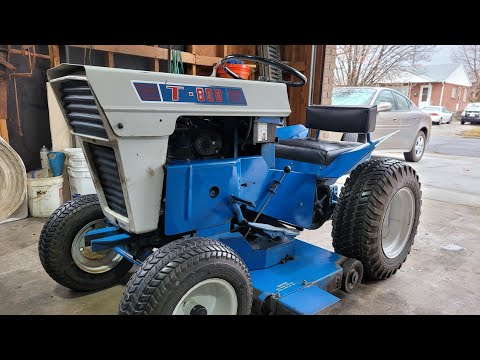
The Ford 172 Industrial Engine Donor Guide
In the world of engine swaps and restorations, most enthusiasts have a mental map of where to find the good stuff. You look for a Fox Body for a 5.0L, an old Cadillac for a 500-cubic-inch big block, or a 1990s truck for a 12-valve Cummins. But there is a parallel universe of internal combustion that most car people drive past every day without realizing it: the industrial yard.
Among the most versatile and misunderstood engines in this forgotten ecosystem is the Ford 172-cubic-inch industrial four-cylinder.
To the uninitiated, the 172 is often dismissed as just a tractor engine. While it did gain fame in the Ford 800-series tractors of the 1950s and 60s, its life extended far beyond the farm. From wood chippers and Hyster forklifts to airport tugs and even miniature amusement-park trains, the 172 (and its larger brother, the 192) was the backbone of mid-century American industry. For the modern restorer or fabricator, these machines represent a gold mine of heavy-duty, often obsolete components.
The Anatomy of an Industrial Workhorse
The Ford 172 is a cam-in-block, overhead-valve inline-four. At first glance, it looks like a standard automotive engine of its era, but industrial Ford engines were built to a different standard. These were power units designed for a 100 percent duty cycle, meaning they were intended to run at a specific RPM under load for hours on end without failure.

Key Technical Differences:
- The 172 vs. 192: These two engines share the same basic block architecture. The 192 is essentially a bored-out version of the 172. In the industrial world, they are often interchangeable, making a dead 192-powered wood chipper a perfect displacement upgrade for a 172-powered tractor.
- Fuel Versatility: One of the most fascinating aspects of this family is its adaptability. Ford produced these blocks to run on gasoline, Diesel, or LPG (Propane). Many components, including the heavy-duty blocks, were designed to handle the higher compression ratios of diesel or the dry-burn characteristics of propane.
- Governors and Accessory Drives: Unlike a car engine, which relies on your foot to regulate speed, industrial 172s almost always feature mechanical governors to maintain a steady RPM. These governors and their associated linkages are highly specific and often missing from rebuilt engines found online.
The Donor Value: Why a Dead Machine is a Gold Mine
If you find a wood chipper with a tree through the side or a forklift with a bent mast, you are not just looking at scrap metal. You are looking at a donor vehicle for an engine family where new old stock (NOS) parts are drying up. In the industrial world, the value is not necessarily in the horsepower—it is in the application-specific hardware.
1. The Distributor Drive This is a common trap for many enthusiasts. You cannot simply grab a distributor from a Ford car or even a different Ford tractor and assume it will work. Industrial 172s often used unique distributor drive systems. Finding a donor with an intact, functional distributor and its specific drive gear can save a restorer hundreds of dollars and weeks of searching through obscure catalogs.

2. Heavy-Duty Castings Industrial blocks were often cast with extra webbing and mounting points that passenger-car engines lack. If you are building a custom power unit, a log splitter, or even a specialized off-road rig, these industrial mounting pads provide rock-solid attachment points that a standard car block does not offer.
3. Flywheels and Starters Industrial 172s often used massive, heavy-inertia flywheels to help maintain momentum under sudden loads (like when a wood chipper hits a log). These flywheels—and the specialized starters required to turn them—are distinct from automotive units. Because these parts are heavy and expensive to ship, finding them on a local donor vehicle is the most cost-effective way to keep another machine running.
4. Specialized Induction Systems Industrial carburetors (often side-draft or up-draft designs) were built for reliability and simplicity rather than peak CFM. They are rugged, easy to rebuild, and specifically jetted for the 172 torque curve. If you are restoring a vintage piece of equipment, these original carburetors are far more valuable than a universal modern replacement that will not bolt up to the factory linkages.
Practical Considerations for the Salvage Hunter
Before you drag home a piece of 1960s industrial equipment, there are a few things to keep in mind:
- Identification is Key: Do not trust a standard automotive parts catalog. Ford industrial engines have their own identification tags, often located on the rocker cover or a plate on the side of the block. You will need these specific Model and Type numbers to find the right gaskets or internals.
- Interchangeability Pitfalls: While the blocks are similar, the crankshafts and cooling systems can vary wildly between a forklift (which needs a compact cooling footprint) and a tractor (which has a large open radiator). Always measure your clearances before assuming a part will swap.
- The Sitting Factor: Like motorhomes sitting in fields, industrial equipment often sits for years. While the 172 is a robust sleeper, check for a frozen rotating assembly. However, even if the block is cracked, the external components—the governor, the manifold, the starter, and the industrial-specific bellhousing—often retain their value as parts for other survivors.
Final Thoughts on the Industrial Ecosystem
The Ford 172 and 192 family represents a time when industrial power was standardized and overbuilt. Whether it is powering a miniature train at a theme park or a Hyster forklift in a warehouse, these engines were designed to be rebuilt, not replaced.
The next time you see an old, rusted piece of yellow iron sitting in the weeds, do not look at the displacement. Look at the ecosystem it represents. In an age where parts for modern engines are increasingly plastic and disposable, the industrial-grade iron of the Ford 172 remains a valuable commodity for those who know where to look.



No Comments Yet
Be the first to comment on this article.