Curtis.Castiglione@ROzebra.com

The 1996-2001 Mercury Mountaineer: The Ultimate 5.0L Donor
By Curtis Castiglione
When an enthusiast decides to build a small-block Ford, the first instinct is usually to hunt for a 1987-1993 Mustang GT. It makes sense on the surface; the Fox-body Mustang is the poster child for the 5.0L Windsor V8. However, the reality of the market has made these cars expensive, and many have been subjected to decades of abuse.
If you are looking for the best factory version of the 5.0L engine to swap into a hot rod, a classic truck, or an early Bronco, you should stop looking at sports cars and start looking at the 1996 to 2001 Mercury Mountaineer and its twin, the Ford Explorer. Beneath the unassuming exterior, Ford engineers stuffed a collection of parts that represent the absolute peak of factory small-block development.

The Crown Jewel: GT40 and GT40P Cylinder Heads
The centerpiece of the Mountaineer donor is the engine. While the Mustang 5.0L used the standard E7TE cylinder heads, the Mountaineer received the high-performance treatment:
- 1996 to Early 1997: Equipped with GT40 heads. These were derived from the hardware used on the legendary 1993 Mustang Cobra and the Ford Lightning pickup. They offer significantly better airflow via larger valves and improved port geometry.
- Mid-1997 to 2001: Received the GT40P heads. These feature a revised combustion chamber and an even more efficient port design.
The Catch: The GT40P heads have a specific spark plug angle. This can cause significant clearance issues with standard headers designed for the Mustang. If you use a P head engine, you must source headers specifically designed for that configuration to avoid melting spark plug boots or interference.
The High-Flow Intake Manifold
The Mountaineer uses a high-flow, long-runner EFI intake that is arguably superior to the standard Mustang HO manifold.
- The Tubular Prize: The 1996 and early 1997 models featured a tubular style upper intake. These are aesthetically striking, resemble the expensive Ford Performance aftermarket units, and are highly sought after by restorers.
- Performance: These manifolds provide excellent low-end torque and mid-range power, making them ideal for heavier trucks or street-driven hot rods.
Solving the Tight Fit Packaging Problem
If you are swapping a V8 into a vehicle with a cramped engine bay—like a 1932 Ford, a Jeep CJ, or an MG—the front accessory drive is your biggest hurdle.
The Mountaineer 5.0L features the shortest factory accessory drive Ford ever produced for the Windsor family. The water pump, timing cover, and brackets are tucked much closer to the block than those on a Mustang or F-150. Buying the whole donor vehicle gives you:
- The compact timing cover and water pump.
- The high-output alternator and power steering pump.
- All factory brackets and the serpentine belt tensioner.
Sourcing these parts individually can cost hundreds; getting them on a donor vehicle is essentially free.
The Heavy-Duty Drivetrain Upgrades
The value of the Mountaineer extends all the way to the rear bumper. Most V8 models were equipped with a version of the Ford 8.8-inch rear axle that is significantly better than the Mustang version.
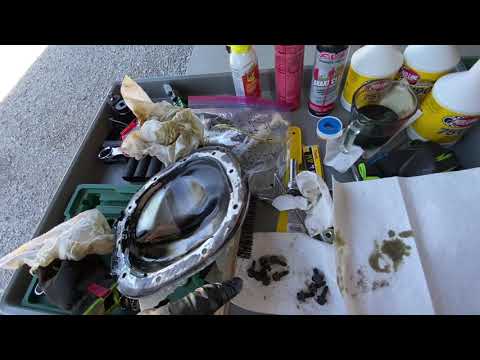
- Strength: It features 31-spline axle shafts, compared to the 28-spline units found in Mustangs.
- Brakes: Almost all 1996-2001 units come factory-equipped with rear disc brakes.
- Traction: Many were equipped with a Traction-Lok limited-slip differential and desirable gear ratios like 3.73 or 4.10.
- The Transmission: These vehicles used the 4R70W four-speed automatic. This is a stout, electronically controlled transmission. However, if you plan to use it, you must harvest the original computer and wiring harness to make it function.
The Marine 5.0L: A Tempting but Complex Alternative
While the Mountaineer is a hidden gem, many builders are tempted by another source: the cheap Marine 5.0L. It is common to find these engines in boat salvage yards and wonder: Could you put automotive electronics on a marine 5.0L?
The answer is sometimes, but it is rarely plug-and-play. This is a full conversion project. If you go the marine route, follow these rules:
- Identify the Exact Engine: Determine the engine generation, cylinder-head configuration, and crank or cam trigger arrangement.
- The Complete Package Rule: Never buy a stripped marine engine. Buy the complete package including the harness, sensors, and original ECM.
- Flexibility: A complete donor boat allows you to use the original marine harness as a reference. You can compare the marine sensors against automotive versions to see what needs to be swapped.
Because of this complexity, a complete junk boat can sometimes be a better donor than a stripped engine advertised as ready to install.
Practical Considerations for the Swap

Ignition System: The 1996-2001 5.0L uses an Electronic Distributorless Ignition System (EDIS). It has a Camshaft Synchronizer where the distributor used to be. If you plan to run a carburetor, you will need to swap the timing cover and install a traditional distributor.
Condition over Clout: While a Cobra engine commands a massive premium, a 1998 Mercury SUV engine is often priced as a commodity. Because these were luxury family haulers, they were rarely raced and often maintained better than sports cars.
Summary of the Mountaineer Donor Benefits
| Component | Why it is Desirable |
|---|---|
| Cylinder Heads | GT40 or GT40P (High flow, large valves) |
| Intake Manifold | High-flow EFI (Tubular design on 96-97) |
| Accessory Drive | Shortest factory Windsor setup (Great for tight bays) |
| Rear Axle | 8.8-inch, 31-spline, Disc Brakes, Traction-Lok |
| Transmission | 4R70W (Heavy-duty 4-speed automatic) |
By looking past the wood-grain trim and the suburban stigma, a builder can acquire a high-performance top end, a compact accessory drive, and a heavy-duty drivetrain in one affordable, overlooked package. The best performance parts are not always in the fastest cars; sometimes, they are in the one parked at the grocery store.



No Comments Yet
Be the first to comment on this article.