Curtis.Castiglione@ROzebra.com

Salvaging GM Engines from Bayliner Boats
By Curtis Castiglione
To the average passerby, an old Bayliner sitting on a rusted trailer in a field is an eyesore. It is a vessel of forgotten weekends, likely suffering from a rotted transom, waterlogged foam, and a sun-cracked interior. However, to the seasoned engine hunter, that deteriorating hull is something else entirely: a specialized, heavy-duty engine stand for a General Motors powerplant.
While V8-powered boats typically get the most attention from displacement junkies, the six-cylinder Bayliners offer a unique opportunity for enthusiasts. These boats are often overlooked, yet they house reliable, high-torque engines that share a massive lineage with some of the most iconic trucks and cars in automotive history.
Two Eras of GM Architecture
The term "six-cylinder Bayliner" actually covers two distinct eras of GM engine design. Depending on the age of the boat, you are likely to find one of two very different, yet equally desirable, powerplants.
1. The Chevrolet Third-Generation Inline-Six
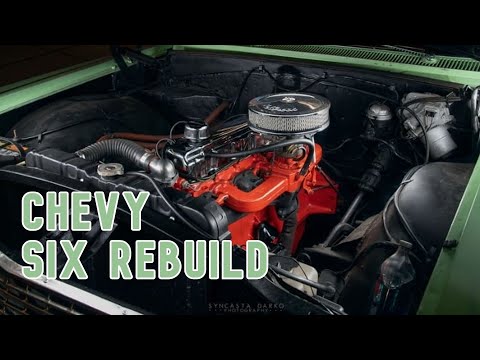
In older Bayliners, primarily from the 1970s and early 1980s, you will often find the venerable GM Inline-Six, usually branded as a MerCruiser 165.
- The 250 Cubic Inch (4.1L): This is the most common find. It is legendary in the Chevy Nova and C10 truck communities for its smoothness and longevity.
- The 292 Cubic Inch (4.8L): While rarer in Bayliners, some heavy-duty marine applications used the 292. This is the "holy grail" of GM six-cylinders for truck restorers and rat-rodders. It features a taller deck height and a beefier rotating assembly designed for industrial-level torque.
2. The GM 4.3L V6 (The "Small Block Minus Two")
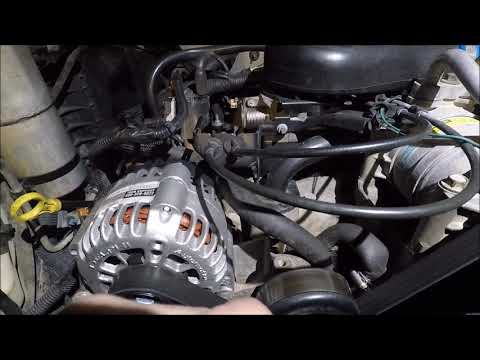
By the mid-1980s, the marine industry shifted toward the GM 4.3L V6. This engine is essentially a Chevrolet 350 (5.7L) small-block V8 with the back two cylinders removed.
- Shared DNA: Because it shares the same 4.00-inch bore and 3.48-inch stroke as its V8 sibling, it also shares a significant number of internal components, including pistons, rods, and valve train parts.
- The Sweet Spot: For builders looking to repower a lightweight Jeep, a Chevy S10, or a custom utility project, the 4.3L provides an excellent power-to-weight ratio. It offers significantly more torque than a four-cylinder while fitting into tight engine bays where a V8 would require extensive firewall modifications.
Why the "Dead Boat" is an Engine Hunter’s Dream
A boat is a harsh environment, but it is also a protective one. Because fiberglass hulls often fail structurally due to rot or the "outdrive" (the external propeller unit) breaks, many boats are retired while the engines still have relatively low hours.
When a seller says, "The engine doesn't run," they are often referring to a peripheral issue rather than a catastrophic internal failure. For an engine hunter, the following are common—and fixable—reasons a boat has been sitting:
- Seized gimbal bearings in the drive unit, not the engine itself.
- Electrical corrosion in the marine-specific wiring harness.
- A gummed-up carburetor from sitting with stabilized or old fuel.
- The owner simply gave up on the high cost of marine-specific shop labor.
Marine vs. Automotive: What You Need to Know
The transition from sea to land is not a simple plug and play affair. To successfully harvest a GM engine from a Bayliner, you must understand the marine-specific modifications.
The Cooling System
Most marine engines use "raw water" cooling, meaning the water the boat sits in is pumped directly through the engine block.
- The Risk: If the boat was used in saltwater without a closed-loop heat exchanger, the internal water jackets may be severely corroded. Always inspect the cooling passages for heavy scale or crust.
- The Benefit: Marine engines are almost always fitted with brass freeze plugs rather than the steel ones found in cars. This is a factory upgrade that prevents the plugs from rusting through from the inside out.
Camshaft Profiles
Boats operate under a constant load, much like a truck climbing a never-ending hill. Consequently, marine cams are ground for maximum low-end and mid-range torque. They also feature specific lobe separations to prevent "water reversion," a phenomenon where water from the wet exhaust is sucked back into the cylinders. For a heavy work truck or an off-road rig, a marine cam might be a benefit. For a high-revving street car, you will likely want to swap in an automotive-spec camshaft.
Safety-Rated Peripherals
Marine starters and alternators are internally screened to be spark-arresting. This prevents fuel vapors in a cramped, enclosed engine box from exploding. While these are high-quality parts, they are often bulkier than automotive units and may not fit standard car brackets. Similarly, marine carburetors are designed to vent internally so that a float bowl overflow won't leak fuel into the bilge.

How to Evaluate a Donor Boat
Before you hook up the trailer and haul away a field find Bayliner, perform these quick checks to ensure the core is worth your time:
- The Breaker Bar Test: Bring a breaker bar and a socket for the harmonic balancer bolt. If the engine turns over freely, you have a viable core.
- The "Milkshake" Check: Pull the oil dipstick. If the oil looks like chocolate milk, the block is likely cracked due to improper winterization (water freezing inside the jackets). If the oil is black or amber, the block is likely sound.
- Check the Castings: Verify the casting numbers on the back of the block to confirm if you are looking at a 250 or a 292 inline-six, or to see if the 4.3L V6 is a balance shaft version, which is common in later models.
The six-cylinder Bayliner is a reminder that automotive treasure is often hidden in plain sight. By looking past the peeling gelcoat and the rotted upholstery, a savvy enthusiast can find a proven GM engine architecture ready to be rebuilt and returned to the pavement. Whether you are building a vintage Chevy pickup or a rugged off-road crawler, the boat motor in that old hull might just be the most affordable, heavy-duty donor you will ever find.



No Comments Yet
Be the first to comment on this article.