Curtis.Castiglione@ROzebra.com

RV Big-Block Engine Donor Guide
When hot-rodders and engine swappers hunt for big-block power, the search usually begins and ends with the classic muscle car. However, as the performance era of the late 1960s faded into the smog-controlled 1970s, the high-displacement V8 did not actually disappear. It simply changed its wardrobe.
While passenger cars were being downsized and outfitted with smaller, emissions-conscious engines, the recreational vehicle (RV) industry was booming. These literal houses on wheels required immense torque to move, creating a second life for some of the most famous engine families in American history. For the modern builder, a neglected motorhome may be the most cost-effective way to source a legendary big-block powerplant.
By Curtis Castiglione
The Philosophy of Displacement: Why Weight Demands Torque
The primary reason RVs became sanctuaries for big-blocks is simple: weight. A typical 25-foot motorhome from the 1970s or 1980s can weigh anywhere from 10,000 to 15,000 pounds. To move that mass, horsepower was less important than torque—the raw rotational force required to get a heavy object moving and keep it climbing grades under sustained load.
Manufacturers like Ford, Chevrolet, Cadillac, and Dodge realized that the same large-displacement architecture used for performance cars was perfectly suited for heavy-duty hauling. While a muscle car engine was tuned for high-RPM sprints, the RV version was built for low-RPM endurance. This makes these engines perfect donors for projects requiring reliability and pulling power, such as classic truck restorations, towing rigs, or off-road mud trucks.

The Secret Superstars: Cadillac 472 and 500
Perhaps the most overlooked donor vehicles are the full-size Cadillacs and the RVs built on Cadillac-derived chassis from 1968 to 1976. Cadillac produced a family of engines that redefined the concept of no replacement for displacement.
- The 472 and 500 V8: The 472 arrived in 1968, followed by the monstrous 500-cubic-inch (8.2-liter) version in 1970. By 1975, the 500 became the standard engine for nearly all full-size Cadillacs.
- Torque is King: A 1970 Cadillac 500 was factory-rated at 400 horsepower and a staggering 550 lb-ft of torque.
- Weight Advantage: Surprisingly, a Cadillac 500 weighs significantly less than a Chevy 454—roughly only 60 to 70 pounds more than a small-block Chevy 350. This impressive power-to-weight ratio makes them viable for swaps into vehicles where a traditional iron-headed big-block might ruin the handling.
Builders must note that many 500-cubic-inch engines from front-wheel-drive Eldorados use a unique rear-sump or mid-sump oil pan to clear the transaxle. If swapping into a rear-wheel-drive car, you will need the oil pan and pickup from a DeVille or Fleetwood. Additionally, these engines use the BOP (Buick-Oldsmobile-Pontiac) bolt pattern, requiring an adapter to mate with standard Chevrolet transmissions.
The Evolution of the Chevrolet 454
The Chevrolet 454-cubic-inch V8 is the most common treasure found in these land yachts. While it debuted in the 1970 Chevelle, its life in the RV world spanned decades:
- The Mark IV: Found in mid-1970s RVs, these are the closest relatives to muscle car engines with interchangeable parts and traditional architecture.
- The Gen V (Mk5): Introduced in the early 1990s, it featured better cooling and a one-piece rear main seal to reduce leaks, though it lost the mechanical fuel pump boss.
- The Gen VI (Vortec 7400/L29): Produced from 1996 to 2000, this engine features sequential fuel injection, a hydraulic roller camshaft, and much better-flowing cylinder heads. It is a literal gold mine for builders seeking a reliable, fuel-injected powerhouse.

Ford and Mopar Options
RVs built on Ford and Dodge chassis offer their own high-displacement rewards:
- Ford 460 (385 Series): Used extensively in Ford-chassis motorhomes well into the 1990s. These are famous for their massive torque and are a favorite for Ford truck enthusiasts.
- Chrysler 440 (RB Block): Before exiting the heavy-duty chassis market in the late 1970s, the 440 was the king of the road in Dodge-based RVs. These Wedge engines are identical in architecture to the ones found in Chargers and Challengers, though often equipped with heavy-duty cooling passages.
Technical Hurdles for the Swapper
The biggest mistake a builder can make is assuming an RV engine will drop into a car without modifications. To survive the extreme heat of a 12,000-pound vehicle, these engines were equipped with specific components:
- Accessory Drives: RV engines often feature massive alternators and AC compressors on brackets that are too tall or wide for a standard car engine bay.
- Oil Pans: Motorhomes use commercial-grade truck frames, meaning the oil pans are often deep-sump designs that will hit the crossmember of a smaller vehicle.
- Valvetrain: Cadillac engines, for example, used T-bar pivot rockers designed for smoothness. These are prone to failure if the engine is pushed past 5,000 RPM, necessitating an upgrade to roller rockers for performance use.
- Compression Ratios: RV engines typically have lower compression (often 8.5:1 or lower in the smog era) to prevent detonation under heavy load. However, the internal architecture remains robust and ready for performance upgrades.
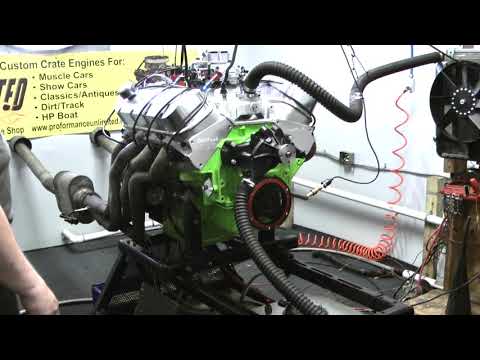
The Donor Vehicle Advantage: More Than Just an Engine
Why buy a whole RV instead of just a block? The value is often in the heavy-duty peripheral components:
- Transmissions: Many Chevy-based RVs used the legendary Turbo-Hydramatic 400 (TH400) or the later 4L80E electronic four-speed. These are among the strongest transmissions ever built.
- Cooling Systems: Large-core radiators and auxiliary oil coolers are common and can often be repurposed for custom builds.
- Electrical Upgrades: Many RVs were equipped with high-output alternators to charge house batteries, which are perfect for modern cars with power-hungry electric fans.
Practical Considerations: Acquisition and Extraction
An old motorhome is often a non-performer in the real estate sense—it is a massive object that owners are often desperate to remove from their property. While a crate 454 might cost $5,000, a water-damaged 1985 Winnebago with a healthy, low-mileage engine can often be purchased for the price of its scrap weight.
However, the cost of extraction is real. You must have the space to store a large vehicle while you strip it and a plan for disposing of the remaining shell, which is mostly wood, fiberglass, and aluminum.
Final Thoughts
The next time you see a 1978 Fleetwood or a 1995 Bounder sitting in a field, do not just see a relic of family vacations past. See it for what it truly is: a protective steel vault holding one of the last great American big-blocks. These engines did not disappear when the muscle car era ended; they just went to work. For the resourceful builder, the campgrounds of America are the new hunting grounds for performance.




No Comments Yet
Be the first to comment on this article.