Curtis.Castiglione@ROzebra.com

Retired Ambulances as Heavy-Duty Donor Vehicles
To the uninitiated, a retired ambulance sitting in a salvage yard or a government auction lot looks like a worn-out box truck. It is often painted an unappealing shade of white or safety yellow, stripped of its sirens, and carrying the scars of a decade of emergency service.
However, to the builder, fabricator, or hot-rodder, that boxy exterior is merely a wrapper for some of the most robust automotive components ever factory-installed in a light-to-medium-duty chassis.
Ambulances are not built like standard consumer vans or trucks. They are mission critical vehicles. When a patient’s life is on the line, mechanical failure is not an option. Consequently, manufacturers outfitted these vehicles with heavy-duty cooling, high-output electrical systems, and the most durable drivetrains available. If you are looking for a donor vehicle for a project that requires strength and reliability, it is time to stop looking at muscle cars and start looking at the emergency lane.

The Foundation: Commercial-Grade Chassis
Most ambulances are built on cutaway or chassis cab versions of popular commercial platforms. These vehicles were designed to carry a heavy medical box, a full crew, and thousands of pounds of life-saving equipment. For a builder, this means access to heavy-duty suspension mounting points, steering boxes with higher ratios, and thicker gauge steel than what is found in a standard half-ton pickup.
The most common donors include:
- Ford E-Series (E-350/E-450) and F-Series (F-350/F-450/F-550): These are the backbone of the American ambulance fleet.
- Chevrolet/GMC G-Series and C-Series: Often utilized for Type I (truck-based) and Type III (van-based) units.
- Freightliner and International: Found in heavy-duty medium duty ambulances, providing industrial-grade components.
The Heart: High-Torque Drivetrains
An ambulance donor is rarely about high-RPM horsepower; it is about unrelenting torque and durability. These vehicles often received the top shelf engine options from the manufacturer.
1. The Diesel Powerhouses
Many ambulances from the 1990s and 2000s were specced with diesel engines for their ability to idle for hours and provide massive low-end grunt. The Ford 7.3L Powerstroke, found in many late 1990s and early 2000s Fords, is a legend for reaching 300,000+ miles. As a donor, it provides a complete turbocharged system and a bulletproof block. Similarly, the GM 6.6L Duramax found in later Chevy/GMC units is highly sought after for engine swaps into older trucks or off-road rigs.

2. The Big-Block Gas Engines
Before the total shift to diesel and modern small-blocks, ambulances were the last refuge of the displacement kings. The Ford 460 (7.5L) 385-Series, found in 1980s and early 1990s units, often featured heavy-duty cooling passages. On the GM side, the 454 (7.4L) and 8.1L Vortec engines were frequently the L18 or L21 variants, designed for commercial use with forged components or improved oiling systems compared to their passenger-car cousins.
Transmissions and Axles Built for Punishment
You won't find a light-duty 4L60E in a retired ambulance. These vehicles almost exclusively used heavy-duty transmissions like the GM 4L80E, the Allison 1000/2000 series, or the Ford 5R110W TorqShift. The 4L80E, in particular, is a favorite for builders because it is essentially a Turbo-Hydramatic 400 with an overdrive fourth gear and electronic controls, capable of handling significant horsepower.
The rear ends are equally impressive. It is common to find Dana 60, Dana 70, or Dana 80 rear axles, or the GM 14-bolt (10.5-inch ring gear). Many of these came factory-equipped with dually configurations and limited-slip differentials—the perfect starting point for a heavy-duty hauler or a rock crawler.

The Electrical Advantage: Powering a Mobile Hospital
The electrical system is where an ambulance donor truly outshines almost any other vehicle. Because of the massive draw from medical equipment, lighting, and climate control, ambulances were equipped with industrial-grade charging systems.
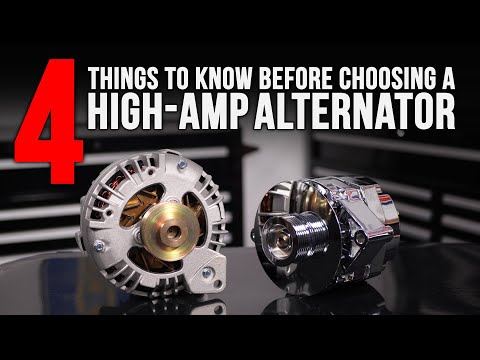
- High-Output Alternators: It is not uncommon to find Leece-Neville or similar industrial alternators rated at 200 to 300 amps. For a restomod with modern electronics, winches, or a high-end audio system, this is a massive upgrade over a standard 60-100 amp unit found in most donor cars.
- Dual or Triple Battery Trays: Most ambulances come with pre-fabricated, heavy-duty battery trays and high-gauge wiring and solenoids for isolated multi-battery setups.
- Professional Wiring: The wiring in the cab and engine bay is often run through high-quality looms and organized in a way that makes identifying circuits much easier than in a consumer vehicle.
Supporting Hardware: The Free Parts
When you buy an ambulance as a donor, you aren't just buying an engine; you are buying a complete system.
Ambulances use the largest radiators available for their chassis, often paired with auxiliary transmission coolers and oil coolers. These are usually stand-alone units that can be easily adapted to a custom build. Furthermore, most ambulance-spec chassis came with the largest rotors and calipers available for that platform, often utilizing hydro-boost braking systems rather than vacuum boost. This is a favorite upgrade for engine-swapped vehicles that may not produce enough vacuum for traditional power brakes.
What to Look For: The Know-Before-You-Buy
While the mechanical value is high, a knowledgeable buyer must look past the odometer.
- Idle Hours vs. Mileage: An ambulance might only have 80,000 miles, but it likely has thousands of hours of idle time. Check the engine hour meter if available. Excessive idling can lead to carbon buildup or wear on the valvetrain.
- Maintenance Records: The silver lining of a fleet vehicle is that they were usually maintained on a strict schedule. Look for vehicles coming out of municipal fleets where open checkbook maintenance was the norm.
- The Ambulance Package Code: For Ford enthusiasts, look for the Y55 or 67A codes on the door sticker, which denotes the official Ambulance Prep Package, confirming the heavy-duty upgrades.
The best donor vehicle isn't always the one that looks the fastest. It is the one that provides the most high-quality parts for every dollar spent. While a performance car donor gives you an engine, an ambulance gives you a heavy-duty drivetrain, an industrial-grade electrical system, a massive cooling package, and a bulletproof rear end. In the world of custom building, the ambulance is the ultimate sleeper donor.



No Comments Yet
Be the first to comment on this article.