Curtis.Castiglione@ROzebra.com

P0456 Repair Cost Guide
By Curtis Castiglione
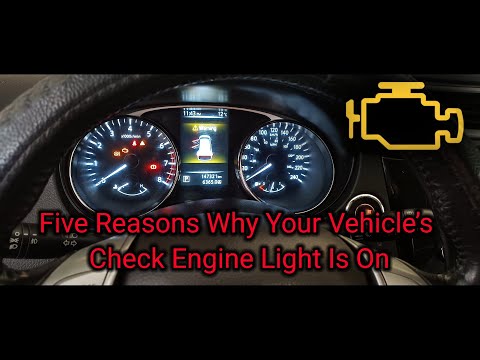
If your check engine light has recently flickered on and a scan tool reveals code P0456, your first question is likely: How much does a P0456 repair cost? Because this code represents a very small leak in the evaporative emissions (EVAP) system, the price to fix it can range significantly—from under $30 for a new gas cap to over $600 for more complex component replacements.
On average, most drivers find themselves paying between $150 and $400 for professional diagnosis and repair.
The reason for this price fluctuation is that P0456 is a diagnostic trouble code (DTC), not a specific part failure. It tells the vehicle’s computer that the fuel system cannot maintain vacuum pressure, but it does not tell the technician exactly where the hole is. To understand what you are paying for, it is essential to break down the difference between the diagnostic process and the actual repair.
What Is a P0456 Repair?
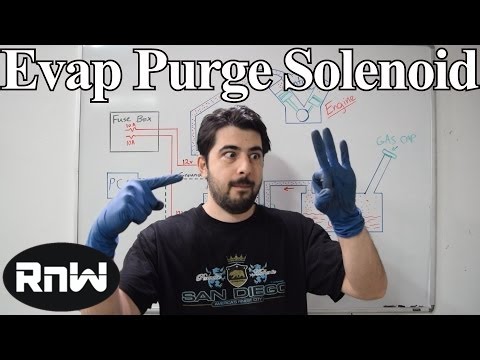
The EVAP system is designed to trap gasoline vapors before they escape into the atmosphere. Gasoline is highly volatile, and without this system, fuel fumes would leak out of the tank and contribute to smog and environmental pollution. The system consists of several components working together, including:
- The Fuel Tank and Gas Cap: These seal the system.
- The Charcoal Canister: This component contains activated charcoal that absorbs and stores fuel vapors until the engine is ready to burn them.
- A Network of Rubber Hoses and Vapor Lines: These carry vapors between the tank, the canister, and the engine.
- The Purge Valve: This valve opens to allow the engine to draw in and burn off stored vapors.
- The Vent Valve: This allows fresh air into the system so the charcoal canister can be cleared of vapors.
When the engine computer runs a self-test and detects a pressure drop through a hole as small as 0.020 inches (about the size of a pinprick), it triggers code P0456. A P0456 repair involves identifying the source of that tiny leak and replacing the compromised component. Common culprits include a dried-out gas cap seal, a cracked rubber hose, or a sticking vent solenoid.
Average P0456 Repair Cost
The total P0456 price is usually a combination of a diagnostic fee, parts, and labor. While a single price is not universally applicable, a realistic total repair range for most passenger vehicles is between $100 and $600.
Parts Cost
Parts costs vary wildly depending on which component has failed. While some parts are universal, many are vehicle-specific:
- Fuel Cap: $15 – $30
- EVAP Purge Valve: $50 – $150
- Vent Solenoid: $60 – $180
- Charcoal Canister: $200 – $450
- Vapor Lines/Hoses: $20 – $100
Because P0456 replacement cost is tied to specific vehicle engineering, a luxury vehicle or a heavy-duty truck will almost always sit at the higher end of these estimates.
Labor Cost
The P0456 labor cost is generally divided into two phases: finding the leak and fixing the leak.
- Diagnostic Fee: Most shops charge a flat diagnostic fee, usually equivalent to one hour of labor. Depending on your local market rates, this can range from $100 to $200. This is often the most critical part of the P0456 process.
- Repair Labor: The actual labor to replace a part is often relatively low because many EVAP components are easily accessible. Expect between 0.5 and 1.5 hours of labor for most repairs. However, if the leak is located on top of the fuel tank and the tank must be lowered to access the lines, labor time and costs will increase significantly.

What Can Make the Repair More Expensive?
Several factors can drive up the total bill beyond the average estimates:
- Location and Rust: If you live in a region where salt is used on the roads (the "Rust Belt"), corroded fuel filler necks are a common cause of this code. Replacing a filler neck is much more labor-intensive and expensive than replacing a simple valve.
- Integrated Components: Some modern vehicles have integrated EVAP components that are part of larger, more expensive assemblies. You may not be able to replace a $20 seal alone; you might have to replace a $300 housing or the entire fuel pump module.
- Diagnostic Complexity: Because the leak is so small, a technician often must use a smoke machine. This machine pumps ultraviolet smoke into the system, allowing the tech to see exactly where the vapor is escaping. While this adds to the initial diagnostic charge, it is usually worth it because it prevents the technician from guessing.
Dealership vs. Independent Repair Shop
Where you take your vehicle significantly impacts how much a P0456 repair costs.
- Dealership: A dealership will generally have the highest price due to higher labor rates and the exclusive use of Original Equipment Manufacturer (OEM) parts. However, they have the most experience with your specific model's common failure patterns and specialized factory tools.
- Independent Repair Shop: An independent shop typically offers a lower labor rate and may use high-quality aftermarket parts, saving you 20% to 30% on the total bill. For a standard EVAP leak, a reputable independent shop is usually the most cost-effective choice.
- DIY Repair: DIY repair is possible if the issue is just a loose or damaged gas cap. However, without a smoke machine, DIYers often end up in an unnecessary parts-swapping exercise—replacing valves and hoses blindly—which can eventually cost more than a professional diagnosis.
Can I Drive With This Problem?
One of the most frequent questions owners ask is: "Can I drive with P0456?"
The short answer is yes. This code does not affect the engine's mechanical performance, and you are not in immediate danger of the car stalling or breaking down. However, is P0456 worth it to fix? Absolutely, for three main reasons:
- Emissions Testing: In many states, you cannot pass an emissions test or renew your registration with a check engine light on.
- Fuel Economy: Because the system is not sealed, your car is constantly venting small amounts of fuel vapor, which can slightly decrease your fuel economy over time.
- Safety: If you smell raw gasoline around your vehicle, you should seek repair immediately. This indicates a more significant leak than a 0.020-inch hole and can be a fire hazard.
How to Avoid Paying for Unnecessary Repairs
The best way to save money is to avoid the "parts cannon." Do not assume that because you have an EVAP code, you need a new purge valve.
Before taking the car to a shop, ensure your gas cap is tightened correctly and that the rubber gasket on the cap isn't cracked or dry-rotted. If the light stays on, pay for a professional smoke test. It is much cheaper to pay for one hour of expert diagnosis than to pay for three different parts that don't fix the problem.
Questions to Ask the Repair Shop
Before approving any work, ask your service advisor the following:
- Did you perform a smoke test to verify the exact location of the leak?
- Is the quoted price for a genuine OEM part or an aftermarket equivalent?
- Does the diagnostic fee get applied toward the cost of the repair if I choose to have the work done here?
- Are there any other visible cracks in the EVAP hoses that might cause a P0442 (medium leak) or P0455 (large leak) in the near future?
Bottom Line
While a P0456 code is rarely an emergency, it is a nagging issue that won't go away on its own. By focusing on an accurate diagnosis rather than immediate parts replacement, you can keep your how much does P0456 cost toward the lower end of the $150 to $400 range.
Disclaimer: Repair prices vary by geographic location, vehicle year, make, model, engine type, parts selection, labor rate, taxes, shop fees, and the actual condition of the vehicle. Always get a written estimate from a local certified technician before authorizing repairs.



No Comments Yet
Be the first to comment on this article.