Curtis.Castiglione@ROzebra.com

P0420 Code and Catalytic Converter Replacement Cost
By Curtis Castiglione
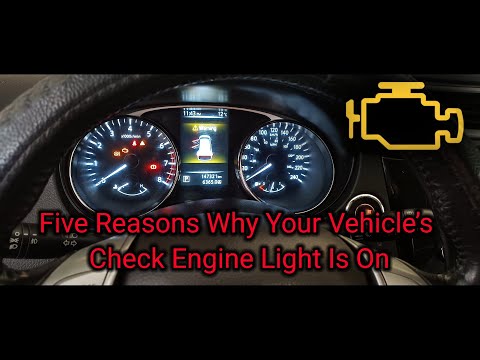
If your check engine light recently flickered on and a scan tool revealed the code P0420, your first question is likely, "How much is this going to cost me?" For most vehicle owners, a catalytic converter replacement cost ranges from $1,000 to $3,500.
However, before you panic at that price tag, it is important to understand what the code actually means. A P0420 code indicates that the catalytic converter's efficiency is below the threshold established by the vehicle manufacturer. It does not automatically mean the converter is dead. The actual repair might be as simple as a $150 oxygen sensor or as complex as a multi-thousand-dollar exhaust overhaul.
The wide range in pricing is due to the precious metals found inside the converter—platinum, palladium, and rhodium—and the specific emissions standards your vehicle must meet. Before you authorize a replacement, you need to understand what you are paying for and whether the converter is actually the root cause of the problem.
What Is Catalytic Converter Replacement?
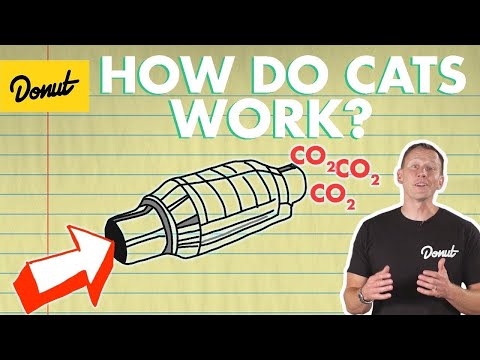
The catalytic converter is a vital component of your vehicle’s exhaust system designed to reduce harmful tailpipe emissions. It looks like a small metal muffler and is located between the engine and the tailpipe. Inside, a ceramic honeycomb structure coated with precious metals reacts chemically with exhaust gases. This process converts harmful carbon monoxide and hydrocarbons into less harmful substances like water vapor and carbon dioxide.
When a technician performs a catalytic converter replacement, they remove the failing unit and install a new one. This typically involves unbolting the unit from the exhaust manifold and the rest of the exhaust pipe. In some cases, if the exhaust system is heavily rusted, the technician may need to cut the old unit out and weld a new one in place. The repair usually involves replacing the gaskets and hardware as well to ensure there are no exhaust leaks.
Average Catalytic Converter Replacement Cost
When calculating how much does a catalytic converter cost, you have to look at both the hardware and the professional expertise required to install it. Because this part contains high-value metals, it is rarely a cheap fix.
Parts Cost
The parts are the most expensive variable in this equation.
- Aftermarket Converters: These can cost anywhere from $200 to $1,200. While more affordable, they often contain fewer precious metals and may not last as long as the original equipment.
- OEM (Original Equipment Manufacturer) Converters: These are the exact parts the vehicle came with from the factory and typically cost between $800 and $2,500.
- High-End or Large Vehicles: For luxury vehicles or heavy-duty trucks with multiple converters, the price for parts alone can exceed $4,000.
Labor Cost
The catalytic converter labor cost generally ranges from $150 to $500. In most standard vehicles, the job takes between one and three hours. However, labor time can spike significantly if the bolts are seized due to rust or if the converter is integrated, meaning it is part of the exhaust manifold attached directly to the engine.
What Can Make the Repair More Expensive?
Several factors can drive the catalytic converter price higher:
- Emissions Standards: If you live in California, New York, or other states that follow CARB (California Air Resources Board) standards, you are legally required to use specific, more expensive converters. These can cost double or triple the price of a Federal-standard converter.
- Number of Converters: Many modern V6 and V8 engines have two, three, or even four catalytic converters. If more than one has failed, the cost multiplies.
- Underlying Engine Issues: A converter rarely fails on its own. If your engine is misfiring or burning oil, those issues must be fixed first. If you don't, the new converter will likely fail within a few months.
- Rust and Corrosion: In many regions, exhaust bolts often snap during removal, requiring extra labor for drilling, tapping, or welding.
Dealership vs. Independent Repair Shop
- Dealership: This will almost always be the most expensive option because they use OEM parts and have higher labor rates. However, for newer vehicles, the dealership may be your only option for a part that integrates perfectly with the vehicle’s computer system.
- Independent Repair Shop: An independent shop can often save you 30% to 50% by using high-quality aftermarket parts.
- Specialty Muffler Shops: These shops are often the most efficient at welding and custom exhaust work, which can sometimes lower the labor cost if a universal converter can be welded in.
- DIY Repair: While possible for bolt-on converters, it is a difficult job for a novice. You will need a way to safely lift the vehicle and tools to deal with rusted, high-heat fasteners.
Can I Drive With This Problem?
Can I drive with a P0420 code? In the short term, yes. Usually, a P0420 code does not cause the vehicle to break down immediately. However, if the converter is physically clogged or restricted, you will notice a significant loss of power, poor fuel economy, and potentially engine overheating.
When you should NOT drive: Do not drive the vehicle if the check engine light is flashing. A flashing light indicates a severe engine misfire. A misfire sends raw fuel into the converter, which can cause it to glow red-hot, potentially melting the internal components instantly or even starting a fire.
How to Avoid Paying for Unnecessary Repairs
The most important step is to distinguish between a diagnosis and a repair. Never tell a shop, "Replace my catalytic converter because I have a P0420 code." This treats the trouble code like a parts catalog, which it is not.
Instead, pay for a professional diagnosis. A technician should check for:
- Exhaust leaks (which can trick oxygen sensors).
- Faulty oxygen sensors.
- Engine misfires or air-fuel mixture problems.
Is a catalytic converter worth it? It is if your car cannot pass an emissions test or if the old one is physically clogged. But it is a waste of money if the real problem is a $50 cracked vacuum hose or a $150 sensor.

Questions to Ask the Repair Shop
Before you approve the work, ask your service advisor these five questions:
- Did you verify that the oxygen sensors are functioning correctly?
- Is the replacement part a CARB-compliant part or a Federal-standard part?
- What is the warranty on the part and the labor?
- Did you find an underlying cause for the failure, such as a misfire or oil consumption?
- Are there any exhaust leaks upstream (closer to the engine) that could be tricking the sensor?
Bottom Line
A P0420 code is a warning, not a final bill. While a catalytic converter replacement cost is one of the more expensive repairs a vehicle owner faces, proper diagnosis is the key to keeping those costs as low as possible. Expect to pay somewhere in the neighborhood of $1,500 for a quality repair on a standard vehicle, but always insist on a full system health check to ensure your new investment lasts.
Note: Repair prices vary significantly by geographic location, vehicle year, make, model, engine type, parts selection, local labor rates, taxes, and shop fees. The figures provided here are estimates based on national averages and should be used for general budgeting purposes only.



No Comments Yet
Be the first to comment on this article.