Curtis.Castiglione@ROzebra.com

Managing Race Car Overheating
For amateur and grassroots racers, cooling is often the primary bottleneck to getting more track time. While a street car is designed to sit in traffic with the air conditioning on, a race car lives at high RPMs and high loads for 20 to 30 minutes at a time. This environment puts massive stress on the cooling system. Understanding how to monitor your car and diagnose heat issues can save you from a catastrophic engine failure and a very expensive tow home.
Monitor the Gauge and Establish a Baseline
The most important tool you have is your temperature gauge. However, many racers make the mistake of looking for a universal "safe" number. Every engine, radiator, and sensor placement is different.
The first step is establishing a baseline. On a day with moderate ambient temperatures, note where your gauge sits during a standard session. If your car typically runs at 210 degrees Fahrenheit and suddenly starts touching 230 degrees, that 20-degree swing is your warning.
- Don’t wait for the red zone: If you see a steady upward trend that does not stabilize after a lap or two, you need to pit.
- Watch the recovery: A healthy cooling system should see temperatures drop slightly on long straights (due to increased airflow) or during a cool-down lap. If the needle stays pinned even when you back off, the system is heat-soaked.

Warning Signs Beyond the Gauge
Sometimes gauges fail, or sensors are placed in "dead spots" that do not capture the whole picture. You should be alert for these physical symptoms:
- The Sweet Smell: This is the scent of hot ethylene glycol (coolant). If you smell it inside the cabin, you likely have a pinhole leak in a hose or a failing radiator cap.
- Loss of Power: Modern ECUs will often pull ignition timing or limit throttle if they detect high cylinder head temperatures. If the car feels "lazy" on the straights, check your gauges immediately.
- Steam: If you see white vapor coming from the hood, pull off the racing line immediately. This usually indicates a burst hose or a boiled-over overflow tank.
- Fluid on the Windshield: If your car (or the car in front of you) is spraying fluid onto the glass, it is a major safety hazard. Get off the track to avoid spinning yourself or others on your own coolant.
Common Causes of Overheating
Before you spend money on expensive aftermarket radiators, check the basics. Many overheating issues are caused by simple mechanical or aerodynamic failures.
- Airflow Obstructions: The radiator needs a constant supply of high-pressure air. Check for leaves, "marbles" (discarded tire rubber), or flattened radiator fins. If you have added a large intercooler or oil cooler in front of the radiator, you may have inadvertently blocked too much airflow.
- Air in the System: If you recently changed your coolant, you might have an air pocket trapped in the cylinder head. This prevents coolant from circulating. Ensure you "burp" the system according to your vehicle's specific procedure.
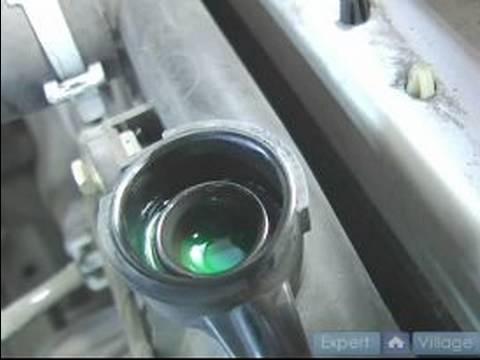
- Failing Radiator Cap: A radiator cap is designed to hold a specific pressure, which raises the boiling point of the coolant. If the spring is weak, the coolant will boil at a lower temperature and vent into the overflow tank prematurely.
- Thermostat Issues: A thermostat that is stuck partially closed will restrict flow. While some racers remove the thermostat entirely, this can sometimes cause the coolant to move too fast through the radiator to effectively shed heat. A restrictor plate is often a better grassroots solution.

The Tradeoff: Bigger Radiators vs. Better Ducting
A common mistake is assuming a larger radiator is the only fix. While a high-capacity aluminum radiator provides more surface area, it is only effective if air actually passes through it.
Ducting is often more important than radiator size. If there are large gaps between your bumper intake and the radiator face, air will take the path of least resistance and flow around the radiator rather than through it.
The Pro Tip: Use simple materials like aluminum flashing, coroplast, or even heavy-duty "racer's tape" to seal the gaps between the grill and the radiator. This forces all incoming air through the cooling fins and can drop temperatures by 10 to 15 degrees without the weight or cost of a larger radiator.
Track Demands and Driving Adjustments
The layout of the track and your driving style heavily impact heat. Long, uphill sections under full throttle generate the most heat. If you find your car is running hot mid-session, you can manage it with these techniques:
- Short Shifting: Shifting 500 to 1,000 RPM earlier reduces friction heat and slows the water pump down to a range where it may be more efficient.
- The Heater Trick: Turning your cabin heater to full blast acting as a secondary, smaller radiator. It is uncomfortable for the driver, but it can provide just enough cooling to finish a session safely.
- Use Cooldown Laps: If you see temperatures climbing, back off for a lap. Stay in a high gear to keep RPMs low, but keep your road speed high enough to maintain airflow through the radiator.
Paddock and Maintenance Checklist
Between sessions, make a habit of checking your cooling system once the car has had time to rest:
- [ ] Check the overflow tank level: Never open a hot radiator cap. Check the plastic reservoir instead.
- [ ] Inspect hose clamps: Heat cycles can loosen clamps over time.
- [ ] Look for "trails": Dried coolant usually appears as white, crusty residue. Follow these trails to find slow leaks.
- [ ] Test the fans: Ensure your electric fans are actually engaging at the correct temperature.
- [ ] Clean the fins: Use low-pressure compressed air or a hose to blow out any rubber or dirt trapped in the radiator.
By treating the cooling system as a critical performance component, you can focus on improving your lap times instead of worrying about your engine's survival. Always prioritize reliability; a car that runs at 100 percent for the whole day is always faster than a "fast" car that is stuck in the paddock with a blown head gasket.



No Comments Yet
Be the first to comment on this article.