Curtis.Castiglione@ROzebra.com

Industrial Chrysler Slant Six Donor Guide
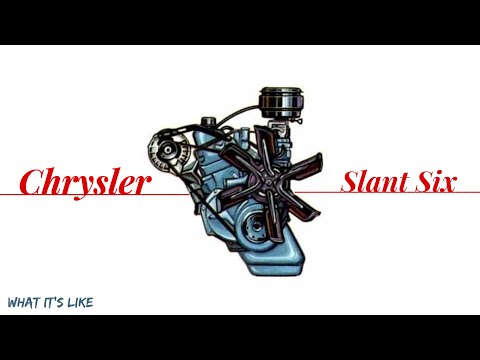
For decades, the Chrysler Slant Six earned a reputation as the "unkillable" engine. Found in the engine bays of the Dodge Dart, Plymouth Valiant, and early Barracudas, the 170, 198, and 225 cubic-inch "Leaning Tower of Power" became a symbol of American reliability. However, as the muscle car era fades further into the rearview mirror, finding a clean, rebuildable automotive Slant Six core is becoming increasingly difficult and expensive.
But there is a secret hiding in plain sight: the industrial world. Long after the Slant Six was phased out of passenger cars in 1983 and trucks in 1987, it continued to labor away in warehouses, on farms, and at construction sites. If you are looking for a bulletproof foundation for your next project, the local forklift graveyard might be a better place to look than the classifieds.
The Industrial Pedigree: The 225 Beyond the Pavement
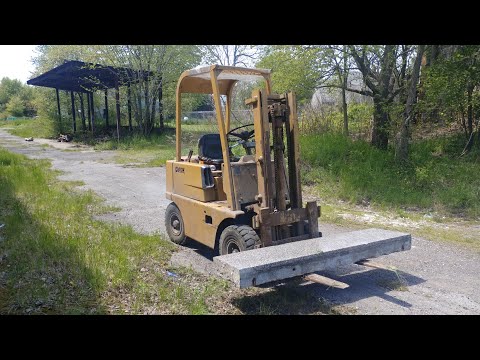
Chrysler’s industrial division was a powerhouse, supplying engines for everything from irrigation pumps and generators to marine applications and material handling. One of the most prolific users of the 225 Slant Six was Yale, whose forklifts utilized the 225 industrial block as a primary power plant well into the 1980s.
While the basic architecture—the 30-degree tilt, the deep-skirt block, and the rugged internal layout—remains the same as the passenger car version, these industrial engines were built for a different kind of duty cycle. While a car engine experiences fluctuating RPMs and coasting, a forklift engine lives a life of constant load, frequent idling, and high-torque demands.
Why the Industrial Core is a Hidden Gem
The primary appeal of an industrial donor is the integrity of the core.
- Low Mileage, High Hours: Industrial engines aren't measured in miles. While they may have many "hours" on them, they haven't endured the salt-covered roads, high-speed vibrations, or chassis-flexing stress of a passenger car.
- Maintenance Schedules: Equipment like Yale forklifts often belonged to corporate fleets with strict preventative maintenance schedules. This means regular oil changes and cooling system flushes were more common than with a high-schooler's old Dodge Dart.
- Heavy-Duty Specs: Like the "Dash 3" 440 V8s found in 1970s Winnebago motorhomes, many industrial Slant Sixes were equipped with premium internal components. This includes forged steel crankshafts (particularly in pre-1976 models) and heavy-duty valve seats designed to survive the heat of continuous operation.
The Technical Differences: What You Need to Know
Before you drag a Yale forklift into your garage, you must understand that "industrial" does not mean "identical." To make an industrial 225 work in a 1968 Valiant or a 1972 Dart, you will need to perform some surgical swaps.
1. The Fuel System (The Propane Factor)
Many forklifts were configured to run on liquid propane (LPG). While propane is a clean-burning fuel that often leaves the internal engine components looking brand new, the fuel system is entirely application-specific. To "car-ify" the engine, you will need to source an automotive intake manifold, carburetor, and fuel pump. The industrial block will usually have the mounting boss for a mechanical fuel pump, but it may be blocked off with a plate.
2. The Crankshaft and Flywheel
This is often the biggest hurdle for the home builder. Many industrial engines used a unique crankshaft flange or a different pilot bearing diameter to accommodate hydraulic pumps or heavy-duty industrial transmissions. You must verify if the crank is drilled for a pilot bushing (if you are running a manual) and check the bolt pattern for the flywheel or torque converter. In some cases, the industrial crank "snout" or "tail" may differ in length from the automotive version.
3. The Cooling System and Water Pump
Just like the heavy-duty 440s in motorhomes, the industrial Slant Six may feature a different water pump housing or a larger-diameter water pump meant for a heavy-duty radiator. To fit into a passenger car's tight engine bay, you will likely need to swap to the automotive-style timing cover, water pump, and pulley system to ensure the fan clears the radiator.
4. Oil Pans and Pickups
A forklift has a very different frame than a Chrysler A-body or B-body. The oil pan on an industrial engine is often a rear-sump or a massive "square-sump" design that will never clear a car's K-member. You must keep your original automotive oil pan and pickup tube to ensure the engine sits correctly over the steering linkage.
5. The Bellhousing
Industrial applications often use SAE (Society of Automotive Engineers) standard bellhousing patterns to mate with specialized transmissions. These are entirely different from the Chrysler 904 or 727 Torqueflite patterns. To put this engine in a car, you will be stripping it down to the "long block" and reusing your automotive-specific bellhousing or transmission case.

Scouting Tips for the Enthusiast
When hunting for an industrial donor, don't just look for "an old forklift." Look for the Chrysler Industrial tag, usually riveted to the side of the block or the valve cover.
- Year Matters: Try to find units from the early-to-mid 1970s if you are looking for the coveted forged steel crankshaft. Chrysler transitioned to cast iron cranks in most automotive applications by the mid-70s, but industrial units often retained the forged steel parts longer.
- Check the Bore: Because these engines were often rebuilt multiple times by fleet mechanics, bring a bore scope if possible. You want to ensure the block hasn't already been bored to its maximum limit (.060 over).
- Compression: Industrial engines often had lower compression ratios for longevity. If you are building a performance engine, plan on milling the head or installing higher-compression pistons to wake the engine up.
The Chrysler Slant Six was too good for the scrap heap, which is why it spent an extra thirty years working in the shadows of the industrial world. While a forklift might seem like an unlikely donor for a classic Mopar restoration, the structural strength of these industrial cores is undeniable. By looking past the propane tanks and the yellow paint, a savvy builder can find a high-quality, heavy-duty foundation that will keep their vintage Mopar leaning into the curves for another fifty years.



No Comments Yet
Be the first to comment on this article.