Curtis.Castiglione@ROzebra.com

How Much Does an Engine Oil Change Cost?
By Curtis Castiglione
If you are a vehicle owner, an oil change is the most frequent maintenance task you will encounter. Because it is a recurring necessity, understanding the engine oil change cost is essential for managing your households automotive budget. For most drivers, a conventional oil change will range from $40 to $100. However, if your vehicle requires full synthetic oil—which is increasingly common in modern cars—the oil change price typically jumps to between $60 and $150. In some cases involving high-capacity engines or specialized European lubricants, the cost can exceed $200.
It is important to remember that repair prices vary significantly based on your geographic location, your vehicles year, make, and model, the engine type, and the specific parts selected. Local labor rates, taxes, and shop supply fees—which cover items like hazardous waste disposal—will also influence your final invoice.
What Is an Engine Oil Change?
An engine oil change is a foundational maintenance service designed to keep your engines internal components lubricated, cool, and clean. Over time, engine oil breaks down due to extreme heat and pressure. It also picks up microscopic debris, carbon, and metallic shavings that naturally occur during engine operation.
If the oil is not replaced, it loses its viscosity (thickness) and its ability to protect moving parts. This leads to 'sludge' buildup, which can eventually cause catastrophic engine failure.
The service involves three primary physical components:
- Engine Oil: The lubricant that flows through the engine to reduce friction.
- Oil Filter: A component that traps contaminants before they can circulate through the engine.
- Drain Plug Gasket: Often called a 'crush washer', this ensures a leak-free seal where the oil is drained from the pan.
Most professional shops also include a basic multi-point inspection, checking fluid levels (coolant, brake fluid, washer fluid), tire pressure, and the condition of your belts and hoses.
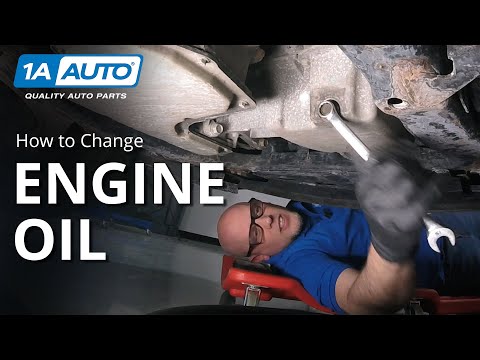
Average Engine Oil Change Cost
When researching how much does an engine oil change cost, it is helpful to look at the breakdown of parts and labor separately. While many shops offer a flat 'package' price, the components of that price are driven by the quality and quantity of the materials used.
Parts Cost
The cost of parts is largely determined by your engines oil capacity and the required oil specification.
- Conventional Oil: Refined crude oil. The least expensive option, usually $4 to $7 per quart.
- Synthetic Blend Oil: A mixture of conventional and synthetic, typically costing $6 to $9 per quart.
- Full Synthetic Oil: Chemically engineered for better performance and longer life. It usually costs $9 to $15 per quart.
- Oil Filter: A standard spin-on filter generally costs $5 to $15. Specialized cartridge filters used in many modern or European vehicles can cost $20 to $40.
Labor Cost
The oil change labor cost is often bundled into a package price rather than a strict hourly rate. An oil change typically takes a technician 20 to 45 minutes of active work time. In a stand-alone labor format, this equates to roughly $20 to $50 in labor charges. At a dealership or a high-end specialty shop, the labor portion may be higher because the technician is often more highly trained to spot brand-specific issues during the routine inspection.
What Can Make the Repair More Expensive?
Several factors can cause your oil change replacement cost to rise unexpectedly:
- Oil Capacity: A small four-cylinder engine might only hold 4 quarts of oil, whereas a heavy-duty diesel truck might require 12 to 15 quarts. Most shop specials only cover the first 5 quarts.
- Manufacturer Specifications: If your manual requires a specific oil (like 'Dexos' for GM or 'VW 502.00' for Volkswagen), the shop must use that specific—and often more expensive—product to maintain your warranty.
- Accessibility: Some vehicles have complex aerodynamic under-trays or 'skid plates' that must be removed to access the filter and drain plug. If a technician has to spend extra time removing these shields, the shop may add a small labor surcharge.
- European and Performance Models: These vehicles often have high oil capacities and require premium synthetic oils, pushing the total engine oil change cost higher.
Dealership vs. Independent Repair Shop
Where you take your vehicle significantly impacts the final engine oil change cost.
- Independent Repair Shops: These offer a balance of competitive pricing and a personalized relationship with the mechanic. They are generally less expensive than dealerships.
- Dealerships: They may charge more, but they use Original Equipment Manufacturer (OEM) parts and have technicians who specialize in your specific brand.
- Quick Lube Centers: These are focused on speed and low costs. While convenient, verify they are using the correct oil grade for your car, as they often use bulk oil to keep prices down.
- DIY Repair: If you perform the work yourself, you only pay for parts. However, you are responsible for the physical labor and the proper disposal of used oil at a recycling center.
Can You Drive With This Problem?
If your vehicle is simply 'due' for an oil change based on mileage or time, you can generally drive it while you schedule an appointment. Modern oils are robust, and missing your interval by a few hundred miles is unlikely to cause immediate damage.
However, can I drive with an oil pressure warning light? No. If your oil pressure light (the red oil can icon) illuminates, you must stop driving immediately and turn off the engine. This light indicates that the engine is not receiving enough lubrication. Driving even a short distance with no oil pressure can destroy an engine in minutes. Similarly, if your dipstick shows no oil, do not drive the vehicle until you have added enough to reach the safe mark.

How to Avoid Paying for Unnecessary Repairs
The best way to save money is to follow your owners manual rather than the 3,000-mile sticker often placed on windshields by repair shops. Many modern vehicles can safely go 7,500 or even 10,000 miles between changes.
Is an oil change worth it? Absolutely—it is the cheapest insurance you can buy for your car. However, be wary of the 'upsell'. During an oil change, shops often recommend new air filters, cabin filters, or engine flushes. While these are sometimes necessary, ask to see the dirty filter before authorizing a replacement.
It is also important to distinguish between a routine service and a diagnostic service. If you are getting an oil change because you see oil spots on your driveway, the oil change itself will not fix the leak. You will likely need to pay a diagnostic fee for the technician to find the source of the leak, which is a separate charge from the oil change price.
Questions to Ask the Repair Shop
Before you authorize the work, ask these three questions:
- Does the quoted price include the specific oil viscosity and specification required by my vehicles manufacturer?
- How many quarts of oil are included in the base price, and what is the cost per quart if my car needs more?
- Does this service include a new drain plug gasket or crush washer? Reusing an old gasket is a common cause of slow leaks after a service.
Bottom Line
An oil change is a small investment that prevents a multi-thousand-dollar engine replacement. While you might be tempted by the lowest price, a cheap oil change isnt necessarily a bargain if it uses the wrong oil or an inferior filter. By understanding your vehicles specific needs and following the manufacturers maintenance schedule, you can ensure you are paying a fair oil change price for a service that keeps your car running reliably for years to come.



No Comments Yet
Be the first to comment on this article.