Curtis.Castiglione@ROzebra.com
How Much Does an Alternator Replacement Cost?
By Curtis Castiglione
If your car is struggling to start, your headlights are dimming, or you see a battery warning light on your dashboard, you are likely facing an alternator replacement. As an automotive service writer, one of the most common questions I hear from concerned owners is: "How much is this going to cost me, and what am I actually paying for?"
On average, an alternator replacement cost typically ranges from $400 to $1,100 for most passenger vehicles. This price includes both the parts and the professional labor required to install them. However, it is vital to understand that repair prices vary significantly based on your geographic location, vehicle year, make, model, engine type, parts selection, local labor rates, taxes, and shop fees. For some luxury or high-performance vehicles, the total alternator replacement price can easily exceed $1,500 if the unit is difficult to access or requires a specialized high-output model.
What Is an Alternator?
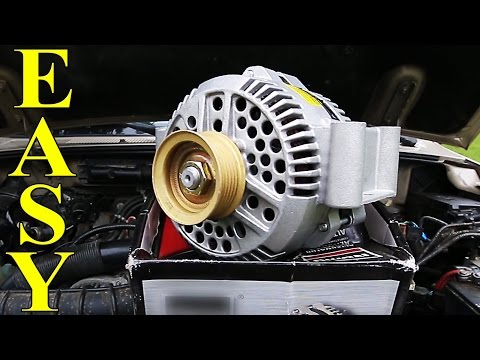
The alternator is a vital component of your vehicle's charging system. While many people think the battery powers the car, the battery is actually only responsible for providing the initial burst of energy to start the engine. Once the engine is running, the alternator acts as a small generator, driven by the engine's serpentine belt.

The alternator produces the electricity needed to run your lights, radio, and power windows, while simultaneously recharging the battery for the next start. When the alternator fails, the vehicle relies solely on the stored energy in the battery. Since a battery has a limited capacity, the vehicle will eventually stall and refuse to restart once that energy is depleted.
Average Alternator Replacement Cost
To help you budget, here is a breakdown of the typical costs associated with this repair.
Parts Cost
The cost of the alternator itself usually makes up a significant portion of the bill, generally ranging from $150 to $600. The price depends largely on the type of part you choose:
- OEM (Original Equipment Manufacturer): These parts are made by your vehicle's manufacturer. They offer the best fit and longevity but are the most expensive.
- Aftermarket: Made by third-party companies, these are often more budget-friendly and widely available.
- Remanufactured: These are used units that have been rebuilt with new internal components. They are common and often come with a solid warranty, though quality can vary by brand.
Labor Cost
The alternator labor cost generally runs between $150 and $500. Most shops charge a flat hourly rate, and an alternator replacement typically takes between one and four hours.
- Easy Access: On a basic four-cylinder engine where the alternator is sitting right at the top, a technician might finish the job in about an hour.
- Difficult Access: On some V6 or V8 engines, the alternator might be buried underneath other components like the air conditioning compressor or steering rack, requiring significantly more time and disassembly.
What Can Make the Repair More Expensive?
Several factors can drive the how much does alternator cost question toward the higher end of the spectrum:
- Engine Layout: If the alternator is tucked away in a hard-to-reach spot, labor time increases. Some vehicles require removing the front bumper or radiator to gain access.
- High-Output Requirements: Modern vehicles with heated seats, advanced infotainment systems, and complex electronics require high-output alternators that cost more than standard units.
- Water-Cooled Alternators: Some high-end European vehicles use water-cooled alternators integrated into the engine's cooling system. These parts are exceptionally expensive, and the labor is intensive because the cooling system must be drained and refilled.
- Related Damage: If a failing alternator has caused the battery to discharge completely and sit "flat" for a long period, you may also need to pay for a battery replacement.
Dealership vs. Independent Repair Shop
Where you take your vehicle will have a major impact on the final alternator replacement cost.
- Dealerships: Generally the most expensive option. They use OEM parts and have the highest labor rates. However, they have specialized diagnostic tools and technicians specifically trained for your make of vehicle.
- Independent Repair Shops: These shops usually offer lower labor rates and give you the choice between OEM and aftermarket parts. This is often the most cost-effective choice for vehicles that are out of warranty.
- Specialty Shops: Electrical specialty shops can sometimes offer competitive pricing on remanufactured units.
- DIY Repair: This is the cheapest option if you have the tools and mechanical knowledge. However, keep in mind that many modern alternators are computer-controlled. A mistake during a DIY install can damage the vehicle's expensive Engine Control Module (ECM).
Can You Drive With This Problem?
If you suspect your alternator is failing, you should not continue to drive the vehicle. Can I drive with a bad alternator? Technically, yes—until the battery dies. Once the alternator stops charging, you are driving on borrowed time.
As the battery drains, safety systems like power steering, anti-lock brakes, and even your headlights may stop functioning. Eventually, the engine will die completely, potentially leaving you stranded in a dangerous location or in the middle of traffic. If the battery light is on, your goal should be to get the vehicle to a repair shop immediately.
How to Avoid Paying for Unnecessary Repairs
The most important step in avoiding unnecessary costs is ensuring a proper diagnosis. A battery warning light does not always mean the alternator is bad. The problem could be a blown fuse, a broken serpentine belt, a loose wiring connection, or simply a failing battery.

As a service writer, I always recommend a charging system test before replacing any parts. A professional technician will use a multimeter or a computerized tester to check the alternator output under load. It is common for a bad battery to be blamed on the alternator, or vice-versa. Paying for a 30-to-60-minute diagnostic fee is much cheaper than paying for an alternator you didn't actually need.
Note: Do not assume that an OBD-II trouble code (like P0562 for low system voltage) automatically identifies the alternator as the culprit. The code only tells the technician that the voltage is low; it doesn't tell them why.
Questions to Ask the Repair Shop
Before you authorize the work, ask the service advisor these questions to ensure you are getting a fair alternator replacement price:
- Did you perform a full charging system test, and what was the measured voltage output of the old unit?
- Is the battery still holding a charge, or does it need to be replaced as well?
- What is the warranty on the replacement alternator (does it cover both parts and labor)?
- Are you installing a new OEM part, a new aftermarket part, or a remanufactured unit?
- Does the estimate include the cost of a new serpentine belt? (If the belt has to be removed anyway, it is often wise to replace it if it shows signs of wear or cracking).
Bottom Line
While an alternator replacement cost can be a significant hit to your wallet, it is a critical repair that cannot be ignored. Expect to pay somewhere in the range of $400 to $1,100 for most vehicles. By insisting on a proper diagnosis and understanding the difference between part types, you can ensure your vehicle stays reliable without overpaying for parts you don't need.
Is alternator replacement worth it? Absolutely—it is the only way to keep your vehicle running and ensure your electrical systems remain safe and functional. Ignoring the problem will only lead to a breakdown and potentially higher towing fees later.



No Comments Yet
Be the first to comment on this article.