Curtis.Castiglione@ROzebra.com

How Much Does a Wheel Alignment Cost?
By Curtis Castiglione
If you have noticed your vehicle drifting to one side or your steering wheel sitting at an awkward angle while driving straight, you are likely facing a wheel alignment issue. For most vehicle owners, the primary concern is how much a wheel alignment cost will set them back.
On average, you can expect to pay between $100 and $250 for a professional alignment. However, this price is not set in stone. The final wheel alignment price depends heavily on your geographic location, the year, make, and model of your vehicle, and whether your car requires a two-wheel or four-wheel adjustment.
What Is Wheel Alignment?
A wheel alignment is not an adjustment of the tires or the wheels themselves. Instead, it is a sophisticated adjustment of the vehicle’s suspension system—the complex network of components that connects the vehicle to its wheels. The goal is to ensure the tires make contact with the road at the precise angle required by the manufacturer.
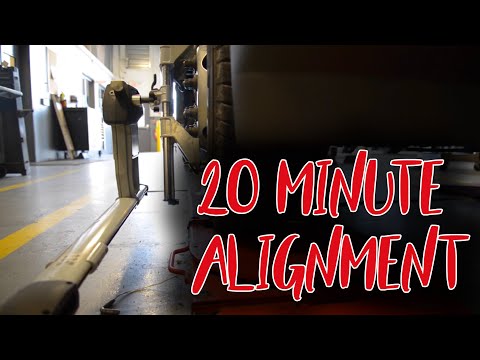
During the service, a technician uses a specialized alignment machine with optical sensors to measure and adjust three primary angles:
- Toe: This refers to whether the fronts of the tires are tilted inward or outward when viewed from above (similar to looking down at your own feet and pointing your toes inward).
- Camber: This is the inward or outward tilt of the tire when viewed from the front of the vehicle.
- Caster: This is the angle of the steering axis when viewed from the side. Proper caster ensures your steering wheel returns to the center after a turn and helps with high-speed stability.
When these angles are off by even a fraction of a degree, it can cause rapid tire wear and poor handling.

Average Wheel Alignment Cost
When researching how much does a wheel alignment cost, it is important to distinguish between the two main types of service:
- Front-End Alignment: This covers only the two wheels on the front axle. It is typically performed on older vehicles or trucks with a solid rear axle. This usually falls on the lower end of the spectrum, often between $80 and $120.
- Four-Wheel Alignment: Most modern vehicles, especially those with independent rear suspensions or all-wheel drive, require all four wheels to be adjusted. This comprehensive service generally ranges from $125 to $250.
Parts Cost
Unlike a brake job or an alternator replacement, a standard wheel alignment replacement cost for parts is typically $0. You are primarily paying for the use of a precision computer-controlled alignment rack and the technician’s expertise.
In some specific cases, however, a vehicle may not have built-in adjustment points for certain angles, like camber. If your vehicle is out of specification and there is no factory way to move it back, the shop may need to install an "alignment kit." This might include eccentric bolts, adjustable control arms, or shim kits. These parts can add $50 to $150 to the total bill, but they are generally only required if the vehicle has been modified or has suffered minor structural fatigue.
Labor Cost
The wheel alignment labor cost makes up nearly 100% of the bill. A standard alignment usually takes between 60 and 90 minutes.
If the technician encounters rusted or seized adjustment sleeves—common in older vehicles or those driven in "salt belt" states—the labor time can increase significantly. Technicians may need to use heat or penetrants to free up the components. If the parts are too seized to move or are physically damaged, they may require replacement before the alignment can be successfully completed.
What Can Make the Repair More Expensive?
Several factors can drive the wheel alignment price higher than a standard quote:
- Advanced Driver Assistance Systems (ADAS): Many modern vehicles have cameras and radar sensors for lane-departure warnings, lane-keep assist, and adaptive cruise control. When the steering angle is changed during an alignment, these systems often require a digital recalibration to ensure the car knows exactly where "straight" is. This can add $150 to $300 to the service cost.
- Suspension Condition: An alignment cannot be performed correctly if there are worn-out ball joints, tie rod ends, or bushings. If a technician finds "play" or looseness in these parts, they will recommend replacing them first.
- Specialty Vehicles: Luxury European imports or heavy-duty trucks often require more time and specialized tools, which can increase the base labor rate.
Dealership vs. Independent Repair Shop
Where you take your vehicle significantly impacts the cost.
- Independent Repair Shops and Specialty Shops: These are often the most competitive. Many high-volume tire shops offer "lifetime" alignment packages. For a one-time fee (usually around $200), you can get your alignment checked and adjusted every 6,000 miles for as long as you own the car.
- Dealerships: These are typically the most expensive, often charging $150 to $250. However, they have the specific OEM software required to reset steering angle sensors and calibrate ADAS systems on newer models, which some independent shops may lack.
Can You Drive With This Problem?
If you are asking, "can I drive with an alignment problem?" the answer is yes—but it will cost you in the long run. You can generally drive a vehicle that is out of alignment, but it is not advisable for long.
If you are wondering "is wheel alignment worth it," consider the cost of tires. A vehicle with a severe "toe-out" condition can scrub the tread off a brand-new set of tires in less than 1,000 miles. Replacing a $1,000 set of tires is far more expensive than a $150 alignment.
Furthermore, if the vehicle pulls so hard to one side that you have to fight the steering wheel to stay in your lane, it becomes a safety issue. This can lead to driver fatigue and reduced control during emergency maneuvers.

How to Avoid Paying for Unnecessary Repairs
The best way to avoid unnecessary costs is to understand the difference between a diagnosis and a repair. An alignment is an adjustment, but it is often requested to fix a "pull." However, a pull can also be caused by:
- Uneven tire pressure
- Internal tire damage (radial pull)
- A sticking brake caliper
- Worn suspension bushings
A reputable shop should perform a "pre-alignment inspection." During this phase, they check tire pressures and inspect suspension components for wear. If they find a failed suspension part, do not authorize the alignment until that part is replaced. Aligning a car with worn parts is a waste of money because the vehicle will fall back out of specification as soon as you hit a pothole or even a small bump.
Questions to Ask the Repair Shop
Before approving the work, ask your service writer the following questions:
- Does the price include a four-wheel alignment or just the front end?
- Do you provide a before-and-after computer printout of the alignment angles?
- Will you check my suspension and tire condition before starting the work?
- Does my vehicle require an ADAS recalibration or a steering angle sensor reset, and is that included in the quote?
- Do you offer any warranty on the labor if the car still pulls after the service?
Bottom Line
While a wheel alignment cost of $100 to $250 might feel like an annoying maintenance expense, it is a critical investment in your vehicle’s longevity. By ensuring your tires track straight, you are protecting your tires from premature wear and ensuring your car handles safely.
Always ask for that digital printout to verify that the work was done to the manufacturer’s specific standards. It is the only way to prove the angles were actually corrected.
Note: Repair prices vary by geographic location, vehicle year, make, and model, labor rate, taxes, and shop fees. Always request a detailed estimate for your specific vehicle.



No Comments Yet
Be the first to comment on this article.