Curtis.Castiglione@ROzebra.com
How Much Does a Parking Brake Repair Cost?
By Curtis Castiglione
If you have pulled your parking brake handle and felt it go limp, or if you pressed your electronic parking brake button only to be met with a flashing warning light and a frantic chiming, your first thought is likely: How much is this going to cost me?
On average, a parking brake repair cost ranges from as little as $150 to more than $1,000. The wide range in price is primarily determined by whether your vehicle uses a traditional mechanical system or a modern electronic one. While a simple adjustment might be on the lower end of the spectrum, replacing specialized electronic components can quickly drive the total into the four-figure range.
What Is a Parking Brake Repair?
A parking brake repair involves identifying and replacing the components that hold your vehicle stationary when parked. Unlike your primary hydraulic brakes, which use fluid pressure to stop the car while driving, the parking brake is a secondary system designed to lock the wheels using either mechanical tension or electric motors.
The components involved depend heavily on the age and design of your vehicle:
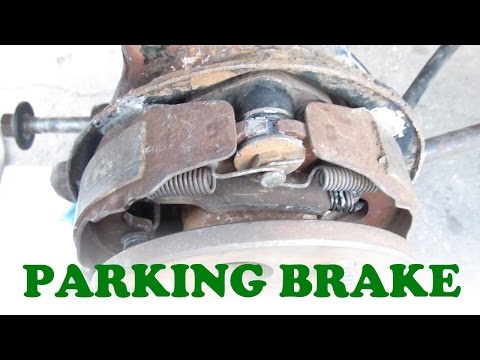
- Mechanical Systems: These utilize a hand lever or foot pedal connected to steel cables. These cables pull on an equalizer, which then engages either dedicated parking brake shoes (located inside the rear brake rotors, often called a drum-in-hat system) or a mechanical lever built into the rear brake calipers.
- Electronic Parking Brakes (EPB): Found on most modern vehicles, these replace the cables with electric actuators or motors mounted directly onto the rear brake calipers. They are controlled by a dashboard switch and a dedicated computer module.

Average Parking Brake Repair Cost
When calculating how much does parking brake repair cost, you must account for both parts and professional labor. Because every vehicle is designed differently, these figures are estimates. Actual parking brake price totals vary by geographic location, vehicle year, make, model, labor rates, and the specific quality of parts chosen.
Parts Cost
- Mechanical Cables: A single replacement cable typically costs between $30 and $100. Most vehicles have two or three separate cable sections.
- Parking Brake Shoes: A set of shoes usually runs between $40 and $80.
- EPB Actuators/Motors: For an electronic system, the parking brake replacement cost for parts is significantly higher, ranging from $200 to $600 per side.
- Control Modules: If the electronic computer brain fails, the part alone could exceed $500.
Labor Cost
The parking brake labor cost typically ranges from $100 to $200 per hour, depending on your local market and the type of shop you visit.
- A simple cable adjustment or replacement usually takes 1 to 2 hours of labor.
- Replacing electronic actuators or shoes hidden inside a rotor can take 2 to 3 hours.
- On many modern vehicles, a technician must use a diagnostic computer to put the car into service mode to even begin the work, which can add 0.5 to 1 hour of labor time.
Realistic Estimated Total Range
- Minor Adjustment or Single Cable: $150 – $350
- Rear Shoe Replacement: $250 – $500
- Electronic Actuator Replacement: $450 – $900
- Full EPB System Overhaul: $1,000+
What Can Make the Repair More Expensive?
Several factors can drive your total bill toward the higher end of the spectrum:
- Corrosion and Rust: In salt belt states, parking brake cables frequently seize inside their protective sheaths. If cables are rusted to the chassis, a technician may spend extra time using heat or specialized tools to remove them, increasing labor costs.
- Diagnostic Complexity: On electronic systems, the problem is not always a broken part. It could be a frayed wire, a blown fuse, or a software glitch. A professional diagnostic fee (usually $100 to $150) is standard to pinpoint the failure before parts are ordered.
- Related Brake Components: If a parking brake seizes while engaged, it can overheat the rear brake pads and rotors. If the heat is intense enough, it can glaze the pads or warp the rotors, requiring a full rear brake job in addition to the parking brake repair.

Dealership vs. Independent Repair Shop
Where you take your vehicle significantly impacts the final parking brake replacement cost.
- Dealership: These shops generally have the highest labor rates but possess the proprietary software required to calibrate EPB systems and perform software updates. If you have a complex electronic failure on a newer vehicle, the dealer is often the safest choice.
- Independent Repair Shop: These shops typically offer lower labor rates and can source high-quality aftermarket parts. They are excellent for mechanical cable repairs and general maintenance.
- DIY Repair: While a mechanical cable replacement is possible for a savvy DIYer with jack stands and basic tools, electronic parking brakes require extreme caution. Attempting to retract an electronic caliper without a scan tool or service mode can physically destroy the expensive motor or cause personal injury.
Can I Drive With This Problem?
Whether can I drive with a parking brake problem depends on how the system failed:
- If the brake won't engage: You can generally drive, but you are relying entirely on the Park gear in your transmission (the parking pawl) to hold the car. This is dangerous on hills, as the pawl is a small metal pin that can shear off under extreme stress.
- If the brake is stuck on: Do not drive. If a cable or electronic motor fails in the locked position, the rear brakes will overheat, smoke, and eventually fail while you are moving. If you feel the car dragging or smell a pungent burning odor, pull over immediately.
How to Avoid Paying for Unnecessary Repairs
The best way to save money is to distinguish between a diagnosis and a parts-swap. Do not assume that an OBD-II trouble code for a Parking Brake Actuator automatically means the part is dead; it could be a simple wiring issue or a battery voltage problem. Always pay for a proper physical inspection first.
Furthermore, use your parking brake daily. Mechanical cables seize and electronic motors bind up when they are not used for long periods. Regular movement keeps the components lubricated and prevents rust from locking the system in place.

Questions to Ask the Repair Shop
Before you authorize the work, ask your service writer these four questions:
- Is the failure mechanical (cables and shoes) or electronic (motors and sensors)?
- Does the total estimate include the diagnostic fee and a system calibration or software reset?
- Are my primary rear brake pads and rotors still in good condition, or did the parking brake failure cause heat damage?
- What is the warranty period on the replacement parts and the labor?
Bottom Line
Is a parking brake repair worth it? Absolutely. In many states, a functioning parking brake is a legal requirement to pass a safety inspection. More importantly, it is your vehicle's failsafe in the event of a primary brake system failure. While the parking brake replacement cost can be steep for modern electronic systems, diagnosing the issue early can prevent a simple $150 adjustment from turning into a $1,000 electronic nightmare. Always ask your technician to clarify whether the problem is mechanical or electronic to ensure you are paying for the right fix.



No Comments Yet
Be the first to comment on this article.