Curtis.Castiglione@ROzebra.com

Hidden Mechanical Damage in GMC Sierra 2500HD Front Collisions
If you own a 2018 GMC Sierra 2500HD, you likely bought it for its ruggedness, towing capacity, and heavy-duty construction. However, that same rigidity can be a double-edged sword during a front-corner collision. Because these trucks are built with massive, interconnected suspension components, the energy from an impact does not just "crumple" and dissipate; it travels deep into the mechanical systems.
What looks like a scuffed wheel and a mangled bumper often hides significant mechanical damage to the steering knuckle, hub, and electronic systems. Understanding how this damage is diagnosed and how insurance claims handle mechanical repairs is vital to ensuring your truck is safe to return to the road.
The Kinetic Chain: How a Wheel Hit Becomes Structural Damage
In a front-corner impact, the tire and wheel act as a massive lever. When the wheel is struck, the kinetic energy follows a path—a "kinetic chain"—from the point of contact into the heart of the vehicle.
- The Wheel and Hub: The force passes through the rim into the wheel hub and bearing assembly.
- The Steering Knuckle: The hub is bolted to the steering knuckle, a heavy cast-iron or forged piece that serves as the central pivot for the suspension.
- The Suspension Links: From the knuckle, the force moves into the tie rods (which steer the truck), the upper and lower control arms, and the shock absorbers.
- The Frame: Finally, the energy reaches the frame mounts.
Because the Sierra 2500HD components are so stout, they often bend rather than snap. A steering knuckle that is bent by only three or four millimeters is impossible to detect with the naked eye, but it will fundamentally ruin the truck’s alignment and handling.

Why Does My Repair Estimate Keep Changing?
It is common for a vehicle owner to receive an initial insurance estimate that seems low, only for the final bill to double or triple. This is not necessarily because the shop is "padding" the bill; it is due to the teardown and supplement process.
- The Initial Estimate: Often written by an adjuster using only a visual inspection. They see the dented fender and the scraped wheel, but they cannot see a bent knuckle or a pinched wire hidden behind the brake rotor.
- The Teardown: Once the shop removes the wheel and begins "tearing down" the damaged area, they can inspect the hard parts.
- The Supplement: When the shop finds a bent tie rod or a cracked shock, they submit a "supplement"—a request for additional parts and labor—to the insurance company. This is a standard part of collision repair.
The Hidden Enemy: ABS Wiring and Brinelled Bearings
Two of the most frequently overlooked items in a Sierra 2500HD collision are the ABS (Anti-lock Braking System) wiring and the wheel bearings.
Stretched ABS Wiring
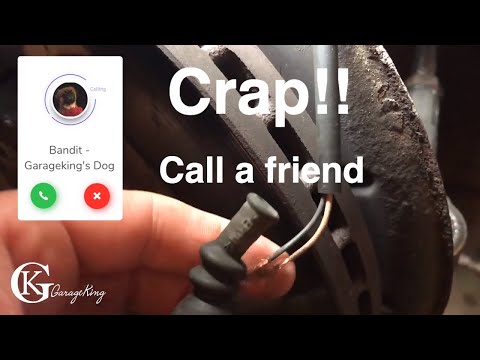
The wheel speed sensor wiring runs along the control arms to the hub. During a collision, the suspension can be pushed to extreme angles, stretching or pinching these wires. Even if the outer plastic casing looks fine, the internal copper strands can break. This leads to intermittent ABS or Traction Control warning lights that may not appear until you are driving at highway speeds or towing a load.
Brinelling the Bearing
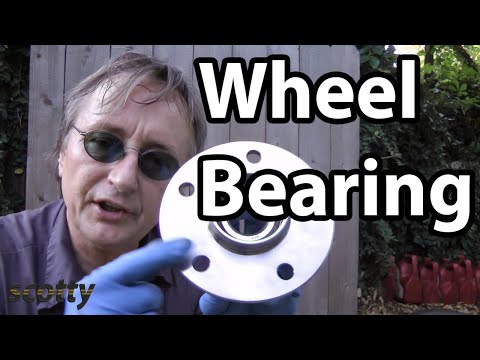
A side-impact to the wheel can cause "brinelling." This occurs when the hardened steel balls or rollers inside the wheel bearing are slammed into the bearing race, leaving microscopic permanent indents. The bearing may not make noise immediately, but those small dents will cause the bearing to howl, vibrate, and eventually fail prematurely a few months down the road.
Does Insurance Cover Mechanical Suspension Damage?
One of the biggest concerns for owners is: "Does my insurance cover mechanical parts, or just bodywork?"
Generally, if the mechanical damage was caused by the collision, it is covered under your collision coverage. However, there are important distinctions to understand:
- Collision Damage vs. Wear and Tear: Insurance covers the accident. If the shop finds that your ball joints were already worn out due to high mileage and were not damaged by the impact, the insurance company will likely not pay for them.
- Betterment: This is a common insurance concept. If your tires were 80% worn out and the accident requires a new tire, the insurance company may pay for the new tire but ask you to contribute a percentage of the cost (the 80% you already "used up"). This reflects the fact that the vehicle is now in better condition than it was before the accident.
The Alignment Rack: Your Mathematical Proof
If your insurance company is skeptical about replacing a steering knuckle or control arm, the alignment report is your best friend.
A professional repair facility will perform a diagnostic alignment. If the "camber" or "caster" angles are outside of GMC’s factory specifications and cannot be adjusted back to normal, it is mathematical proof that a structural component is bent. Never allow a shop to simply "center the steering wheel" by adjusting the tie rods. If the steering wheel is crooked after an accident, a part is deformed, and it must be replaced to maintain the structural integrity of the truck.
Practical Steps for the Vehicle Owner
If your 2018 GMC Sierra 2500HD has been in a front-corner accident, follow these steps to ensure a proper repair:
- Demand a Diagnostic Scan: Ensure the shop performs a "pre-scan" and "post-scan" of the vehicle’s computers to check for ABS, stability control, and steering angle sensor codes.
- Ask for the Alignment Sheet: You want to see the "Before" and "After" printout. If the "Before" numbers are red (out of spec), it justifies the replacement of mechanical parts.
- OEM vs. Aftermarket: Check your policy. For a heavy-duty truck used for towing, many owners prefer Original Equipment Manufacturer (OEM) suspension parts over aftermarket alternatives to ensure the metallurgy and load ratings match the original design.
- Document the Relationship: Ensure the shop takes photos of the damaged components in relation to the impact point to help the insurance adjuster see how the force was transmitted.
A 3/4-ton truck is a precision machine disguised as a workhorse. When the front corner takes a hit, the damage is rarely just skin-deep. By focusing on the mechanical "kinetic chain," you ensure your Sierra remains as capable and safe as the day it left the factory.
Disclaimer: Insurance policies and state laws vary. Review your specific policy and consult with your insurance company or a qualified repair professional regarding your claim.



No Comments Yet
Be the first to comment on this article.