Curtis.Castiglione@ROzebra.com
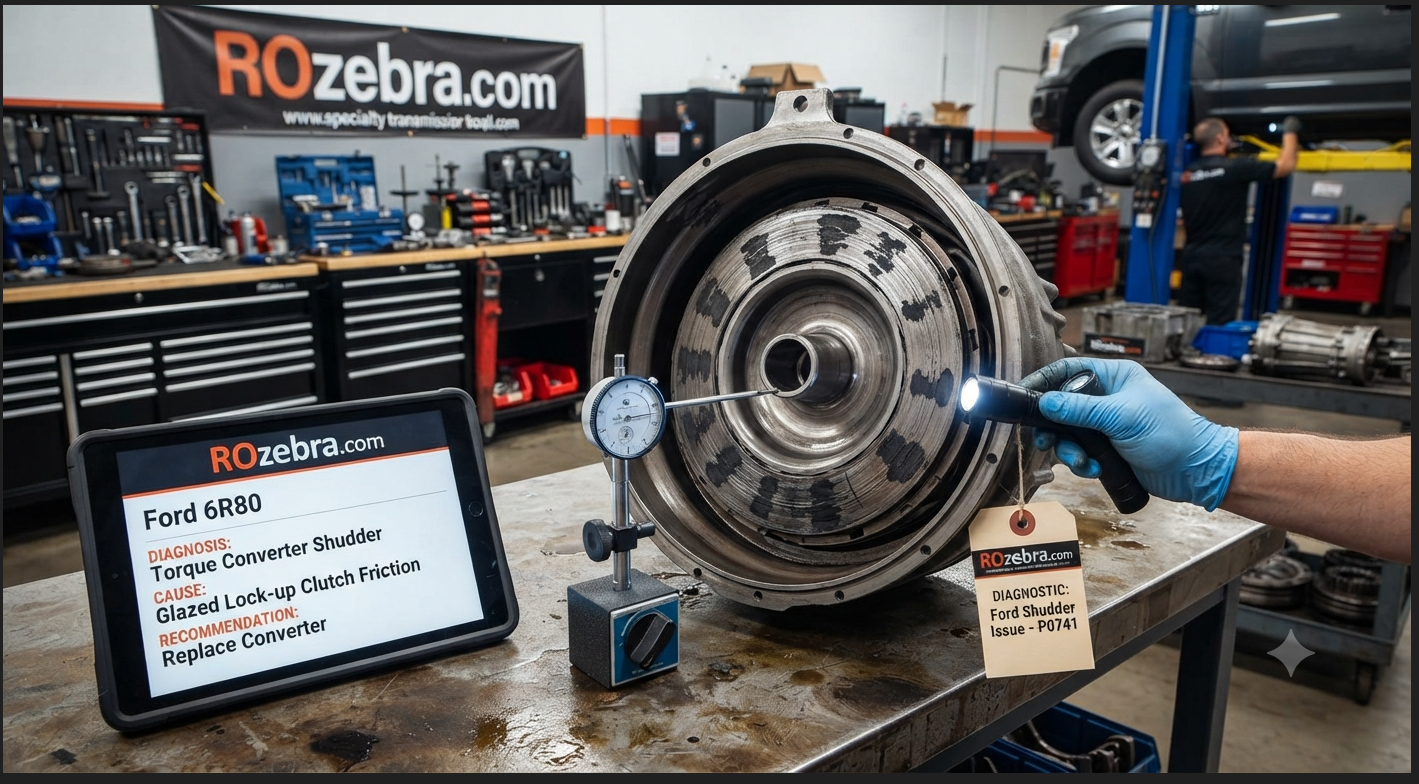
Ford Torque Converter Shudder Diagnosis
You are cruising down a smooth stretch of highway at about 45 miles per hour. Your foot is steady on the gas, the radio is on, and suddenly, the whole truck feels like it is driving over a set of rumble strips. The vibration lasts for just a second or two, then disappears, only to return a few minutes later when you hit a slight incline.
You might check your rearview mirror to see if you dropped a tire, or perhaps you wonder if the road surface is just poorly paved. But when it happens again on a perfectly smooth road, you realize the problem is coming from underneath the floorboards. In the shop, we call this rhythmic, chattering vibration torque converter shudder. If you drive a Ford vehicle with a high-mileage automatic transmission, it is a sensation you need to be able to identify before it turns into an expensive repair bill.
What is Actually Happening?
To understand why your Ford is acting like it has a nervous twitch, we have to look inside the torque converter. Think of the torque converter as a fluid-filled coupling that connects your engine to your transmission.
Inside this component is a lock-up clutch. This clutch is designed to create a direct mechanical link between the engine and the transmission once you reach cruising speeds. By locking the two together, the car eliminates internal slippage and improves fuel economy.
The shudder occurs when this lock-up clutch cannot decide whether to grab or let go. Instead of a smooth, firm engagement, the clutch plates slip and grab rapidly against each other. This chatter sends that characteristic vibration through the entire drivetrain.
The Root Causes: Fluid and Solenoids
In most Ford transmissions—especially common models like the 4R70W or the 6R80—the root cause usually boils down to two factors:
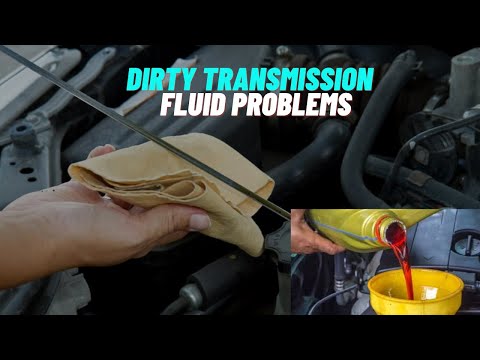
- Fluid Degradation: Automatic transmission fluid is more than just a lubricant; it is a complex hydraulic fluid packed with friction modifiers. These chemicals ensure the clutch plates grab with the right amount of friction. Over time, heat and mileage break these chemicals down. When the fluid loses its ability to manage friction, the clutch begins to chatter.
- TCC Solenoid Performance: The Torque Converter Clutch (TCC) solenoid is an electronic gatekeeper that regulates the hydraulic pressure applied to the clutch. If the solenoid is struggling or if the fluid is too thin to maintain pressure, the clutch won’t have enough force to stay locked, leading to that rumble strip sensation.

The Brake Tap Diagnostic Trick
How do you know if you are looking at a torque converter issue or something else, like a tire out of balance or an engine misfire? There is a simple trick you can perform on the road:
- The Test: When you feel the shudder occurring, maintain your speed with your right foot and use your left foot to very lightly tap the brake pedal.
- The Goal: You do not want to slow down; you only want to press the pedal far enough to trigger the brake light switch.
- The Result: In most Ford vehicles, tapping the brake sends a signal to the computer to immediately disengage the torque converter lock-up clutch. If the shudder vanishes the instant you touch the brake, you have confirmed the issue is definitely within the torque converter.
Your Diagnostic Checklist
Before you commit to a major repair, go through these steps with your mechanic:
- Check the Fluid: Pull the transmission dipstick if your model has one. If the fluid smells burnt or looks like dark chocolate milk, your friction modifiers are spent.
- Scan for Codes: Even if your Check Engine light is off, the computer may have stored pending codes related to TCC slip.
- Perform a Fluid Exchange: A simple pan drop only replaces about a third of your fluid. A full fluid exchange replaces all the old, broken-down fluid with fresh Mercon-specification fluid, restoring the friction properties the clutch needs.
- Use an Additive: Many technicians recommend a specialized friction modifier additive. These are designed specifically to stop TCC chatter by reinforcing the fluid’s ability to grip the clutch plates.

When Is It Too Late?
The good news is that a fluid service and additive treatment resolve the issue in many cases. However, if the vibration persists for more than 50 to 100 miles after the service, the friction material on the lock-up clutch has likely worn down to the metal or internal seals have hardened. At that point, the torque converter assembly itself will require replacement.
If you feel that rumble, do not ignore it. Constant shuddering creates excessive heat and sends fine metal debris through your transmission. Catching it early with a fluid analysis and a TCC stress test can be the difference between a preventable maintenance task and a total mechanical failure. Talk to your mechanic as soon as you feel those ghost rumble strips to keep your Ford shifting smoothly.
Written by Curtis Castiglione



No Comments Yet
Be the first to comment on this article.