Curtis.Castiglione@ROzebra.com
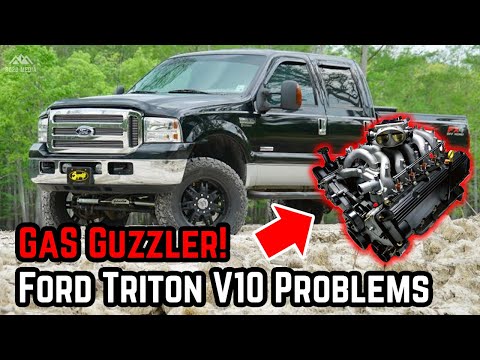
Ford 6.8L V10 Industrial Generator Engine Guide
When enthusiasts think of the Ford 6.8L Triton V10, they usually picture an F-250 Super Duty hauling a horse trailer or a 30-foot Class A motorhome climbing a mountain pass. It is an engine defined by its work ethic—a modular powerhouse designed to bridge the gap between the V8 and the diesel PowerStroke.
However, there is a hidden source for these engines that most hot-rodders and truck restorers completely overlook: the industrial generator. While thousands of these engines spent their lives on the highway, many others spent decades bolted to concrete pads inside weather-proof enclosures, waiting for the power to go out.
For the savvy builder, a decommissioned commercial generator can be the ultimate donor vehicle—provided you know exactly what you are looking at.
The Industrial Pedigree: Why the V10?
Ford’s 6.8L V10, part of the Modular engine family, was a natural choice for stationary power applications. In a generator role, the engine’s primary job is to maintain a constant, governed RPM (usually 1,800 or 3,600 RPM depending on the alternator's pole configuration) to produce a steady 60Hz of electricity.
The V10 was favored over smaller V8s because of its massive displacement and inherent balance. It could produce the necessary torque to handle block loading—the sudden hit of a large building’s electrical load—without stalling or significant frequency drop. For the donor hunter, this means the engine has likely lived a very simple life. It hasn't seen stop-and-go traffic, salt-covered winter roads, or the fluctuating cooling cycles of a delivery van.

The Same but Different Trap
The most common mistake a buyer can make is assuming that a 6.8L V10 pulled from a Generac or Kohler unit is identical to the one in a 2005 Ford Excursion. While the long block (the block, heads, and rotating assembly) is often the same, the jewelry surrounding it is frequently application-specific.
An industrial V10 should not automatically be assumed to be identical to the engine that came in an F-Series truck or E-Series van. Before you buy a generator engine with the intent of dropping it into a project, you must realize that industrial applications often utilize:
- Governor Strategies: Unlike a truck engine that responds to a foot pedal, generator engines use a governor to maintain precise RPM. This often involves a specialized electronic throttle body or a mechanical linkage that does not interface with a standard Ford PCM (Powertrain Control Module).
- Fuel Systems: Many industrial V10s were configured to run on Liquid Propane (LPG) or Natural Gas (NG). This means the intake manifold, fuel rails, and injectors may be completely different from gasoline automotive versions.
- Cooling and Exhaust: Industrial units often use massive, heavy-duty radiators and unique exhaust manifolds designed for stationary enclosures rather than narrow engine bays.
- Accessory Drives: You may find short accessory drives or unique pulley setups that don't include power steering pumps or A/C compressors.
Technical Considerations: 2-Valve vs. 3-Valve
Most industrial V10 generators stayed with the 2-valve (2V) cylinder head design long after the trucks transitioned to the 3-valve (3V) design in 2005. Why? Because the 2V head was perceived as more robust for continuous duty and didn't suffer from the early 3V issues with spark plug breakage or cam phaser complexities.
If you are looking for a donor engine for an older F-250 (1999–2004) or an E-Series van, a generator-sourced 2V engine is often a near-perfect match. If you are trying to put a generator engine into a later 3V truck, you will face significant hurdles with the intake manifold and computer integration.

The Take Everything Rule of Harvesting
If you find a low-hour industrial V10 at a surplus auction or a scrap yard, the price is often significantly lower than a tested engine from a wrecked truck. However, the cost of converting it back to automotive use can eat those savings if you aren't careful.
If you find one cheap, photograph the entire installation before dismantling it. Record every part number you can find on the engine and controller. Do not just take the long block. You must harvest:
- The Engine Controller (ECM): Even if you don't use it, the part number on the controller is the Rosetta Stone for identifying the engine's internal specs, such as compression ratio or cam profile.
- The Wiring Harness and Sensors: Industrial sensors (especially Crank and Cam sensors) may have different connectors or signal types than automotive versions.
- The Ignition Components: Coil-on-plug (COP) units on industrial engines are often heavy-duty versions designed for 24/7 operation.
- The Throttle Hardware: Whether electronic or mechanical, keep it for reference or resale to the industrial market.

The Verdict: Is it Worth It?
The industrial generator market is one of the strangest and most rewarding places to search for Ford power. The biggest advantage is the duty cycle. A generator with 500 hours on the meter has essentially just finished its break-in period, whereas a donor truck from a fleet might have 200,000 miles of hard labor.
The mistake is assuming, "It's a Ford V10, so I'll just put a truck computer on it." Maybe you can, but that is a question to answer after identifying the specific engine, not before buying it.
A Ford V10 from a generator isn't a plug-and-play miracle, but for the builder who values a fresh, low-wear engine and is willing to swap over their existing automotive manifolds and sensors, it is one of the best-kept secrets in the salvage world. Before you pull the first bolt, document everything. This documentation is vital when you are sitting in your garage three months later trying to figure out why the truck's wiring harness won't plug into the generator's specific sensors.



No Comments Yet
Be the first to comment on this article.