Curtis.Castiglione@ROzebra.com
Ford 6.8L V10 Generator Donor Guide
By Curtis Castiglione
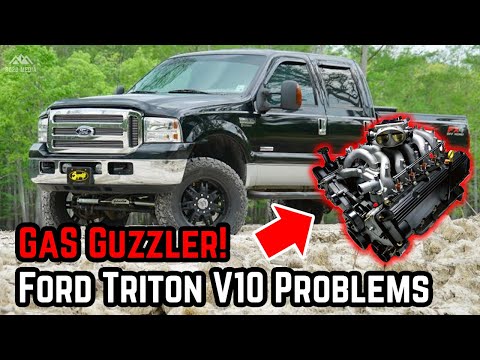
When most automotive enthusiasts think of the Ford 6.8L V10, the image that comes to mind is a heavy-duty F-Series pickup hauling a horse trailer, an Excursion packed with a large family, or an E-Series chassis-cab serving as a high-mileage ambulance. Known for its distinct exhaust note and its ability to bridge the gap between a small-block V8 and a diesel, the "Triton" V10 has earned its reputation as a reliable, high-torque workhorse.
However, as these vehicles age and succumb to rust or high-mileage fatigue, finding a "clean" 6.8L donor engine in a traditional salvage yard is becoming increasingly difficult. To find the next great V10 donor, you need to stop looking at the road and start looking behind commercial buildings, hospitals, and telecommunications hubs.
The Ford 6.8L V10 wasn't just a truck engine—it was a primary choice for industrial stationary power.

The Industrial Connection: The Cummins GGHG
It may seem counterintuitive to look for a Ford engine inside a piece of equipment branded by their diesel rival, but the industrial world often creates strange bedfellows. Cummins, specifically in their Spark-Ignited (SI) generator line, utilized the Ford 6.8L V10 for years.
Found in models like the Cummins GGHG, these engines were tasked with providing standby power in the 60 kW to 100 kW range. In these applications, the V10 was chosen for the same reasons it was popular in the F-250: it is a smooth-running, internally balanced engine capable of producing consistent torque for long durations.
Why a Generator is the "Ultimate" Donor
In the automotive world, we measure an engine's life in miles. In the industrial world, we measure it in hours. This creates a massive opportunity for the savvy builder:
- Low "Mileage" Equivalency: A standby generator is designed to sit idle until power fails. Many of these units are retired after 15 or 20 years with fewer than 500 total hours on the clock—mostly from weekly 15-minute "exercise" cycles.
- Maintenance Regimes: Commercial generators are typically maintained on strict service contracts. The oil is changed and the coolant is flushed based on the calendar, regardless of whether the engine actually ran.
- Constant Speed Operation: Unlike truck engines that endure the stresses of stop-and-go traffic, varying RPMs, and cold-start redlining, generator engines typically run at a governed constant speed (usually 1,800 or 3,600 RPM).

The Technical Divide: Truck vs. Industrial
Before you bid on a decommissioned generator, you must understand that "6.8L V10" describes the architecture, not the exact specification. These are not always plug-and-play swaps for your 2004 F-350.
1. Fuel Systems (Gasoline vs. Gaseous)
Many industrial 6.8L engines were configured to run on Natural Gas (NG) or Propane (LPG).
- The Good: Gaseous fuels burn incredibly cleanly. If you tear down a Natural Gas V10, the internals often look brand new—no carbon buildup on the pistons and no fuel dilution in the oil.
- The Durability Factor: Gaseous-fuel engines often feature hardened valve seats to handle the higher combustion temperatures, which is actually a durability "plus" if you plan on adding a turbocharger later.
- The Bad: The fuel mixers, regulators, and intake manifolds for an NG engine are useless for a gasoline truck swap.
2. The Induction: Naturally Aspirated vs. Turbocharged
While Ford never offered a factory turbocharged V10 in a production pickup, they did exist in the industrial sector. Some Cummins GGHG units featured turbocharged 6.8L configurations. While these industrial turbos are designed for constant-load efficiency rather than "street-ability," the manifolding and internal strengthening required for a factory-backed turbo V10 make them highly desirable for custom performance builds.
3. Electronics and Governors
This is the most significant hurdle. A truck engine uses a Powertrain Control Module (PCM) to manage shifting, variable throttle positions, and emissions. A generator engine uses an industrial controller (like the Cummins PowerCommand) to maintain a steady frequency (60Hz).
- The wiring harness is entirely different.
- The throttle body may be a mechanical or electronic governor-style unit.
- The sensor suite (Crank, Cam, MAF/MAP) may use different connectors or calibrations.
The Donor Strategy: What to Harvest
If you find a generator donor, the "long block" (the block and heads) is the prize, but the "jewelry" (the electronics) is the insurance policy. If you are buying a generator for an engine swap, take everything. Do not leave the following behind:
- The Engine Wiring Harness: Even if you don't use it, it provides the pigtails for the industrial-spec sensors.
- The ECM/Controller: These units are expensive to replace and vital if you plan to use the engine for a non-automotive project.
- All Sensors and Ignition Coils: Industrial versions often use high-quality components designed for 100% duty cycles.
- Fuel-Control Hardware: If it is a propane/NG unit, the regulators and mixers have significant resale value to the right buyer.

Practical Considerations for Swappers
If your goal is to put a generator-sourced 6.8L into a Ford truck, you should plan on stripping the engine down to the long block and "dressing" it with the parts from your original truck engine. You will likely need to swap:
- The Intake Manifold and Fuel Injectors: To return it to gasoline operation.
- The Oil Pan: Industrial pans are often shaped differently for stationary mounting and may not clear a truck's crossmember.
- The Accessory Drive: You will need the alternator, power steering pump, and A/C compressor brackets from a truck donor.
- The Flywheel/Flexplate: Industrial units use different offsets and bolt patterns to mate with the generator head.
Final Verdict
The Ford 6.8L V10 is a legendary engine that is often overlooked because it lived in the shadow of the 7.3L PowerStroke diesel. As the supply of clean V10 trucks dwindles, the industrial generator market remains a secret reservoir of low-hour, well-maintained engines.
If you can navigate the differences in fuel systems and electronics, a "stationary" Ford V10 might just be the most reliable heart you could ever find for your next heavy-duty project. Just remember: in the world of industrial donors, the engine is the bargain, but the documentation is the treasure. Always get the service logs before you pull the bolts.



No Comments Yet
Be the first to comment on this article.