Curtis.Castiglione@ROzebra.com

Finding Industrial Slant Six Engine Donors
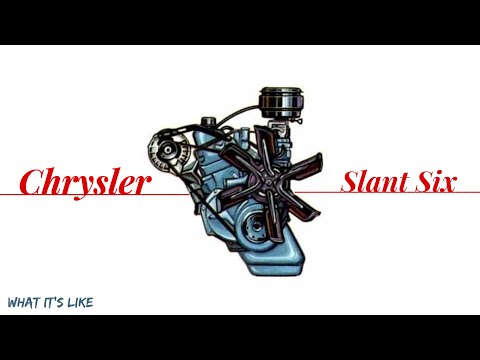
The Chrysler Slant Six is an engine that borders on the mythical. Known affectionately as the Leaning Tower of Power due to its 30-degree tilt, the engine earned a bulletproof reputation in the engine bays of the Dodge Dart, Plymouth Valiant, and early Barracudas. To many enthusiasts, the story of the Slant Six ended when the last rear-wheel-drive passenger cars left the showrooms in the early 1980s.
However, for the savvy restorer or budget-minded builder, the story actually continued for decades in much stranger places. While automotive Slant Sixes are becoming increasingly picked over in salvage yards, a hidden reservoir of these engines remains tucked away in warehouses, farm fields, and marinas.
The Industrial Life of a Legend
Chrysler’s Industrial Products Division saw the inherent value in the Slant Six’s overbuilt nature. Because the engine was designed with a deep-skirt block and an incredibly robust bottom end, it was perfectly suited for stationary and continuous duty applications. This means the engine was sold to manufacturers of agricultural equipment, marine vessels, and material handling machinery.
One of the most common—and often overlooked—sources for a Slant Six core is the industrial forklift. Yale, for instance, famously utilized the 225-cubic-inch industrial variant of the Slant Six for years. These engines weren’t just similar to the car engines; they shared the same basic architecture, making them a gold mine for hard parts like blocks and cranks.

The Industrial vs. Automotive Divide
While the foundation is the same, you cannot simply pull a 225 out of a Yale forklift and drop it into a 1965 Signet without a plan. The industrial version was built for a specific duty cycle: low RPM, high torque, and long hours. Consequently, there are several factors that a builder must evaluate:
- The Fuel System: This is the most immediate difference. Many industrial forklifts were designed to run on liquid propane (LPG). This means the intake manifold, carburetor (actually a mixer), and regulator are entirely application-specific. To put this engine in a car, you will need a standard automotive intake and carburetor.
- The Crankshaft: This is where the news is often good. Many industrial and heavy-duty versions of the Slant Six were equipped with forged steel crankshafts (particularly in the pre-1976 era), whereas later automotive versions often utilized cast iron. A forged crank is a major score for anyone looking to build a performance engine.
- The Valvetrain and Head: Industrial heads may feature different valve materials or rotators on the valves to prevent burning during long periods of constant load. While the heads are generally interchangeable, you must check the combustion chamber volume to ensure your compression ratio doesn't change unexpectedly.
- The Cooling System: Industrial engines often used massive water pumps or different housing configurations to accommodate high-capacity radiators. You will likely need to swap to an automotive water pump and pulley setup to clear a car's radiator fan shroud.
Critical Interchange Considerations
Before you haul a forklift engine home, you need to conduct a bolt-pattern audit. Industrial engines were often adapted to work with SAE (Society of Automotive Engineers) bellhousings rather than the standard Chrysler small-block or Slant Six automotive patterns.
Check the rear face of the block for an adapter plate. Some industrial Slant Sixes use a specialized housing to mate with hydraulic pumps or heavy-duty transmissions. You will need to ensure the block can still accept a standard TorqueFlite or manual transmission bellhousing.
Furthermore, forklifts and tractors don't have to worry about K-members or steering linkages. Consequently, the oil pan on an industrial engine is often a deep sump or a front-sump design that will collide with a passenger car’s front suspension. You will almost certainly need to source a passenger car oil pan and pickup tube. Finally, because industrial engines often ran at a governed RPM, the flywheels are frequently much heavier to provide more inertia. These must be replaced with automotive units to allow the engine to rev freely in a car.

Why the Hunt is Worth It
Sourcing a forklift engine offers several distinct advantages for the Mopar builder:
- Lower Wear and Tear: While a car engine has dealt with the stresses of stop-and-go traffic and high-RPM highway shifts, many industrial engines lived a pampered life at a governed, steady RPM in a climate-controlled warehouse.
- Price: A non-running forklift is often viewed as a liability by a business owner. You can frequently acquire the entire machine for the price of scrap, or find the engine alone for a fraction of what a classic engine seller would demand.
- The HD Factor: These engines were built to work. Often, you’ll find heavy-duty internals, better gaskets, and thicker castings that were intended to make the engine last 10,000 hours of operation—far exceeding the expected lifespan of a 1970s passenger car.
When you find a potential donor—whether it’s in a Yale forklift, a Massey Ferguson combine, or a Chrysler-powered marine boat—don't let the grime and the strange paint color fool you. Underneath the propane mixers and the industrial pulleys lies the same legendary long-stroke 225 that powered a generation of Mopar fans. By understanding the subtle differences in the crank, head, and accessory drives, you can rescue these industrial workhorses and put them back on the street.



No Comments Yet
Be the first to comment on this article.