Curtis.Castiglione@ROzebra.com

Does Insurance Pay for Airbag Replacement?
If you have been in an accident where the airbags deployed, you are likely facing a complex and expensive repair process. Airbags are not just pillows that pop out of the dashboard; they are part of a sophisticated, one-time-use explosive safety system.
The short answer is yes—car insurance typically pays for airbag replacement, provided you have the appropriate coverage and the vehicle is not declared a total loss. However, because these systems are integrated into the vehicle’s electronics and structural components, the process is rarely as simple as just plugging in a new bag.
Does My Policy Cover Airbag Replacement?
Whether insurance covers the replacement depends entirely on the type of coverage you carry and the cause of the deployment:
- Collision Coverage: If your airbags deploy due to a crash with another vehicle or an object (like a guardrail or tree), collision coverage typically pays for the replacement, minus your deductible.
- Comprehensive Coverage: If the deployment was caused by something other than a collision—such as a fallen tree limb, a flood, or theft/vandalism—comprehensive coverage usually applies.
- Liability Only: If you only carry the state-mandated minimum liability insurance, your own insurance will not pay to fix your car or replace your airbags. If the other driver was at fault, their liability insurance should cover the costs.
Insurance policies and state laws vary regarding coverage and total loss calculations. You should always review your specific policy and consult with your insurance representative to confirm your benefits.
Why Airbag Replacement is More Than Just a Bag
In the automotive repair industry, we refer to this as a repair of the Supplemental Restraint System (SRS). When an airbag deploys, it is a violent chemical event. The heat and force generated can affect multiple components throughout the vehicle.
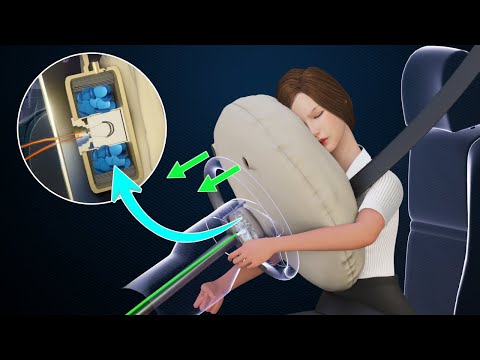
A proper repair estimate for an airbag deployment often includes:
- Airbag Modules: The actual driver, passenger, side-curtain, or knee airbags.
- Seat Belt Pretensioners: These are explosive devices in the seat belt assembly that cinch the belt tight during a crash. Once they fire, the seat belt is often locked and must be replaced.
- Impact Sensors: Sensors located in the bumper or doors that detected the crash.
- SRS Control Module: The brain of the system. Many manufacturers require this to be replaced or professionally reset after a deployment.
- Clock Spring: A spiral-wound electrical connector behind the steering wheel that can be melted or snapped during a deployment.
- Dashboards and Trim: Many passenger-side airbags deploy through the dashboard, requiring the replacement of the entire instrument panel.
Why Does My Repair Estimate Keep Increasing?
It is common for an initial insurance estimate to increase significantly once the vehicle is at the shop. This is due to hidden damage and the need for diagnostic scanning.
- The Teardown: A shop must perform a teardown and blueprint to see what happened behind the panels. They may find melted wiring harnesses or bent mounting brackets that werent visible to the insurance adjuster during a preliminary inspection.
- Electronic Calibration: Modern vehicles are rolling computers. After physical parts are replaced, a technician must perform a Post-Repair Scan. They may also need to initialize or program the new SRS module to the vehicle's specific Vehicle Identification Number (VIN).
- ADAS Recalibration: If your car has Advanced Driver Assistance Systems (like lane-keep assist or automatic braking), the cameras and radar sensors may need recalibration if the impact was significant enough to trigger airbags.

The Controversy: New OEM vs. Used Parts
When it comes to safety systems, there is a major distinction between Original Equipment Manufacturer (OEM) parts and recycled (used) parts.
While insurance companies may suggest using recycled parts for cosmetic items like a fender, most vehicle manufacturers have Position Statements explicitly prohibiting the use of used or salvaged SRS components. There is no way to verify if a used airbag has been exposed to moisture, high heat, or internal degradation.
As a vehicle owner, you should ask your repair facility for a copy of the manufacturer’s specific repair procedures. If your insurance company insists on used safety components, consult the manufacturer’s guidelines. Your safety in a future accident depends on these components working exactly as designed.
Why Airbag Deployment Often Leads to a Total Loss
You may be asking, "Why is my insurance company totaling my car just because the airbags went off?"
Insurance companies use a Total Loss Threshold. If the cost of the repair (including body work, paint, and the SRS system) plus the salvage value of the car exceeds the car’s Actual Cash Value (ACV), the car is totaled.
Because a full SRS reset can easily cost between $3,000 and $7,000—on top of the heavy structural damage that usually causes the deployment—many older or mid-range vehicles are simply not economical to repair according to factory standards.
What Should You Do If Your Airbags Deploy?
- Do Not Drive the Vehicle: Even if the engine runs, the seat belts may be locked, and the steering wheel clock spring may be damaged. Many modern cars also have a pyrotechnic battery disconnect that cuts power to prevent fires, making the vehicle unreliable.
- Request a Diagnostic Report: Once the shop says the car is fixed, ask for a copy of the final diagnostic scan. This report should show that all hard codes are cleared and the SRS system is Ready and communicating correctly.
- Review Your Policy: Check your policy language regarding OEM Parts. Some policies have endorsements that allow you to insist on new factory parts, which is especially important for safety systems.
- Verify the Shop's Credentials: Ensure the shop you choose has the proper scanning tools and technicians trained in SRS repair.

The Bottom Line: While insurance typically pays for airbag replacement, the complexity of modern safety systems means these repairs are frequently the deciding factor in whether a car is fixed or totaled. Always prioritize the manufacturer’s repair requirements over cost-saving measures when it comes to your vehicle's safety system.
Written by Curtis Castiglione



No Comments Yet
Be the first to comment on this article.