Curtis.Castiglione@ROzebra.com
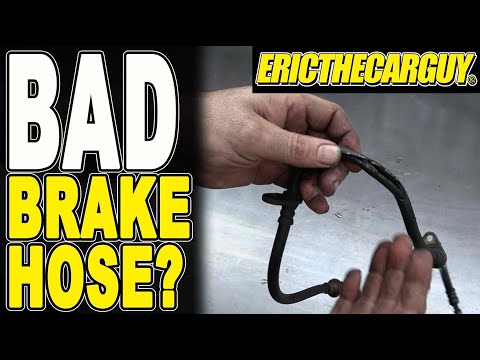
Diagnosing Brake Hose Ballooning and Internal Collapse
You are driving down a familiar road, and you notice something is off. When you step on the brakes to slow for a red light, the steering wheel tugs sharply to the left. Or perhaps you notice that after a long drive, one wheel smells like burnt toast and the car feels like it is struggling to accelerate, almost as if the parking brake is still partially engaged. You might even feel the brake pedal get a bit soft or spongy under your foot.
These are common frustrations for many drivers, and while your first instinct might be to blame worn-out brake pads or a warped rotor, the real culprit is often a silent, hidden failure within your flexible rubber brake hoses.
The Hidden Complexity of a Simple Hose
As a technician, I see this frequently. To understand what is happening, you have to look at how a brake hose is built. These are not just simple rubber tubes. They are complex, multi-layered components designed to withstand thousands of pounds of hydraulic pressure while remaining flexible enough to move with your steering and suspension.
A standard brake hose typically consists of three distinct layers:
- An inner synthetic liner: Designed to be chemically resistant to brake fluid and provide a smooth path for flow.
- A reinforced fabric or wire braid: This acts as the skeleton of the hose, preventing it from expanding under high pressure.
- An outer protective rubber jacket: The shield that protects the internal layers from road salt, moisture, and extreme engine heat.
Over years of heat cycles, exposure to the elements, and the chemical breakdown of old brake fluid, these layers begin to fail from the inside out.
Internal Collapse: The One-Way Valve Effect
The first major issue we encounter is internal structural collapse. Think of this like a one-way valve that was never supposed to exist.
When you press the brake pedal, you are exerting massive force that pushes hydraulic fluid through the hose to the brake caliper, squeezing the pads against the rotor. However, if the inner liner of the hose has detached or frayed, that high-pressure fluid can force its way past the flap of rubber.
Once you release the pedal, there is no high-pressure force to push the fluid back toward the master cylinder. The frayed inner liner acts as a dam, trapping pressure at the wheel. This results in a dragging brake. The caliper stays applied, the pads stay hot, and your car pulls to one side because that specific wheel is constantly braking even when your foot is off the pedal.

Ballooning: Why Your Pedal Feels Spongy
The second issue is what we call ballooning. This is a failure of the middle reinforcement layer. When the internal braids snap or stretch due to age, the hose can no longer contain the hydraulic pressure effectively.
When you hit the brakes, instead of all that force going to the caliper to stop the car, the hose actually expands like a balloon. From the driver's seat, this feels like a spongy or long brake pedal. You are effectively spending half of your pedal travel just stretching the rubber hose rather than stopping the vehicle. If left unaddressed, this ballooning will eventually lead to a total rupture, resulting in a complete loss of braking ability for that section of the system.
How to Identify a Failing Hose
Identifying these failures requires a mix of visual and physical inspection. When I have a car on the lift, I use the following techniques:
- Visual Inspection: I look for bubbling, cracking, or wet spots on the outer hose jacket. Any visible deformity is an immediate sign of failure.
- The Twist Test: I check to see if the hose feels excessively soft or has any bulges when the brakes are applied. If the hose grows in diameter when a helper steps on the pedal, it is ballooning.
- Thermal Diagnostics: Using an infrared thermometer is a pro tip. After a road test, if one brake rotor is significantly hotter than the others, and the caliper itself is moving freely, the hose is the primary suspect for trapping pressure.
What to Discuss With Your Mechanic
If your car is pulling or feeling sluggish, do not just throw new pads at it. If a hose is restricted, new pads will wear out in a matter of weeks due to the constant dragging and heat.
When you take your vehicle in for service, tell your mechanic: I am noticing a pull and a spongy pedal; can you check specifically for brake hose restriction or internal collapse?
It is a relatively inexpensive part to replace, but ignoring it can lead to ruined calipers, destroyed rotors, and more importantly, a dangerous loss of stopping power. Most manufacturers recommend a full brake system inspection every year. If your vehicle is more than six or seven years old, those flexible hoses are likely reaching the end of their reliable service life. Taking care of them now ensures that when you hit the pedal, the car responds exactly how you expect it to.
Written by Curtis Castiglione



No Comments Yet
Be the first to comment on this article.