Curtis.Castiglione@ROzebra.com

Car Shaking: Driveline and Suspension Diagnosis
Have you ever been cruising down the highway and felt a strange shimmy through the floorboards? Maybe it starts as a faint tingle in your seat that grows into a full-on shudder every time you step on the gas. Or perhaps you’ve noticed that your steering wheel feels loose and jittery, almost like your front wheels are fighting each other to decide which way to go.
To most drivers, these sensations are just a "weird vibration," but to a technician, these are specific clues. Whether you describe it as a clunk, a wobble, or a rhythmic thumping, your car is trying to tell you that something in its mechanical skeleton or its power delivery system is failing.
While unbalanced tires are the most common cause of shaking, we have to look deeper when the symptoms become speed-specific or load-dependent. If your vibration changes based on acceleration or the weight of the car's movement, we are likely looking at the driveline or suspension systems.
The Shudder of Acceleration: Inner CV Joints
If you feel a violent shaking or side-to-side shudder specifically when you are pushing the accelerator—but the vibration disappears the moment you let off the gas and coast—you are likely looking at a worn inner CV (Constant Velocity) joint.

CV joints are designed to transfer power from the transmission to the wheels while allowing the suspension to move up and down. Inside the joint, heavy-duty bearings ride in precision tracks. Over time, the protective rubber boot can crack, letting grease out and road grit in. This creates pitting in those tracks. Under the load of acceleration, the bearings get stuck in these pits, causing the entire axle—and your car—to shake.
High-Frequency Vibes: Driveshafts and U-Joints
In trucks and rear-wheel-drive vehicles, vibration often comes from the driveshaft. If you feel a high-frequency vibration that feels like it is coming from directly under your seat rather than the steering wheel, that is a classic sign of a failing U-joint or an imbalanced driveshaft.
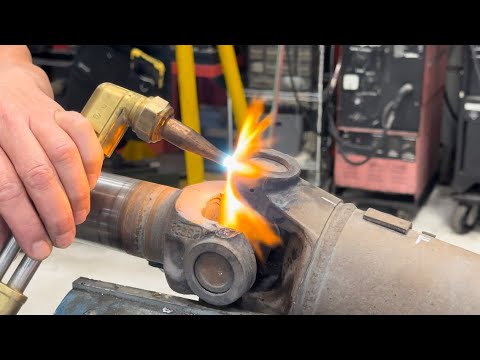
Think of the driveshaft as a high-speed spinning baton. If it loses a small balancing weight or if the needle bearings in the U-joint dry up and seize, it creates a harmonic imbalance. This isn't just a comfort issue; a failing driveshaft can cause significant damage to your transmission output seals and differential, potentially turning a $250 U-joint repair into a $1,500 driveline overhaul.
The Death Wobble: Worn Suspension Geometry
The suspension system is essentially the geometry of your car. Your wheels are held in place by a complex network of ball joints, tie rods, and control arms, all cushioned by rubber bushings. When these components wear out, the tightness of your steering disappears.

You might experience:
- The Death Wobble: A violent shaking after hitting a bump that requires you to slow down to stop the oscillation.
- Wandering: The car feels like it is drifting left and right while shaking.
- Loose Steering: A lack of response or a "dead zone" when you turn the wheel slightly.
In the shop, we diagnose this by checking for play. If I can move your wheel back and forth with my hands while the car is on the lift, those parts are dangerously loose and need immediate replacement.
When Shaking Occurs During Braking
If the vibration only occurs when you apply the brakes, the issue is almost certainly warped brake rotors. When rotors become unevenly worn or overheated, the brake pads cannot make smooth contact with the surface. This creates a pulsating sensation in the brake pedal and a rhythmic shaking in the steering wheel. This is more than a nuisance; it increases your stopping distance and puts extra stress on your suspension.
Is It Safe to Drive?
It depends on the severity, but you should always err on the side of caution.
- Schedule an appointment soon if: The vibration is mild, only occurs at a specific speed (like 60 mph), and the vehicle remains easy to control.
- Stop driving immediately if: The shaking becomes violent, you hear loud grinding or clunking, or the steering feels disconnected.
A failed ball joint or a snapped CV axle can cause a wheel to literally fold under the car or lose power entirely. At highway speeds, that is a catastrophic failure.
Repair Costs to Expect
Repairing a vehicle vibration varies significantly based on the root cause. Here are some typical estimates:
- Tire Balancing: $20–$80
- Wheel Alignment: $100–$250
- Brake Rotor Replacement: $350–$900
- Wheel Bearing: $300–$800
- Ball Joint or Tie Rod: $200–$700
- Driveshaft or CV Axle Repair: $400–$1,500
What to Tell Your Mechanic
When you bring your car in, being specific can save you a lot of money in diagnostic time. Don't just say "the car shakes." Tell us:
- Where do you feel it? Is it in the steering wheel, the floorboards, or the seat?
- When does it happen? Only when braking, only when accelerating, or only at highway speeds?
- What does it sound like? Is there a hum, a click, or a rhythmic thump?
Providing these details helps us narrow down the technical root cause much faster, ensuring your vehicle gets back to being smooth, quiet, and safe.



No Comments Yet
Be the first to comment on this article.