Curtis.Castiglione@ROzebra.com

Brake Fluid Contamination and Hydroscopic Degradation
Imagine you are coming down a steep mountain grade with a heavy trailer hitched to your truck. You press the brake pedal, expecting that firm, reassuring resistance that tells you the vehicle is under control. Instead, the pedal feels soft—almost like you are stepping into a bowl of pudding. You find yourself frantically pumping the pedal just to slow down, or worse, the pedal sinks all the way to the floorboard without providing any stopping power.
In the shop, we call this a spongy pedal. While it might feel like a minor mechanical quirk at first, it is actually a major warning sign that your brake fluid has reached a dangerous level of degradation.
The Chemistry of Your Braking System
When a customer describes a mushy or fading pedal, my mind immediately goes to the chemistry of the brake fluid. Most modern trucks use glycol-based DOT 3, DOT 4, or DOT 5.1 fluid. These fluids are specifically engineered to be hygroscopic, which is a technical way of saying they act like a sponge for moisture.
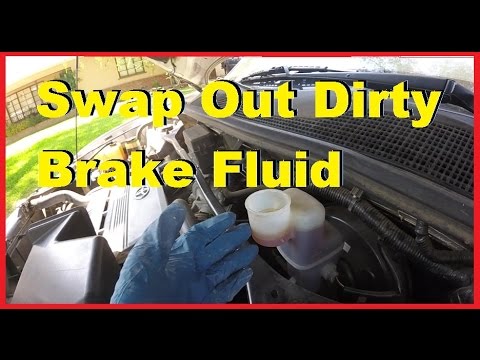
Even though your brake system is considered a sealed system, it is not perfectly airtight. Over time, your brake fluid constantly pulls water from the atmosphere through several entry points:
- Microscopic pores in rubber brake hoses.
- Worn or aging seals in the master cylinder.
- The breather vent located in your reservoir cap.
Boiling Points: The Wet vs. Dry Reality
The core of the problem is the boiling point. Fresh, 'dry' brake fluid has a very high boiling point, often exceeding 450 degrees Fahrenheit. This high threshold is critical because brakes work by converting kinetic energy into heat through friction. When you are hauling heavy loads or navigating stop-and-go traffic, your calipers and pads generate incredible amounts of heat, which is transferred directly into the fluid.
As water enters the system, we have to look at what we call the 'wet' boiling point. Pure water boils at just 212 degrees Fahrenheit. As the water content in your fluid increases, the overall boiling point of the mixture drops significantly. This creates a dangerous environment inside your brake lines.
The Danger of Vapor Lock
When your brake fluid is contaminated with enough moisture, that water eventually reaches its boiling point and turns into steam inside your brake lines. This leads to a phenomenon known as vapor lock.
In a healthy system, brake fluid is a liquid. Because liquids are incompressible, the force from your foot is transferred directly to the brake pistons to stop the truck. However, gas or steam is highly compressible. When vapor lock occurs, your foot is simply squeezing steam bubbles instead of moving the brake pistons. This is exactly why the pedal feels soft and why your stopping distance suddenly and dangerously increases.
How We Diagnose the Issue
You cannot always judge brake fluid by its color. While dark, murky fluid suggests old age and internal corrosion, the real danger—moisture—is invisible to the naked eye. In the shop, we use two primary professional diagnostic tools to give you an accurate assessment:
- Chemical Test Strips: These change color based on the percentage of moisture present in the fluid.
- Electronic Fluid Testers: These devices measure the electrical conductivity or the actual boiling point of the fluid to provide a precise digital readout of contamination.

If our testing shows a moisture content of 3% or higher, the fluid is considered functionally failed. At that point, it is no longer a matter of 'if' your brakes will fade, but 'when.'
The Solution: The Brake Fluid Flush
When you take your truck in for service, do not settle for a simple visual inspection of the pads and rotors. Ask your mechanic to specifically test the moisture content of your fluid.
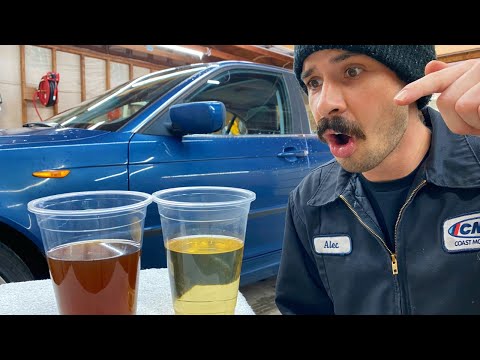
If it is contaminated, you need a full brake fluid exchange, also known as a flush. This involves pushing all the old, moisture-laden fluid out of the lines and replacing it with fresh fluid from a vacuum-sealed container.
Pro-Tech Recommendations:
- Standard Service: Perform a full system flush every two years or every 30,000 miles.
- Heavy Duty Use: If you live in a high-humidity climate or frequently use your truck for towing, have the fluid tested annually.
Keeping your brake fluid fresh is the most affordable insurance policy you can buy for your truck. It ensures that when you hit the brakes on that steep mountain grade, your vehicle responds with the firmness and safety you expect.
Written by Curtis Castiglione



No Comments Yet
Be the first to comment on this article.