Curtis.Castiglione@ROzebra.com

Best Used SUVs for Towing Small Campers
By: Curtis Castiglione
Date: August 9, 2026
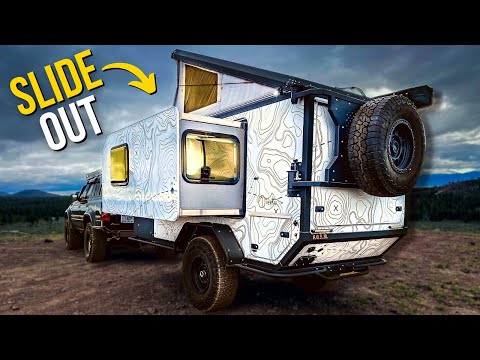
You do not need a massive, fuel-thirsty heavy-duty pickup truck to enjoy the great outdoors. As teardrop trailers, pop-up campers, and lightweight utility trailers grow in popularity, many drivers are looking for a more versatile solution: a used SUV that can handle the daily commute while still pulling 3,000 to 5,000 pounds on the weekend.
Choosing the right used SUV for towing is about more than just reading a brochure. It requires an understanding of stability, cooling, and mechanical endurance. In this guide, we will break down the best pre-owned options on the market that balance everyday livability with genuine pulling power.
Key Factors to Consider Before You Buy
Before scouring the used car lots, understand these four critical metrics to ensure you are buying a safe and capable tow vehicle.
1. Towing Capacity vs. Real-World Weight
Always follow the 80 percent rule. If an SUV is rated to tow 5,000 pounds, aim to pull a trailer that weighs no more than 4,000 pounds fully loaded. This provides a safety margin for steep grades, high winds, and heavy cargo inside the vehicle.
2. Tongue Weight (TW)
The tongue weight is the downward force exerted on the hitch by the trailer. Generally, this should be 10 to 15 percent of the total trailer weight. Most mid-size SUVs are limited to a 500-pound tongue weight. Exceeding this can lift the front wheels of your SUV, compromising steering and braking.
3. Wheelbase and Stability
A longer wheelbase (the distance between the front and rear wheels) generally provides a more stable towing platform. Short-wheelbase compact SUVs can feel "twitchy" or prone to swaying when hit by crosswinds or passing semi-trucks.
4. Transmission Cooling
Towing generates immense heat. Look for vehicles equipped with a factory tow package, which usually includes a heavy-duty radiator and a transmission oil cooler. If you buy a vehicle without one, an aftermarket cooler is a mandatory investment to prevent transmission failure.
Top Used SUV Picks for Towing
Best Overall: Jeep Grand Cherokee (2016–2021)
The Grand Cherokee remains the king of the mid-size segment because of its rear-wheel-drive-based platform. While most competitors use car-based front-wheel-drive setups, the Jeep is built more like a traditional truck, allowing for significantly higher tow ratings.
- Towing Capacity: 6,200 lbs (V6) to 7,200 lbs (V8)
- Pros:
- Best-in-class towing capacity.
- Available factory air suspension can level the load.
- Excellent off-road capability for reaching remote campsites.
- Cons:
- Higher maintenance costs than Japanese competitors.
- Fuel economy is poor when equipped with the Hemi V8.
Best Reliability and Resale: Toyota Highlander (2014–2022)
The Highlander is the pragmatic choice. While it lacks the raw power of the Jeep, its 3.5L V6 is legendary for its longevity. It is a "set it and forget it" vehicle that holds its value exceptionally well.
- Towing Capacity: 5,000 lbs (V6 models)
- Pros:
- Exceptional reliability and long-term durability.
- Comfortable, car-like ride for family road trips.
- Strong resale value makes it a safe financial investment.
- Cons:
- Soft suspension can sag under heavy tongue weight.
- Limited to 5,000 lbs; not suitable for larger fiberglass campers.
Best Performance and Tech: Ford Explorer (2016–2023)
The Explorer offers a variety of turbocharged EcoBoost engines that provide plenty of torque—the pulling power you feel when merging onto a highway. Post-2020 models moved to a rear-wheel-drive platform, further improving towing dynamics.
- Towing Capacity: 5,000 lbs to 5,600 lbs
- Pros:
- Turbocharged engines provide excellent power at high altitudes.
- Abundant cargo space and modern interior tech.
- Wide availability on the used market.
- Cons:
- Early EcoBoost models can have complex turbo-related repairs.
- Interior material quality can be inconsistent between trim levels.
Best Compact Option: Mazda CX-5 (2017–Present)
If you only need to tow a small utility trailer or a very light teardrop (under 2,000 lbs), the Mazda CX-5 is the best-handling vehicle in its class.
- Towing Capacity: 2,000 lbs
- Pros:
- Premium interior feels like a luxury vehicle.
- Excellent fuel economy when not towing.
- Engaging driving dynamics.
- Cons:
- Very low towing limit compared to mid-size SUVs.
- Not suitable for campers with bathrooms or heavy appliances.
Comparative Summary
| Vehicle | Best For | Max Towing Capacity | Recommended Max Load |
|---|---|---|---|
| Jeep Grand Cherokee | Heavy Mid-Size Towing | 7,200 lbs | 5,700 lbs |
| Ford Explorer | Tech and Mountain Driving | 5,600 lbs | 4,500 lbs |
| Toyota Highlander | Long-Term Reliability | 5,000 lbs | 4,000 lbs |
| Mazda CX-5 | Light Utility/Teardrops | 2,000 lbs | 1,600 lbs |
Safe Towing Dynamics: Technical Essentials

Towing Packages vs. Hitch Installations
A factory tow package is superior to an aftermarket hitch. A factory package often includes a higher-output alternator, a larger cooling system, and specialized software for the stability control system that can detect and mitigate trailer sway.
Hitch Classes
- Class II: Up to 3,500 lbs (Common on compact SUVs).
- Class III: Up to 8,000 lbs (Standard for mid-size towing).
- Tip: Always check the stamp on the hitch itself to verify its rating.
Brake Controllers
If your trailer weighs more than 3,000 pounds, it likely has its own brakes. You will need a brake controller installed in the SUV's cabin to synchronize the trailer's brakes with your foot pedal.
Frequently Asked Questions (FAQs)
Can I tow with a CVT transmission? While some SUVs with Continuously Variable Transmissions (CVTs) are rated for towing, they are generally less durable under heavy loads than traditional geared automatics. If you plan to tow frequently, a geared transmission (like those in the Highlander or Grand Cherokee) is preferred.
What is the difference between payload and towing capacity? Towing capacity is what the vehicle can pull. Payload is what the vehicle can carry (passengers, luggage, and the tongue weight of the trailer). It is very easy to stay under your tow limit but exceed your payload limit.
Do I need towing mirrors? If your trailer is wider than your SUV, you need mirror extensions. If you cannot see the rear corners of your trailer, you are driving blindly and creating a safety hazard.

Final Verdict: Which Should You Choose?
For those pulling a 4,000-pound camper through hilly terrain, the Jeep Grand Cherokee is the undisputed winner due to its robust chassis and high weight ceiling.
If your priority is a mix of weekend chores and cross-country family vacations with a small utility trailer, the Toyota Highlander offers the best peace of mind and lowest cost of ownership.
For the tech-forward buyer who wants plenty of passing power and a modern cabin, the Ford Explorer (particularly the 2020+ models) provides a sophisticated towing experience that rivals many luxury brands.
Always have a used SUV inspected by a qualified mechanic before purchase, specifically checking the transmission fluid and cooling system for signs of previous towing stress. Happy trails.



No Comments Yet
Be the first to comment on this article.