Curtis.Castiglione@ROzebra.com

Best Used Mid-Size Sedans: Toyota Camry vs. Honda Accord vs. Mazda 6
While the automotive market has shifted heavily toward SUVs, the mid-size sedan remains the gold standard for many savvy used car buyers. These vehicles offer a superior mix of fuel efficiency, highway stability, and lower maintenance costs compared to their taller, heavier counterparts.
However, not all sedans are created equal. The Toyota Camry, Honda Accord, and Mazda 6 represent three distinct philosophies of Japanese engineering. Choosing the right one depends on whether you value bulletproof reliability, balanced performance, or a premium driving experience. At ROzebra, our goal is to cut through the marketing fluff to help you find the best value for your hard-earned money.
Key Factors to Consider When Buying a Used Sedan
Before diving into specific models, you should evaluate any potential purchase based on these four pillars of value:
1. Long-Term Reliability and Maintenance
Look for a vehicle with a documented service history. Reliability is not just about the engine starting; it is about the cost of keeping it running. Some engines use timing belts that require expensive replacement every 100,000 miles, while others use lifetime timing chains. Always check if the previous owner followed the manufacturer maintenance schedule.
2. Total Cost of Ownership
This includes more than just the sticker price. You must factor in insurance premiums, fuel economy, and projected depreciation. Toyota and Honda typically hold their value better than Mazda. This is a double-edged sword: they cost more to buy on the used market, but they will return more of that investment when you eventually sell.
3. Safety Technology
Safety tech evolved rapidly in the late 2010s. By 2018, most of these models began including advanced driver-assistance systems (like automatic emergency braking and adaptive cruise control) as standard equipment. If safety is your top priority, we recommend aiming for 2018 or newer models.
4. Driving Dynamics
Consider your daily commute. Do you want a soft, compliant ride that absorbs potholes and road noise, or do you prefer a responsive steering rack that makes curvy roads enjoyable? Your seat-of-the-pants feel is just as important as the spec sheet.
Top Product Picks by Use Case
Best Overall: Honda Accord (2018–2022)
The tenth-generation Honda Accord is widely considered the benchmark for the mid-size segment. It offers a massive interior—approaching full-size sedan dimensions—and a choice between fuel-efficient turbocharged engines or a stellar hybrid powertrain. It strikes the most successful balance between daily comfort and driver engagement.

Best for Reliability: Toyota Camry (2015–2017 or 2018–2023)
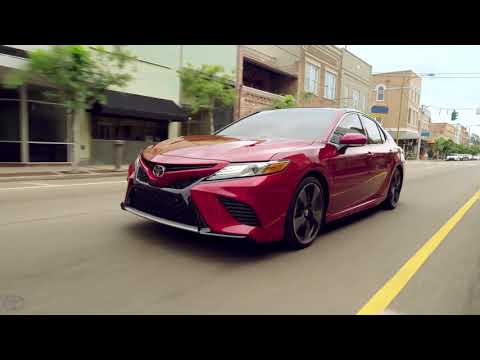
If your primary goal is to reach 200,000 miles with minimal drama, the Camry is the undisputed champion. The 2015–2017 models are legendary for their mechanical simplicity. The 2018 redesign added a more sophisticated suspension and much-improved styling without sacrificing the core durability for which Toyota is famous.
Best for Enthusiasts: Mazda 6 (2018–2021)
The Mazda 6 looks and feels like a luxury car but carries a mainstream price tag. While it was discontinued in the U.S. market after 2021, late-model used versions are hidden gems. It offers the most communicative steering in its class and a beautiful, minimalist interior that rivals entry-level Audi or BMW models.
Pros and Cons Comparison
Toyota Camry
Pros:
- Exceptional Resale Value: Holds its worth better than almost any car on the road.
- Bulletproof Durability: Simple engine designs lead to fewer long-term headaches.
- User-Friendly: Simple, intuitive dashboard controls that do not require a manual to understand.
- Powertrain Options: Available as a fuel-sipping hybrid or a rare, powerful V6.
Cons:
- Dated Tech: Infotainment systems in older models feel a generation behind.
- Uninspired Drive: The steering and handling are functional but rarely fun.
- Price Premium: Expect to pay more for a used Camry than a similarly aged Mazda.
Honda Accord
Pros:
- Spacious Cabin: Features the largest trunk and rear legroom in its class.
- Precise Handling: Feels lighter and more agile than the Camry.
- Modern Engines: The 2.0T engine option offers genuine sports-sedan speed.
- Top Safety: Consistently earns the highest safety ratings year after year.
Cons:
- Low Stance: The low seating position can make entry and exit difficult for those with mobility issues.
- Early Turbo Issues: Some 2018-2019 models with the 1.5T engine reported oil dilution issues.
- Road Noise: Honda is known for letting a bit more tire and wind noise into the cabin than Toyota.
Mazda 6
Pros:
- Premium Aesthetic: Uses high-quality materials like Nappa leather and real wood on high trims.
- Driver-Centric: The most engaging driving experience in this group.
- No CVT: Uses a traditional 6-speed automatic transmission, avoiding the rubber band feel of competitors' CVTs.
- Better Value: Often available at a lower used price than an equivalent Accord or Camry.
Cons:
- Tech Limitations: Smaller infotainment screen with a rotary knob controller that has a learning curve.
- Tight Quarters: Rear seat and trunk space are noticeably smaller than the Accord.
- No Hybrid: If fuel economy is your number one priority, Mazda lacks a dedicated hybrid version.

Best Model Years to Buy
- For the Toyota Camry: Look for 2017 for the best value of the old school style, or 2020 or newer if you want factory-integrated Apple CarPlay and Android Auto.
- For the Honda Accord: The 2017 model is the pinnacle of the 9th generation (no turbos, incredibly reliable). If you want modern tech, the 2019–2020 models offer the best feature-to-price ratio.
- For the Mazda 6: Seek out 2018 or newer. This was a landmark year where Mazda added significant sound deadening, a refreshed interior, and an optional turbocharged engine that transformed the car’s performance.
Frequently Asked Questions (FAQs)
Which of these has the lowest maintenance costs?
The Toyota Camry generally has the lowest long-term maintenance costs. This is due to the widespread availability of inexpensive parts and the simplicity of its naturally aspirated engines, which lack the complexity of turbochargers found in many Accords and Mazdas.
Is high mileage a dealbreaker for these cars?
Not necessarily. A well-maintained Accord or Camry can easily surpass 150,000 miles. However, when shopping for a used Mazda 6, we recommend looking for examples under 100,000 miles to ensure the turbocharger (if equipped) and specialized suspension components are still in peak condition.
Do these cars have Apple CarPlay and Android Auto?
Toyota was late to adopt this tech; you generally need a 2020 or newer Camry for these features. Honda added them to most trims starting in 2016. Mazda added them in 2018, though some 2016–2017 models can be retrofitted by a dealer.
Final Verdict: Which Should You Choose?
The "best" sedan depends entirely on your priorities:
- The Financial Choice: If you want a car that you can ignore for ten years and it will still start every morning, buy the Toyota Camry. It is the safest financial bet.
- The Family Choice: If you have a family and need maximum space but still want a car that feels zippy and modern, the Honda Accord is the most complete package on the market.
- The Connoisseur’s Choice: If you view driving as more than just a chore and appreciate a cabin that feels expensive, the Mazda 6 is your best bet. It offers a premium experience without the premium maintenance bills of a European brand.

ROzebra Tip: Regardless of which model you choose, always insist on a pre-purchase inspection (PPI) from an independent mechanic before signing the paperwork. It is the best $150 you will ever spend.



No Comments Yet
Be the first to comment on this article.