Curtis.Castiglione@ROzebra.com

Best Used Cars with the Lowest Annual Maintenance Costs
Buying a used car is often a smart financial move, but the sticker price is only half the story. The true cost of ownership is hidden in the monthly trips to the mechanic and the price of replacement parts. At ROzebra.com, we believe that a deal is only a deal if it stays out of the shop.
This guide leverages a decade of reliability data to identify the used vehicles that offer the lowest annual maintenance costs, ensuring your hard-earned money stays in your bank account rather than your mechanic’s pocket.
By: Curtis Castiglione
Category: Ownership Costs

Key Factors to Consider When Evaluating Maintenance Costs
Before diving into specific models, it is essential to understand what makes a car cheap to maintain over five to ten years. When we evaluate a vehicle’s long-term affordability, we look at four primary criteria:
1. Parts Availability and Commonality
The most affordable cars to repair are those that were sold in massive volumes. High sales numbers mean that third-party manufacturers produce a surplus of aftermarket parts, which are significantly cheaper than original equipment manufacturer (OEM) parts. If a part is sitting on the shelf of every local auto store, you won’t be paying for expedited shipping or rare part markups.
2. Mechanical Simplicity
Modern cars are increasingly complex, featuring turbochargers, dual-clutch transmissions, and sophisticated air suspensions. While these features improve performance, they are expensive to fix. For the lowest maintenance, look for naturally aspirated engines (non-turbo) and traditional automatic or manual transmissions. Fewer moving parts mean fewer points of failure.
3. Ease of Access
Labor is often more expensive than the parts themselves. Some vehicles require the entire bumper or engine to be moved just to change a lightbulb or a spark plug. Cars designed with a spacious engine bay allow mechanics to work faster, directly reducing your hourly labor bill.
4. Timing Chain vs. Timing Belt
Whenever possible, look for a vehicle with a timing chain. Unlike timing belts, which require replacement every 60,000 to 100,000 miles at a cost of $600 to $1,200, timing chains are designed to last the life of the engine.
Top Product Picks
Best Overall: Toyota Corolla (2014–2019)
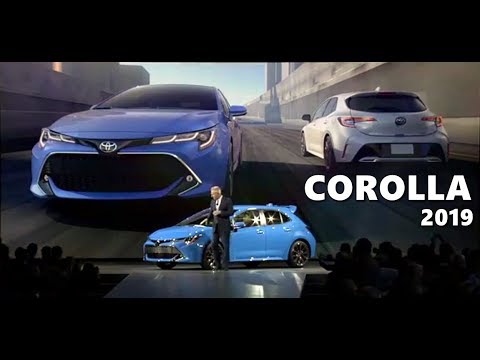
The Toyota Corolla is the undisputed king of low-cost ownership. The eleventh generation (2014–2019) is particularly noted for its bulletproof 1.8-liter engine and a suspension system built to handle daily abuse without complaint.
Pros:
- Extreme parts availability at every local auto store.
- Simple engine design that any general mechanic can service.
- Exceptional resale value when you are ready to sell.
Cons:
- Interior materials are functional but lack a premium feel.
- Driving dynamics are uninspiring for enthusiasts.
- Infotainment technology feels dated compared to current standards.
Best Compact Value: Honda Civic (2012–2015)
While newer Civics moved toward turbocharged engines, the 2012–2015 models (ninth generation) utilized a tried-and-true 1.8-liter i-VTEC engine. This era of Civic is widely considered the peak of set it and forget it engineering.

Pros:
- Highly fuel-efficient, further lowering total ownership costs.
- Excellent visibility and ergonomic interior design.
- Timing chain engine eliminates the need for expensive belt services.
Cons:
- Road noise can be louder than competitors.
- The 2012 model year had a somewhat cheap interior feel (improved in 2013).
- Paint quality on certain dark colors is prone to fading.
Best Hidden Gem: Scion xB (2008–2015)
Though the Scion brand was discontinued by Toyota, the xB remains a maintenance superstar. Because it uses the same powertrain as the Toyota Camry and RAV4 of that era, parts are cheap and mechanics are already familiar with the layout.
Pros:
- Massive interior space for its small footprint.
- Toyota reliability without the Toyota Tax (often cheaper to buy used).
- Boxy shape makes it incredibly easy to park and load cargo.
Cons:
- Boxy aerodynamics lead to mediocre highway fuel economy.
- Minimal safety tech compared to newer used cars.
- The center-mounted gauge cluster is polarizing for some drivers.
Best Mid-Size Sedan: Toyota Camry (2012–2017)
For those who need more room than a Corolla, the 2012–2017 Camry is the gold standard for reliability in the mid-size segment. The four-cylinder models, in particular, are known to reach 200,000 miles with little more than oil changes and brake pads.
Pros:
- Very comfortable ride quality for long commutes.
- Large cabin and trunk space for families.
- Components like water pumps and alternators are known for extreme longevity.
Cons:
- More expensive to purchase upfront than a Nissan or Ford.
- Larger tires result in slightly higher replacement costs than compact cars.
- Conservative styling that does not stand out in a crowd.
Comparative Summary List
| Category | Recommended Model | Key Benefit |
|---|---|---|
| Lowest Annual Repair Bill | Toyota Corolla | Average cost: $362/year |
| Best Longevity | Toyota Camry | Proven 200,000+ mile lifespan |
| Lowest Entry Price | Scion xB | High utility without the brand-name markup |
| Best Balance | Honda Civic | Reliability mixed with fuel efficiency |

Frequently Asked Questions (FAQs)
How much should I budget for annual maintenance on a used car?
On average, for the vehicles listed above, you should budget between $400 and $600 per year. This covers routine oil changes, filters, and occasional wear items like tires or brake pads. Setting aside $50 a month usually covers everything these cars will need.
Is a high-mileage Toyota better than a low-mileage off-brand car?
Generally, yes. A Toyota with 100,000 miles often has more life left and lower projected repair costs than a luxury European car or a budget-tier domestic car with 50,000 miles. Reliability is about engineering quality, not just the odometer reading.
Can I do the maintenance myself on these models?
Yes. One of the reasons these models are recommended is the wealth of DIY tutorials available online. Basic tasks like changing the air filter or oil are very straightforward on a Corolla or Civic, which can save you hundreds in labor costs annually.
Final Verdict
If your primary goal is to minimize your garage bills, the Toyota Corolla (2014–2019) remains the smartest purchase in the used car market. It strikes the perfect balance between parts availability, mechanical simplicity, and historical reliability.
However, for those needing more utility or cargo room, the Scion xB offers the same mechanical peace of mind with a more versatile interior. By sticking to these proven models, you can turn car ownership from a financial burden into a predictable, low-cost utility.



No Comments Yet
Be the first to comment on this article.