Curtis.Castiglione@ROzebra.com

Best Used Cars for Camping and Car-Sleeping Conversions
By: Curtis Castiglione | August 9, 2026
Turning your daily driver into a weekend basecamp is one of the most cost-effective ways to explore the outdoors. In an era of expensive hotels and crowded RV parks, the car-camper conversion offers a sense of freedom and stealth that larger rigs simply cannot match.
However, not every vehicle is built for a comfortable night's sleep. To successfully transition from commuting to camping, you need a vehicle that offers more than just cargo space; you need a flat floor, reliable mechanics, and enough vertical room to move. In this guide, we rank the best pre-owned hatchbacks, wagons, and SUVs that excel at car-sleeping conversions, ensuring you get the best value for your adventure budget.
Key Factors to Consider When Choosing a Camping Vehicle
Before scouring the used car listings, you need to know what makes a vehicle sleepable. Here are the four criteria we used to rank our top picks:
Cargo Floor Flatness
The most critical factor for a good night's rest is a level surface. Many SUVs have a hump where the rear seats fold, or a significant drop between the seatbacks and the trunk floor. Sleeping on an incline can lead to back pain or require a heavy, expensive plywood platform to level out. We prioritize vehicles where the seats fold truly flush with the trunk floor.
Interior Length
For most adults, you need at least 70 to 75 inches of length from the back of the front seats to the rear hatch. Always measure with the front seats moved forward and tilted to see the maximum sleeping mode footprint.
Vertical Clearance
Being able to sit up in bed to change clothes or read a book makes a massive difference in psychological comfort. Low-profile wagons may offer the length, but they often lack the headroom found in boxier SUVs, which can lead to a claustrophobic experience.

Reliability and Ground Clearance
Camping often takes you away from cell service and onto gravel Forest Service roads. Look for vehicles with a proven track record of reliability and at least 7 to 8 inches of ground clearance to avoid scraping on rocky trailheads.
Essential Modifications for Car Camping
Choosing the car is only half the battle. To turn the interior into a functional bedroom, consider these essential upgrades:
- Smart Measuring: Before buying a mattress, measure the narrowest point of the cargo area (usually between the wheel wells). Standard twin or cot-sized memory foam toppers often fit best in hatchbacks, while full-sized toppers work in larger SUVs.
- Ventilation Hacks: Never sleep with the windows fully closed; condensation will soak your headliner and windows by morning. Invest in magnetic mesh window screens that fit over the door frames. These allow airflow while keeping insects out. Additionally, install rain guards (window deflectors) so you can crack the windows during a downpour without getting the interior wet.
- Storage Solutions: If you are sleeping inside the car, your gear (coolers, bags, stoves) needs to go somewhere else at night. A roof rack paired with a weather-proof cargo box is the most effective way to clear out the bedroom for the night.

Top Used Car Picks for Camping Conversions
Best Overall: Honda Element (2003–2011)
The Honda Element remains the gold standard for car camping. Its boxy shape provides unparalleled interior volume, and the versatility of the seating is legendary. The rear seats can be folded flat to create a bed, flipped up against the walls, or removed entirely.
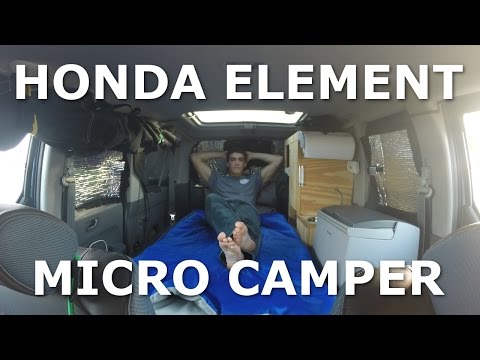
Pros:
- Unmatched Versatility: Seats fold completely flat or can be removed.
- Easy Access: Suicide-style side doors create a massive opening for loading bulky gear.
- Height: High ceiling allows most people to sit completely upright in bed.
- Durability: The floor is made of wipeable urethane—perfect for muddy boots.
Cons:
- Efficiency: Fuel economy is mediocre (20–25 MPG).
- Scarcity: Getting harder to find with low mileage; they hold their value well.
- Refinement: The cabin is quite noisy at highway speeds.
Best Budget Option: Toyota Matrix / Pontiac Vibe (2003–2010)
These mechanical twins are hidden gems in the used market. While they look like small hatchbacks, the rear seats fold dead-flat, and the backs of the seats are covered in a durable hard plastic.
Pros:
- Affordability: Low entry price on the used market.
- Bulletproof: The Toyota Corolla engine and transmission are famously reliable.
- Flat Surface: The plastic floor makes it easy to slide storage bins in and out.
- Fuel Sipper: Excellent fuel economy compared to larger SUVs.
Cons:
- Space: Limited vertical headroom; you won't be sitting up in this one.
- Width: The narrow interior might feel cramped for two people.
- Low Clearance: Lower ground clearance limits your travel to paved or well-maintained dirt roads.
Best for Adventure: Subaru Outback (2015–2022)
The Outback is the quintessential camping wagon. It offers a long cargo floor that accommodates taller sleepers and comes standard with a world-class All-Wheel Drive system.
Pros:
- Length: Offers the longest cargo floor in its class.
- Capability: 8.7 inches of ground clearance allows you to reach remote campsites.
- Roof Storage: Integrated roof rails make adding a cargo box or basket incredibly easy.
- Ride Quality: Comfortable, car-like handling on long highway stretches.
Cons:
- Minor Incline: Rear seats have a slight incline when folded (may require a thin foam shim to level).
- Maintenance: CVT transmissions require diligent fluid changes to remain reliable.
- Battery Drain: Modern electronics can drain the battery if the hatch is left open for long periods.
Best Modern/Hybrid Option: Toyota RAV4 Hybrid (2019–Present)
For those with a higher budget, the RAV4 Hybrid is a game-changer for luxury car sleeping.
Pros:
- Climate Control: Ready Mode allows the car to stay on overnight, using the high-voltage battery to run the A/C or heat. The engine only kicks on briefly to recharge.
- Efficiency: Exceptional fuel economy (40+ MPG).
- Layout: Flat cargo floor with minimal wheel well intrusion.
- Safety: Modern driver-assist features for the long drive to the park.
Cons:
- Price: High initial purchase price compared to older models.
- Complexity: Hybrid electronics are harder for DIY repairs in the field.
- Boxiness: Not as much vertical storage as the Honda Element.
Frequently Asked Questions (FAQs)
Is it legal to sleep in your car? Legality varies by location. Generally, it is legal at highway rest areas (for a set number of hours), designated Bureau of Land Management (BLM) lands, and some private businesses like Walmart or Cracker Barrel (with permission). Always check local ordinances and look for No Overnight Parking signs.
How do I prevent the battery from dying if I leave the hatch open? Many modern cars keep interior lights or dash displays on when a door is ajar. Use a carabiner to click the latch on the hatch into the closed position while the door is physically open. This tricks the sensors into thinking the car is sealed. Just remember to unlock the latch (using the door handle or fob) before physically closing the door!
What is the best mattress for car camping? Inflatable air mattresses are prone to punctures and offer poor insulation against the cold floor. We recommend memory foam tri-fold mattresses or self-inflating camping pads (like the Exped Megamat). They provide better support, warmth, and won't deflate in the middle of the night.
Final Verdict
Choosing the right vehicle depends on your specific adventure style:
- For the ultimate dedicated camping rig on a budget, the Honda Element is king. Its interior versatility remains unmatched.
- If you need a daily driver that sips gas but can still host a weekend getaway, the Toyota Matrix or Pontiac Vibe offers unbeatable value.
- For those who prioritize comfort and climate control, the Toyota RAV4 Hybrid provides a luxurious sleeping experience by allowing you to run the A/C overnight.
No matter which vehicle you choose, focus on the flatness of the floor and your ability to ventilate the cabin—those two factors will define your success on the road. Happy trails!



No Comments Yet
Be the first to comment on this article.