Curtis.Castiglione@ROzebra.com

Best Used AWD Cars Under $10,000 for Winter Driving
By: Curtis Castiglione
Date: August 9, 2026
Living in a region plagued by heavy snowfall and icy roads doesn't have to mean a lifelong commitment to high monthly payments on a brand-new SUV. While marketing departments would have you believe that massive ground clearance is a prerequisite for surviving January, the reality is that a well-engineered all-wheel-drive (AWD) sedan or hatchback can often outperform larger vehicles in stability and handling.
At ROzebra.com, we prioritize value and real-world performance. For under $10,000, you can find a reliable, winter-ready vehicle that offers the traction you need without the fuel economy penalties or the "SUV tax" found in the used truck market. This guide breaks down the best options available today and explains the technology that keeps you on the road when the mercury drops.
Key Factors to Consider When Buying
When shopping for a used AWD vehicle in the sub-$10,000 price bracket, you are likely looking at cars with 100,000 to 150,000 miles. Here is what you must evaluate before signing the title:
- AWD System Type: Not all AWD systems are created equal. Some are "full-time," meaning power is always sent to all four wheels. Others are "part-time" or "on-demand," which primarily use the front wheels and only engage the rear wheels when a slip is detected.
- Maintenance History: High-mileage AWD systems require specific maintenance, including differential fluid changes and transfer case inspections. A car with a documented service history is worth significantly more than a bargain with no paperwork.
- Rust and Corrosion: Since these cars are often used in "salt belt" states, inspecting the undercarriage is mandatory. Surface rust is expected, but structural rot on suspension mounting points is a dealbreaker.
- Ground Clearance: While sedans sit lower than SUVs, some models offer better clearance than others. If you live in an area that doesn't plow side streets promptly, look for cars with at least 5.5 to 6 inches of clearance.

Understanding the Tech: Subaru Symmetrical AWD vs. Haldex
Before diving into the models, it is important to understand the two primary technologies you will encounter in this price range.
Subaru Symmetrical AWD
Subaru’s system is unique because it is a permanent, full-time setup. The engine is mounted longitudinally (front to back) and the drivetrain is linearly balanced. This provides a continuous flow of power to all wheels, making it exceptionally predictable in deep snow.
Haldex and On-Demand Systems
Many other manufacturers, including Volkswagen, Audi, and Volvo, often use Haldex-style systems. These are predominantly front-wheel-drive until the computer senses a loss of traction. While more fuel-efficient, there can be a slight delay (milliseconds) before the rear wheels kick in, which some drivers find less intuitive in heavy slush.
Top Product Picks for Under $10,000
| Model | Best For | AWD Type |
|---|---|---|
| Subaru Legacy (2010-2014) | Best Overall | Full-Time Symmetrical |
| Toyota Matrix AWD (2009-2013) | Best Budget Reliability | On-Demand |
| Volvo S60 AWD (2011-2015) | Best Comfort and Safety | Haldex |
| Subaru Impreza (2012-2016) | Best Compact Option | Full-Time Symmetrical |
Best Overall: Subaru Legacy (2010–2014)
The fifth-generation Legacy is the sweet spot for the $10,000 budget. It offers a spacious interior, excellent visibility, and a legendary AWD system that feels more planted than many modern crossovers.

- Pros:
- Superior mechanical grip in deep snow.
- Comfortable, adult-sized rear seats.
- High safety ratings for its era.
- Cons:
- Head gasket issues are common in the 2.5L engine (verify they have been replaced).
- Fuel economy is lower than FWD competitors.
- Infotainment technology feels dated by 2026 standards.
Best Budget Reliability: Toyota Matrix AWD / Pontiac Vibe AWD (2009–2013)
These two cars are mechanically identical twins. They are essentially Toyota Corollas in hatchback form with an available AWD system. If you want a car that simply works every morning, this is it.
- Pros:
- Exceptional long-term reliability and low maintenance costs.
- Versatile cargo space with fold-flat plastic floor liners.
- Compact size makes it easy to park in winter slush.
- Cons:
- The AWD system is "on-demand" and less capable in extreme off-road conditions.
- Engine noise can be intrusive at highway speeds.
- Hard to find in good condition as owners tend to keep them forever.
Best Comfort and Safety: Volvo S60 AWD (2011–2015)
If you want a more premium experience, the Volvo S60 offers incredible seats and a robust Haldex AWD system that handles icy highways with grace. It is a "vault on wheels."

- Pros:
- Best-in-class seat comfort for long winter commutes.
- Thick gauge steel and advanced safety features.
- Strong turbocharged engine options.
- Excellent rust protection from the factory.
- Cons:
- Higher repair costs for European-specific parts.
- Complex electronics can be finicky as the car ages.
- Requires premium fuel for best performance.
Best Compact Option: Subaru Impreza (2012–2016)
The Impreza is the most affordable way to get a modern-feeling AWD car. It’s smaller than the Legacy but shares the same tenacious grip, making it a favorite for city dwellers.
- Pros:
- Available as a versatile five-door hatchback.
- Very high resale value.
- Excellent fuel economy for a full-time AWD vehicle.
- Cons:
- Early CVT (automatic) transmissions can be prone to failure.
- Interior materials feel budget with lots of hard plastics.
- Low ground clearance compared to the Legacy.
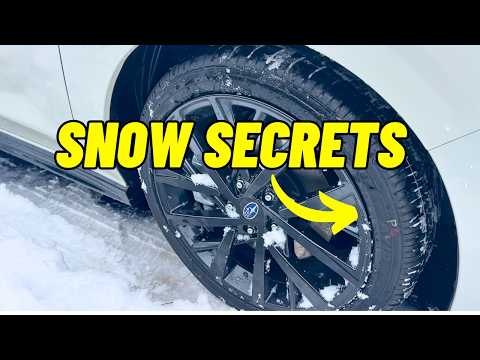
The Secret Weapon: Winter Tires vs. Drivetrain
A common misconception is that AWD replaces the need for winter tires. This is false. AWD helps you accelerate and maintain forward momentum in snow. However, it does nothing to help you stop or turn on ice.
A front-wheel-drive car with dedicated winter tires will almost always outperform an AWD car with "all-season" tires in braking and cornering tests. If you are shopping with a $10,000 budget, we recommend spending $9,200 on the car and reserving $800 for a set of high-quality winter tires (like Bridgestone Blizzaks or Michelin X-Ice). This combination is the ultimate winter "cheat code."
Frequently Asked Questions (FAQs)
Does AWD increase maintenance costs?
Yes. You have more moving parts, including a center differential, a rear differential, and extra CV axles. You should expect to spend roughly 15-20 percent more on drivetrain-related maintenance over the life of the vehicle.
Is high mileage okay on a used Subaru?
Subarus are famous for longevity, but only if maintained. Between 100,000 and 125,000 miles, many Subarus require a timing belt replacement or head gasket attention. If those services have been documented, the car can easily reach 250,000 miles.
Which AWD system is best for black ice?
While no system "fixes" ice, full-time systems like Subaru’s provide more consistent feedback to the driver. This helps you identify when the road surface has become slippery before you actually lose control.
Final Verdict
If your primary goal is absolute confidence in the worst weather, the Subaru Legacy (2010-2014) is our top pick. Its full-time AWD system remains the gold standard for under $10,000. However, if you are looking for the lowest possible ownership costs and "set it and forget it" reliability, the Toyota Matrix AWD is the smarter financial choice.
Regardless of which car you choose, remember that AWD is a tool for "going," but winter tires are your tool for "staying safe." Combine a well-maintained AWD sedan with a fresh set of winter rubber, and you will find yourself passing stuck SUVs all winter long.



No Comments Yet
Be the first to comment on this article.