Curtis.Castiglione@ROzebra.com
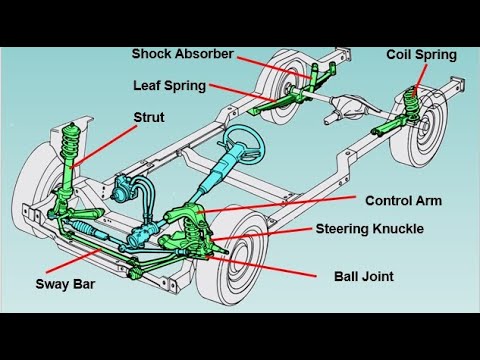
Ball Joint Wear and Suspension Safety
You are pulling into your driveway or perhaps turning the wheel to navigate a tight parking spot when you hear it: a distinct, metallic pop or a dull clunk coming from the front of your vehicle. Maybe you have noticed that your car seems to wander on the highway, requiring constant tiny corrections to stay in your lane, or perhaps you just caught a glimpse of your front tires and noticed the inside edge is wearing down much faster than the rest of the tread.
To most drivers, these are just annoying quirks of an aging vehicle. To a technician, however, these are the classic warning signs that your ball joints are reaching the end of their service life.
The Hips of Your Suspension
To understand why this matters, you have to think of your car’s suspension like a human skeleton. The ball joints act as the hips or shoulders of your vehicle. They are the critical pivot points that connect the control arms to the steering knuckles. Their job is incredibly demanding: they must allow the wheels to move up and down over bumps while simultaneously allowing them to rotate left and right for steering.

When these joints are new, they are tight, lubricated, and precise. But over thousands of miles, the highly polished steel ball inside the socket begins to wear down the internal bearing surfaces. This creates "play," which is essentially extra space inside the joint that should not be there.
Load-Carrying vs. Follower Joints
In the shop, we categorize these components into two main types based on the job they do:
- Load-carrying joints: These joints actually support the weight of the vehicle’s spring, whether it is a coil spring or a torsion bar. Because they are constantly under heavy tension or compression, they often hide their wear until we take the weight off them during a lift inspection.
- Follower joints: These are designed to provide a pivot point and maintain the stability of the suspension geometry. While they do not carry the "weight" of the car, they are vital for steering precision and keeping the wheel aligned.
Professional Diagnostic Methods
When we test these in the bay, we do not just guess by looking at them. We use a dial indicator to measure the exact amount of movement in thousandths of an inch. We check for vertical play—how much the joint moves up and down—and radial play, which is side-to-side movement.
We often use a pry bar to apply leverage to the joint to see if there is any hidden movement. If we can see the joint moving or if the dial indicator shows movement beyond the manufacturer's specification (often as little as 0.050 of an inch), the joint is a safety hazard.
Why Play Destroys Your Handling
The reason this is so critical comes down to what we call dynamic alignment geometry. Your car is aligned while it is sitting still on a flat rack, but once you are moving at highway speeds, the forces of physics take over. If a ball joint has play, the "fixed" angles of your suspension—like camber (the vertical tilt) and toe (the inward/outward direction)—constantly shift as you drive.
This is why your tires wear out prematurely; the wheel is literally wobbling or leaning at an incorrect angle while you drive. More importantly, this play leads to unpredictable handling. If you hit a bump mid-turn, a worn ball joint can cause the wheel to "snap" into a different position, leading to steering drift or a momentary loss of directional control.
The Risk of Neglect
If you are experiencing these symptoms, it is not an issue you should put off. A ball joint failure is a terminal mechanical event. If the ball actually pulls out of the socket while you are driving, the suspension collapses, the steering knuckle detaches, and you lose all ability to steer that wheel. Usually, the wheel will fold outward, causing significant damage to the fender, brake lines, and CV axle.

What to Discuss With Your Mechanic
When you take your car to your mechanic, tell them specifically when you hear the noise. Is it over bumps? Is it only when turning? To get the most out of your visit, ask them to check the following:
- Boot Integrity: Ask if the rubber boots are torn. If grease leaks out and grit gets in, wear accelerates rapidly.
- Measurement: Ask if they measured the radial and vertical play with a dial indicator rather than just a visual check.
- Alignment: If a ball joint is replaced, ensure you get a professional alignment afterward, as the new, tight joint will change your suspension geometry.
Replacing a ball joint is a standard maintenance procedure that restores that "new car" steering feel and, more importantly, ensures that your wheels stay exactly where they are supposed to be: firmly attached to your car.
Written by Curtis Castiglione



No Comments Yet
Be the first to comment on this article.