Curtis.Castiglione@ROzebra.com
Advanced Guide to Hyundai Suspension Technology and Troubleshooting (2001–2026)
Have you ever been driving your Hyundai Elantra down a familiar road and suddenly realized you are feeling every single pebble in the asphalt? Or perhaps you have noticed a strange clunking sound when you turn into your driveway, or your Santa Fe feels a bit like a boat on the high seas after hitting a dip in the road.
As a technician who has spent years under the chassis of everything from a 2001 Tiburon to the latest Ioniq 5, I can tell you that your car is trying to talk to you. Suspension issues often start as subtle hints before they turn into expensive repairs or safety hazards. Over the last 25 years, Hyundai suspension systems have undergone a massive transformation, evolving from simple mechanical setups into high-tech, computer-controlled masterpieces.
Today, diagnosing a problem requires a mix of old-school listening and new-school data analysis. Here is what those strange sensations mean from an expert mechanical perspective.
1. The Metallic Knock (MacPherson Strut and Link Issues)
One of the most common complaints I hear is a persistent clunking or knocking noise when driving over small bumps. From your perspective in the driver’s seat, it feels like something is loose or rattling in the front end.
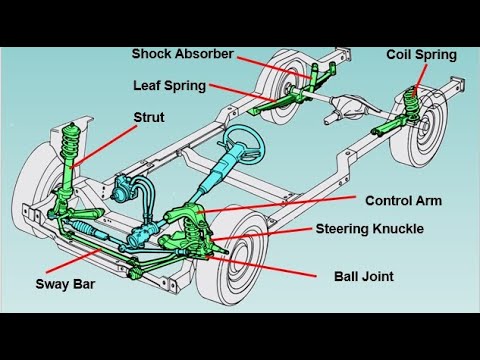
Technically, this is often a failure of the MacPherson strut components. In models from the early 2000s through today, the strut mount—the part that connects the suspension to the car’s body—contains a bearing that can wear out or seize. Additionally, the stabilizer bar links, which are thin rods connecting your suspension to the anti-roll bar, often develop play in their ball joints. When these joints wear down, they rattle inside their sockets, creating that annoying metallic knock.
2. The Nervous Wander (Multi-Link and Bushing Wear)
If your Hyundai feels like it is wandering across the lane or if you have to hold the steering wheel at a slight angle to go straight, you are likely dealing with an alignment or bushing issue.

Hyundai’s transition to complex independent multi-link rear suspensions in the mid-2010s (found in the Sonata, Azera, and Santa Fe) was great for passenger comfort, but it introduced more points of failure. These systems rely on rubber bushings to dampen vibrations. Over time, the rubber cracks and loses its shape. This causes the suspension geometry to shift, leading to uneven tire wear and a car that feels nervous at highway speeds. If you notice your tires are wearing out faster on the inside edge, your control arm bushings or camber links are likely the culprits.
3. The Digital Stiff-Ride (ECS and Road Preview Faults)
For owners of newer, premium Hyundai models or the Genesis line, the symptoms can be more digital. You might notice the ride suddenly feels incredibly stiff, almost like the car has no springs at all.
This is a specific characteristic of Electronically Controlled Suspension (ECS). These systems use sensors and cameras to scan the road and adjust damping in milliseconds. When the computer detects a fault—such as a sensor error or a communication break—it may default to a fail-safe mode. This mode locks the dampers at their firmest setting to ensure the vehicle remains stable. In these cases, a Check Suspension light on your dashboard is a clear sign that a diagnostic code is stored in the computer.
4. The Seesaw Effect (Shock and Damper Failure)
If you push down on the corner of your Tucson or Sonata and it continues to bounce or oscillate more than twice, your shock absorbers are shot. This is known as the classic bounce test.
Internally, shocks and struts use hydraulic fluid forced through tiny valves to control movement. In older Hyundais, these seals eventually leak, or the fluid degrades. In newer performance models like the Elantra N, which uses performance dampers, a leak can significantly degrade the electronic valving’s ability to switch between Normal and Sport modes, leaving you with a ride that is either dangerously bouncy or bone-jarringly harsh.
5. The Heavy Thud (EV-Specific Stress)
If you drive a newer Ioniq 5, Ioniq 6, or Kona Electric and feel a heavy thud or a sagging sensation, keep in mind that these vehicles are significantly heavier than their gasoline counterparts due to the battery packs.

This weight puts immense pressure on the coil springs and subframe mounts. A failing spring on an EV might not squeak; it might simply cause the car to sit lower, affecting your aerodynamics, battery cooling, and ground clearance.
When to See Your Mechanic
How serious is your suspension issue? While a light squeak over speed bumps might just be a dry bushing that needs lubrication, you should seek professional help immediately if you experience:
- Nose-diving: The front of the car dips significantly when braking.
- Excessive Lean: The car feels like it might tip or roll during normal cornering.
- The Death Wobble: The steering wheel shakes violently after hitting a bump.
When you head to the shop, be specific. Tell your mechanic if the noise happens when the steering wheel turns, when the brakes are applied, or specifically when the rear wheels hit a bump. This helps us narrow down whether we are looking at a MacPherson strut in the front, a multi-link bushing in the back, or an electronic sensor error in your vehicle's computer. Proper maintenance ensures your Hyundai stays as smooth as the day you drove it off the lot.



No Comments Yet
Be the first to comment on this article.