Curtis.Castiglione@ROzebra.com

2021 VW Arteon Rear Collision Repair Guide
When a 2021 Volkswagen Arteon is involved in a rear-end collision, the initial insurance estimate often fails to capture the technical reality of the vehicle design. What looks like a simple bumper repair frequently evolves into a complex project involving structural alignment, mechanical exhaust work, and electronic calibration.
Understanding how these systems interact is essential for vehicle owners navigating the repair and insurance claim process. Here is why those seemingly simple rear-end hits are rarely as straightforward as they appear.
The Complexity of the Arteon Liftback Design
The 2021 Arteon features a liftback design rather than a traditional sedan trunk. This means the trunk lid is a large, integrated component that houses the rear glass, the emblem-integrated backup camera, and sophisticated lighting systems.
- Deformation and Sealing: During a professional inspection, a technician must look for more than just surface dents. Even a slight deformation near the latch or the rear edge can prevent the lid from sealing correctly, leading to water leaks or wind noise.
- Alignment Gaps: If the gaps between the trunk lid and the quarter panels are uneven, it often indicates that the impact energy moved past the bumper and into the body structure.
- Material Constraints: Modern Volkswagens utilize high-strength steel. Unlike older vehicles where a trunk could be hammered back into shape, these materials usually require replacement to maintain the structural integrity required for future crash safety.

The Hidden Structure: Rear Crossmember and Frame Rails
Once the plastic bumper cover is removed—a process known as the teardown—the rear crossmember (the bumper reinforcement bar) becomes visible.
The crossmember is designed to absorb and distribute energy. If this bar is bent or compressed, it has performed its function, but it must be replaced to ensure the vehicle can protect occupants in a subsequent accident. The more significant concern is the mounting area where this bar attaches to the frame rails.
If the impact was severe enough to deform the crossmember, the technician must inspect the rear body panel and the floor pan for buckles or kinks. Insurance adjusters often write an initial estimate for a repair of these areas, but Volkswagen specific repair procedures may dictate replacement if the metal is compromised. This is a primary reason why an estimate grows once the car is on a lift.
Hidden Mechanical Damage: The Exhaust System
A common mistake in collision estimating is treating the exhaust system as an isolated component. In a rear-end collision, the exhaust tips are often the first point of contact. Because the exhaust is a rigid series of pipes suspended by rubber hangers, the force of the impact acts like a billiard ball, traveling forward through the system.
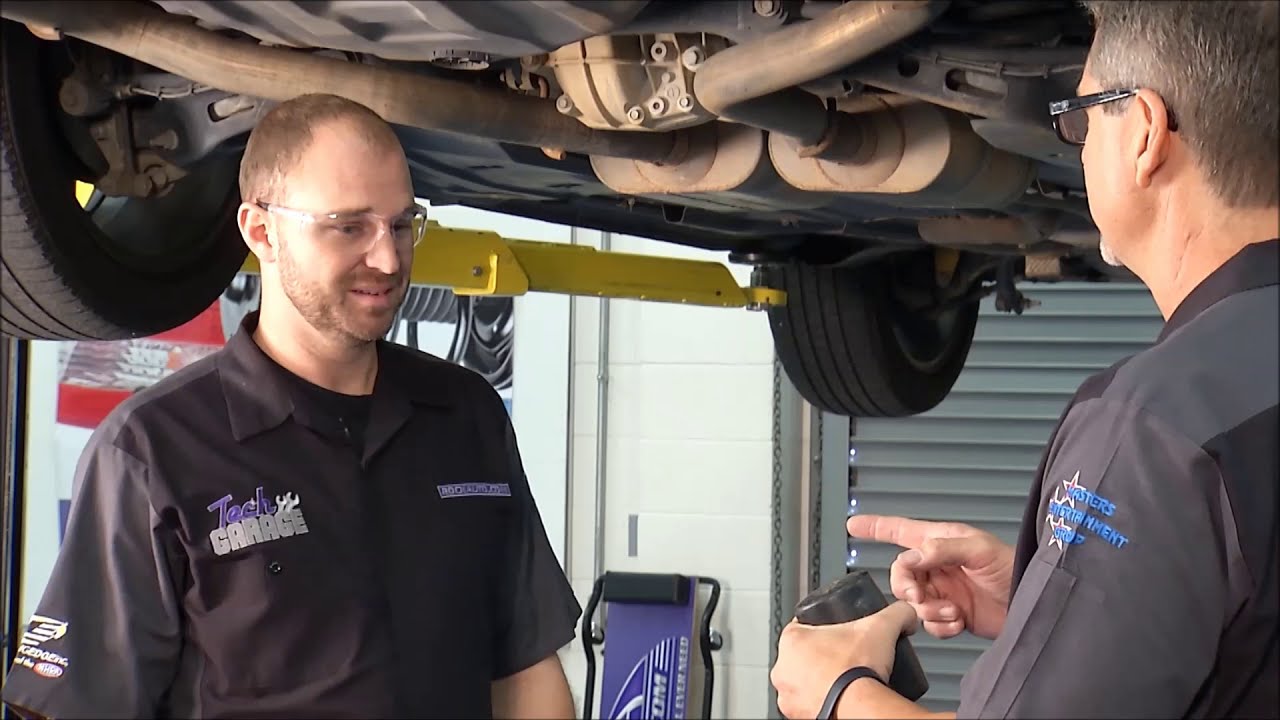
- Forward Displacement: If the exhaust is pushed forward, it can cause vibrations felt in the cabin or even damage the engine manifold and catalytic converter.
- Clearance Issues: Technicians must check for shifted hangers, cracked mounts, or pipes that are now touching the underbody.
- Claim Documentation: Distinguishing between pre-existing wear or rust and collision-related fractures is a critical part of the claim. This is why a physical teardown is necessary; you cannot see a bent exhaust hanger while the car is sitting in a parking lot.
Why Did My Estimate Change? (The Supplement Process)
In the insurance world, an estimate change is called a supplement. The initial estimate provided by an insurance app or a field adjuster is typically a visual-only document. The real blueprinting of the repair happens during the teardown.
For a 2021 Arteon, this process should include:
- Itemized Teardown: Identifying every broken plastic clip, bent bracket, and crimped wire.
- Diagnostic Scanning: Modern Volkswagens are equipped with Advanced Driver Assistance Systems (ADAS), such as blind-spot monitors and parking sensors located behind the bumper cover.
- Calibration: Even if the sensors themselves are not cracked, the brackets holding them may have shifted by mere millimeters. If these sensors are not recalibrated to the manufacturer exact specifications, the safety systems will not function correctly.
Insurance Coverage vs. Repair Procedures
There is often a gap between what an insurance policy covers and what a manufacturer recommends. Most insurance policies state they will pay to return the vehicle to pre-loss condition using parts of like kind and quality. This often leads to the insurance company suggesting recycled (used) or aftermarket parts.
However, Volkswagen may have specific Position Statements regarding the use of aftermarket structural parts or the necessity of specific scanning and calibration steps.
- Policy Variation: Insurance coverage and state laws vary significantly regarding your right to choose OEM (Original Equipment Manufacturer) parts.
- The Contract: As the vehicle owner, you are the one who authorizes the repair. It is important to ask your repair facility if they are following VW-mandated procedures and how they handle disagreements with the insurance company regarding labor hours or part types.
What Should You Do if You Have Been Hit?
If you are researching a repair for your Arteon, do not rely solely on a photo-based estimate. These are notoriously incomplete and are intended only as a starting point.
- Choose a Qualified Shop: Take the vehicle to a collision center that performs a full blueprinting or teardown before ordering parts.
- Request Documentation: Ensure the shop documents the damage with photos of the exhaust clearances, the trunk floor, and the diagnostic scan results.
- Consult Your Policy: Review your policy or speak with your agent to understand your specific coverage for OEM parts and rental car durations, as technical repairs on an Arteon can take longer than a standard sedan.
Ultimately, while the insurance company pays the bill, the contract for repairs is between you and the shop. Being informed about the structural and mechanical needs of your 2021 Volkswagen Arteon ensures that your car remains as safe and high-performing as the day it left the factory.



No Comments Yet
Be the first to comment on this article.