Curtis.Castiglione@ROzebra.com

2020 Silverado Front-End Collision Mechanical Repair Guide
By Curtis Castiglione
If you drive a 2020 Chevrolet Silverado 1500 and experience a front-end collision where the wheel takes the brunt of the impact, you are likely looking at more than just a cosmetic repair. While the initial insurance estimate might focus on the dented fender and the scraped rim, the physics of a modern collision mean that energy travels through the wheel and deep into the mechanical heart of the truck.
To ensure your truck is safe and your insurance claim is handled correctly, you must understand how a "simple" wheel impact affects the steering, suspension, and braking systems.
Does insurance cover suspension and steering damage after a crash?
In most cases, yes, provided you have collision coverage on your policy. However, the challenge for the vehicle owner isn't whether it is covered, but whether the damage is identified.
Insurance adjusters often write a preliminary estimate based on a visual inspection while the truck is sitting in a parking lot. They might see a damaged wheel but cannot see a bent tie rod, a hairline crack in a brake caliper mounting bracket, or a shifted steering rack. This is why the repair process for a Silverado involves more than just swapping shiny parts; it requires a systematic teardown and mechanical diagnosis.
Why did my repair estimate increase after the wheel was removed?
This is a common point of confusion for vehicle owners, and it often leads to supplemental claims. In the collision industry, we call this the supplement process.
Once your Silverado is on a lift and the wheel is removed, a technician can trace the path the energy took. On a 2020 Silverado, the wheel is attached to a hub and bearing assembly, which sits inside a steering knuckle. That knuckle is held in place by upper and lower control arms. When the wheel is hit hard, that energy does not just stop at the rim; it pushes back against the tie rods and the steering rack.
The Supplement Process:
- Teardown: The shop removes the wheel and damaged body panels to inspect the internal structures.
- Documentation: If the shop finds that the steering knuckle is bent or the wheel bearing has excessive play (using a hub runout test), they must document this with photos and measurements.
- Verification: The insurance company reviews this documentation to verify the damage was caused by the accident and not by pre-existing wear and tear.
- Approval: The estimate is updated to include the additional mechanical parts and labor needed to return the truck to pre-accident condition.
The Hidden Danger of Brake Damage in a Collision
Brake components are often overlooked during collision repairs because they are made of heavy cast metals. However, a direct hit to the wheel of a Silverado can stress the brake rotor or even crack the caliper housing.
If the steering knuckle is bent—even slightly—the brake caliper may no longer be perfectly aligned with the rotor. This can lead to uneven braking, overheating, or premature failure. A professional repair facility should inspect the following:
- Brake Hoses: These must be checked for kinks, stretching, or internal tears that occurred during the impact.
- ABS Wiring: Inspected for pinched or frayed wires that could trigger warning lights.
- Wheel-Speed Sensors: These are critical for your truck’s stability control and anti-lock braking systems. If these are compromised, your truck may not react correctly in an emergency.
Why a Wheel Alignment is a Diagnostic Tool, Not Just a Final Step
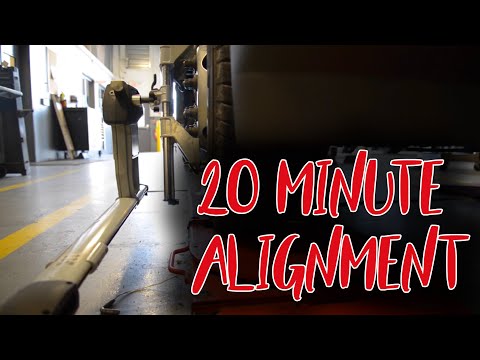
Many owners ask, "Why do I need an alignment if the truck feels like it drives straight?" On a modern Silverado, an alignment is used as a diagnostic tool. By putting the truck on a computerized alignment rack early in the repair process, a technician can see if the caster, camber, or toe readings are outside of factory specifications.

- Identifying Bent Parts: If a reading is significantly off and cannot be adjusted back to normal, it proves that a mechanical component—like a control arm or the frame itself—is bent.
- The Documentation: You should always ask for a copy of the pre-repair and post-repair alignment readings. This is your documented proof that the structural geometry of the truck has been restored to manufacturer standards.
Modern Technology and ADAS Calibrations
The 2020 Silverado is equipped with various Advanced Driver Assistance Systems (ADAS). These systems rely on sensors, cameras, and the steering angle sensor to help you stay in your lane or provide emergency braking.
If your steering components are replaced, or even if the alignment is adjusted, these systems often require a digital recalibration. Insurance policies typically cover these calibrations, but they are a separate labor operation that requires specialized equipment. If the shop replaces a steering rack or a tie rod and fails to reset the steering angle sensor, your truck’s computer may throw an error code, or the stability control may intervene when it shouldn't.
What Should I Do if I Suspect Mechanical Damage?
If you are involved in a front-end hit, do not authorize a shop to simply fix the bodywork. You should be proactive and ask the following questions:
- Did you perform a hub runout test to see if the wheel bearing is bent?
- Was the steering knuckle inspected for cracks or deformation?
- Did the alignment reveal any bent suspension components?
- Are there any fault codes in the ABS or Power Steering modules?
- Did you check the brake hoses and ABS wiring for tension damage?
A collision repair should trace the impact through the wheel, brakes, steering, and suspension. While the insurance company is responsible for paying for the loss according to your policy, the repair shop is responsible for following manufacturer repair procedures.
Always remember that you have the right to choose your repair facility. Select a shop that understands the mechanical complexities of a modern truck and is willing to perform the necessary teardown to find the damage that an insurance adjuster might miss from the sidewalk.



No Comments Yet
Be the first to comment on this article.