Curtis.Castiglione@ROzebra.com
2020 Kia Sorento Front-End Collision Repair and ADAS Calibration Guide
By Curtis Castiglione
If you have recently been involved in a front-end collision with your 2020 Kia Sorento, you might be surprised by the initial estimate provided by your insurance company. On paper, a cracked grille or a scuffed bumper looks like a minor cosmetic fix. However, once the vehicle enters the shop, that 800 dollar estimate can quickly balloon into a 3,000 or 4,000 dollar repair.
This discrepancy is not necessarily a sign of a dishonest shop or a cheap insurance company. Rather, it is a reflection of the sophisticated technology hidden just millimeters behind the plastic trim of a modern SUV.
Why Estimates Change After the Teardown
The most common reason for a price jump is the transition from a preliminary estimate to a supplement. When an insurance adjuster or a shop estimator first looks at your Sorento, they are often writing a visual-only estimate. They can see the cracked plastic of the grille and the dent in the bumper cover, but they cannot see what is happening underneath.
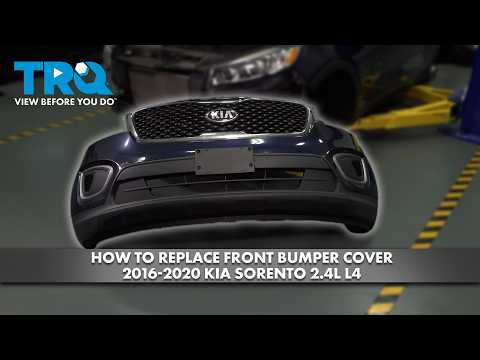
Once the repair facility begins the teardown—the process of physically removing the damaged exterior panels—they often find hidden issues:
- Snapped Wiring Harnesses: The front-end wiring for sensors is often brittle and held by delicate plastic clips that break upon impact.
- Bent Mounting Brackets: The metal or plastic structures that hold your radar and camera units must be perfectly straight. Even a slight bend can render a safety system useless.
- Hidden Structural Damage: The impact bar (the actual metal bumper) or the radiator support may be pushed in, requiring mechanical labor that was not visible from the outside.
The shop then submits a supplement to the insurance company. This is a request for additional funds to cover the damage discovered during teardown.
The Role of Radar and ADAS in Your 2020 Sorento
The 2020 Kia Sorento is equipped with Advanced Driver Assistance Systems (ADAS). Depending on your trim level, your vehicle likely features Smart Cruise Control (SCC) and Forward Collision-Avoidance Assist (FCA).
The brain for these systems is often a radar sensor located behind the lower grille or the front bumper cover. This is why the bumper can no longer be treated as a simple cosmetic bash bar. It is a protective housing for an expensive computer.

Why is Calibration Necessary?
If a radar sensor is moved, unplugged, or its mounting bracket is replaced, it must undergo a calibration. You cannot simply bolt the sensor back on and drive away.
Calibration is a precise procedure where a technician uses specialized targets and diagnostic software to ensure the sensor is aimed correctly. If the radar is misaligned by even a fraction of a degree, it may fail to see a car stopping in front of you, or it might incorrectly trigger an emergency brake because it thinks a bridge or a sign is an obstacle.
Insurance Coverage for Scanning and Calibration
In most cases, insurance will cover these costs, provided the procedures are required by the manufacturer and are a direct result of the accident. A proper repair on a 2020 Sorento requires two types of electronic scans:
- Pre-Repair Scan: This identifies any soft codes or hidden faults triggered by the accident, even if there are no warning lights on the dash.
- Post-Repair Scan: This confirms that all systems are communicating correctly and that the new parts are properly integrated into the vehicle’s network.

While insurance policies vary, most carriers will pay for these operations if the shop provides documentation showing that Kia requires these steps to ensure the vehicle is returned to pre-loss condition.
OEM vs. Aftermarket Parts: The Grille Matters
One of the most frequent points of disagreement between owners, shops, and insurers involves the use of Original Equipment Manufacturer (OEM) parts versus aftermarket (non-Kia) parts.
For a 2020 Sorento, the material of the grille is vital. Kia engineers the plastic in front of the radar to be a specific thickness and density so the radar waves can pass through it without interference. Some aftermarket grilles may have different metallic flakes in the paint or variations in plastic thickness that can blind the radar.
If your insurance policy mandates aftermarket parts to save costs, your repair facility may still advocate for an OEM grille in the impact zone to ensure the ADAS systems function safely.
What to Ask Your Repair Facility
As the vehicle owner, you are the one who authorizes the repair. You have the right to know how your vehicle is being handled. Before you sign off on the final repair, ask your service advisor these four questions:
- Did you perform a pre- and post-repair diagnostic scan? (Ask for a printout of the reports).
- Was the front radar sensor calibrated, and is there documentation of the successful aim?
- Were any brackets or wiring harnesses replaced behind the bumper?
- Did the repair follow Kia’s specific Service Information for this VIN?
While your insurance company pays for the repairs, the contract for the repair is between you and the shop. It is your responsibility to ensure the shop is qualified to handle ADAS-equipped vehicles. If there is a disagreement over repair procedures or parts, consult your policy and talk to your claims adjuster, but never compromise on the safety calibrations that keep your Sorento’s emergency braking systems functional.



No Comments Yet
Be the first to comment on this article.