Curtis.Castiglione@ROzebra.com
2020 Hyundai Santa Fe Front-End Collision Repair Costs
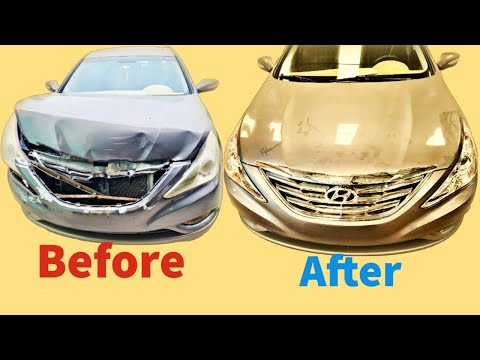
When a 2020 Hyundai Santa Fe is involved in a front-end collision, the damage often looks like a simple matter of replacing a plastic grille and a bumper cover. However, vehicle owners are frequently surprised when the final repair bill is significantly higher than the initial insurance estimate.
This discrepancy happens because modern vehicles are no longer just assemblies of metal and plastic; they are mobile computer networks. What looks like a cosmetic fender bender is often a complex electronic failure waiting to be diagnosed.
The "Invisible" Technology Behind the Grille
The primary reason a 2020 Santa Fe repair estimate escalates is the presence of Advanced Driver Assistance Systems (ADAS). Behind the stylish plastic grille sits a sophisticated radar sensor responsible for:
- Smart Cruise Control (SCC): Automatically maintaining a safe distance from the car ahead.
- Forward Collision-Avoidance Assist (FCA): Identifying pedestrians or obstacles and applying emergency braking if the driver fails to react.
While an insurance adjuster might write an initial estimate based on what they can see from the outside, a technician understands that the force of an impact travels through the flexible bumper fascia into the delicate mounting brackets and wiring harnesses located directly behind it.

Understanding Hidden Damage and the "Teardown"
An initial insurance estimate is often a visual estimate. It covers the damage that is obvious without taking the car apart. On a Santa Fe, the plastic grille might only show a hairline crack, but the brackets holding the radar sensor may be bent or snapped.
If the sensor’s mounting angle is off by even a fraction of a degree, the system will not function correctly. In a worst-case scenario, it may provide "false positives," triggering emergency braking when no obstacle is present because the sensor is pointed at the ground or a side rail.
Once the repair facility begins the teardown process—removing the bumper cover and grille—they often find this hidden damage. This leads to a supplement, which is a formal request sent to the insurance company for additional parts and labor. This is a standard part of the professional collision repair process, not an indication of a dishonest shop.
The Complexity of Wiring and Sensors
The wiring harness in the front of a 2020 Santa Fe is a common source of cost increases. Modern wiring is often bundled tightly and routed through the impact zone.
- Pinched vs. Severed Wires: Even if a wire isn't completely cut, a pinched harness can cause intermittent electronic faults. These "ghost" issues are difficult to diagnose without specialized scanning tools and can lead to safety system failures weeks after the repair is finished.
- Material Science and Radar: The choice of parts matters significantly here. While insurance policies often allow for the use of aftermarket or recycled parts to save costs, certain components like grilles and sensor covers have specific material requirements.
If an aftermarket grille is too thick or contains a different plastic composition than the Original Equipment Manufacturer (OEM) part, it can interfere with the radar signal. A qualified technician will check manufacturer repair procedures to determine if OEM parts are required for the safety systems to function as intended.
The Necessity of Calibration and Diagnostics
One of the most overlooked costs in a modern front-end repair is calibration. If the radar sensor is removed, replaced, or if the mounting area is repaired, the vehicle must undergo a formal calibration procedure. This ensures the "eye" of the car is looking exactly where it should be.

Proper calibration requires:
- Specialized Equipment: Precision targets and diagnostic software to communicate with the Santa Fe's computer.
- Controlled Environment: A level floor, specific lighting conditions, and a certain amount of clear space around the vehicle.
- Labor Time: This is a technical operation that requires a specialized technician, adding to the total labor cost.
If your estimate does not include a "pre-repair scan" and a "post-repair scan," the shop may be missing vital information about the health of the vehicle's electronic systems.
Insurance Coverage vs. Repair Procedures
It is important to distinguish between what your insurance policy covers and what the vehicle manufacturer (Hyundai) recommends.
- Your Insurance Policy: A contract that dictates payment based on coverage limits, state laws, and your deductible.
- Manufacturer Repair Procedures: Technical instructions on how to fix the car safely so it performs correctly in a second accident.
Sometimes, an insurance company may initially refuse to pay for a specific diagnostic step or an OEM part. In these cases, the repair facility must provide documentation—such as photos of damaged internal brackets or a printout of a fault code—to justify the additional expense.
As the vehicle owner, you are generally responsible for your deductible, but you also have the right to ensure the vehicle is returned to its pre-accident safety standard.
What Should You Do? (A Checklist for Owners)
If you are researching a repair for your 2020 Santa Fe, ask the repair facility these four critical questions before authorizing work:
- Scanning: "Did you perform a pre-repair diagnostic scan to check for fault codes in the radar and camera systems?"
- Brackets: "Are the radar mounting brackets being inspected for even slight alignment deviations or cracks?"
- Calibration: "Does the estimate include the labor and equipment for ADAS calibration after the physical parts are replaced?"
- Part Compatibility: "Is the replacement grille compatible with the radar system according to Hyundai’s specific requirements?"
If there is a disagreement between your insurance company and the repair shop regarding the necessity of a specific operation, ask for the manufacturer’s technical service bulletin or repair procedure documentation.
Ultimately, a front-end collision on a modern SUV is a mechanical and electronic repair as much as it is a cosmetic one. Proper documentation of the damaged wiring and sensors ensures that the insurance claim reflects the true cost of a safe, professional repair.
Disclaimer: Insurance regulations, policy language, and state laws vary. You should review your specific policy and consult with your insurance company or a qualified repair professional regarding your coverage.



No Comments Yet
Be the first to comment on this article.