Curtis.Castiglione@ROzebra.com

2020 Honda Pilot: Hidden Suspension Damage and Insurance Claims
By Curtis Castiglione
A front-corner collision in a 2020 Honda Pilot—even one that occurs at low speeds against a curb or another vehicle—is rarely just cosmetic. While you might only see a scuffed rim or a blown tire, the force of that impact travels deep into the mechanical heart of the vehicle.
If your Pilot does not drive the same after an accident, or if you are staring at an insurance estimate that seems too simple, you are likely dealing with hidden suspension damage. Understanding how these components interact and how the insurance claim process works is vital to ensuring your vehicle is safe to drive.
Does insurance cover suspension damage after a collision?
The short answer is yes, provided you have collision coverage and the damage is a direct result of the accident. However, there is a catch: insurance adjusters generally only write for what they can see during a preliminary inspection.
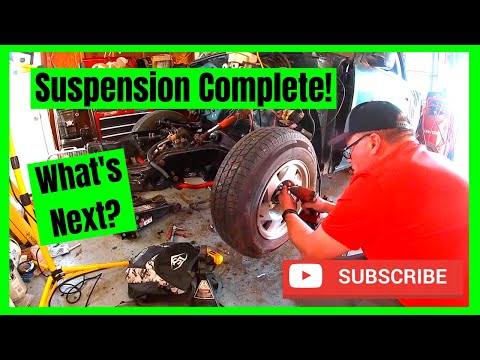
In a 2020 Honda Pilot, the wheel and tire act as the first line of defense. They often absorb the initial shock, masking damage to the components tucked behind them. Because an adjuster cannot see a microscopic bend in a steering knuckle or a hairline crack in a control arm without disassembly, these items are often left off the initial estimate. This is why the supplement process is so important.
Why did my insurance estimate only include a wheel and tire?
It is common for an initial estimate to be a "starter" document. Insurance companies use a visual-only standard to prevent overpaying for damage that might not exist. If your Pilot’s wheel is gouged, they will pay for a wheel. But once the car is on a lift at a professional repair facility, the "teardown" begins.
On a heavy SUV like the Honda Pilot, the wheel acts as a giant lever. When it is struck, it transfers thousands of pounds of lateral force into the following areas:
- The Hub and Bearing: The hub is the mounting point for the wheel. If the wheel takes a hard hit, the hub can be knocked out of round. You might not feel this immediately, but it leads to wheel bearing failure and persistent vibrations.
- Steering Components: The 2020 Pilot uses a precision steering rack. These are designed for steering, not for absorbing side impacts. Internal damage to the rack is rarely visible but can lead to "notchy" steering or a failure of the power steering assist.
- Suspension Arms and Struts: Components like the MacPherson strut or the lower control arm are engineered to flex vertically (up and down) for comfort, but they are relatively fragile when hit from the side.
Why did my repair cost more than the original estimate?
This is the "Supplement" phase of the insurance claim. Once the technician removes the wheel and performs a four-wheel alignment, they may discover that the vehicle’s geometry is out of factory specifications.

If the camber, caster, or toe measurements are "in the red" and cannot be adjusted back to Honda’s specifications, it is physical proof of hidden damage. The shop will then submit a supplemental request to the insurance company, documenting the alignment readings to justify replacing parts like the steering knuckle or strut.
Why do I need an alignment and ADAS calibration?
On a modern 2020 Honda Pilot, a wheel alignment is no longer a simple mechanical adjustment; it is a prerequisite for your safety technology. The Pilot is equipped with Honda Sensing, which includes:
- Lane Keeping Assist System (LKAS)
- Collision Mitigation Braking System (CMBS)
- Adaptive Cruise Control
These systems rely on cameras and radar. If your suspension is slightly bent—even by a fraction of a degree—the vehicle's "brain" may think you are steering straight when the wheels are actually pointed slightly off-center. This "skewed" data can cause the safety systems to intervene unnecessarily or fail to work when needed.

Most repair procedures for the 2020 Pilot require a Steering Angle Sensor (SAS) reset and potentially a full ADAS calibration following any suspension repair or alignment. If these labor operations are missing from your estimate, the repair is likely incomplete.
Can I choose OEM parts for my suspension?
Insurance policies often contain language allowing the use of "Like Kind and Quality" (LKQ) parts, which can include recycled (used) or aftermarket components.
However, Honda has specific position statements regarding the reuse of structural and safety-critical components. For example, some steering and suspension components use "one-time use" fasteners or involve high-strength steel that should not be compromised.
If your repairer is concerned that an aftermarket part does not meet the structural integrity of the original, they should provide the Manufacturer’s Repair Procedures to the insurance adjuster to justify the use of New Original Equipment Manufacturer (OEM) parts.
What should I do if my car still does not drive straight?
If you have picked up your vehicle and it "pulls" to one side or the steering wheel is not centered, the repair is not finished. Here are the steps you should take:
- Request the Alignment Printout: Every professional shop should provide a "Before and After" printout. If the "Final" column has numbers highlighted in red, the car is not within factory specs.
- Ask About the Hub: Ask if the hub "run-out" was measured. A bent hub is a leading cause of post-accident vibrations.
- Check for ADAS Warnings: If your "Lane Departure" or "Brake" warnings are flashing, the sensors likely need calibration following the suspension work.
- Consult Your Policy: If there is a disagreement between the shop and the insurer about what parts are necessary to fix the alignment, review your policy’s "Right to Repair" or "Appraisal Clause" and consider a third-party inspection.
Summary Checklist for 2020 Honda Pilot Owners
- Did the shop perform a full teardown and inspection behind the wheel?
- Is there a four-wheel alignment "Before and After" report provided with the final paperwork?
- Were the Steering Angle Sensor and ADAS systems calibrated?
- Does the final invoice reflect the specific parts (like knuckles or bearings) required to fix the alignment?
A 2020 Honda Pilot is a sophisticated machine. When it comes to the front suspension, what you cannot see is often more important than what you can. Ensure your repair facility is looking past the wheel and tire to the precision components that keep you on the road.



No Comments Yet
Be the first to comment on this article.