Curtis.Castiglione@ROzebra.com
2020 Ford Explorer: Wheel Impact & Suspension Repair Guide
If you have struck a curb, a deep pothole, or another vehicle’s tire while driving a 2020 Ford Explorer, you might look at the scraped wheel and think the damage is minor. However, in the world of modern collision repair, a wheel impact is rarely just a cosmetic issue.
The 2020 Explorer utilizes a sophisticated suspension geometry designed for superior ride quality and handling. While these components make for a comfortable drive, they are also engineered to absorb energy. This means the suspension arms and steering components are often the first things to fail or deform when subjected to lateral or diagonal force.
Does insurance cover suspension damage after a wheel impact?
Generally, yes. If the damage resulted from a sudden, accidental event—such as a collision or hitting a stationary object like a curb—it is typically covered under the collision portion of your auto insurance policy.
However, there is a significant gap between what an insurance company initially writes on an estimate and what the vehicle actually needs to be safe and roadworthy. Understanding this gap is essential for any owner navigating the repair process.
Why your insurance estimate might be incomplete
It is common for an initial insurance estimate to appear "short." Insurance adjusters typically write preliminary estimates based only on what is visible to the naked eye. When they look at a 2020 Explorer after an accident, they can see the gouge in the aluminum rim or the tear in the tire sidewall, but they cannot see:
- A bent strut or shock absorber.
- A shifted or tweaked subframe.
- A hair-line crack in a steering knuckle.
- Internal damage to a sealed wheel bearing.
This leads to the supplement process. Once your vehicle is at a professional repair facility, the technician must document the hidden damage. For example, if the wheel took a hard hit, that energy travels directly into the wheel bearing and the hub. While the car might still drive, that bearing may develop a hum or fail entirely a few hundred miles later.
Practical Tip: If your shop does not identify and document this damage during the initial repair, you may struggle to get the insurance company to pay for it later. They may claim the subsequent failure was due to "normal wear and tear" rather than the accident.
The Diagnostic Alignment: Identifying the "Why"
One of the most common mistakes owners make is accepting an alignment that is "close enough." On a 2020 Ford Explorer, the suspension components are engineered to incredibly specific tolerances.

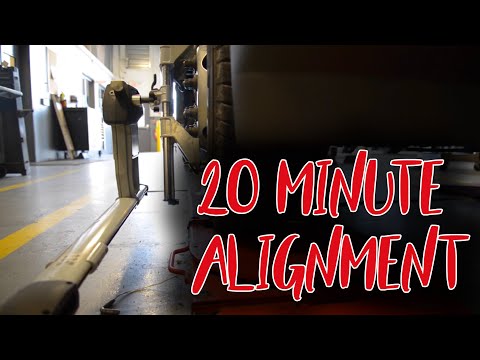
When a technician puts your vehicle on an alignment rack, the machine provides a digital readout of the wheel angles. If these numbers are outside of Ford’s factory specifications, the alignment machine can tell the technician where the wheel is pointing, but it cannot tell them which part is bent.
If a vehicle cannot be brought back to factory specifications, it is a clear indicator of mechanical damage. Common culprits include:
- The Steering Knuckle: The heavy component that holds the wheel and connects to the suspension.
- Control Arms: Often made of cast aluminum or high-strength steel that deforms under pressure.
- The Hub and Bearing: Components that can be "flat-spotted" or damaged internally by the force of an impact.
Unlike older vehicles where a technician might attempt to "straighten" a part, modern Explorer components are designed to deform to protect the rest of the chassis. Once they are bent, they must be replaced to maintain the structural integrity and safety of the vehicle.
ADAS and the hidden tech in your suspension
The 2020 Explorer is a high-tech machine equipped with Advanced Driver Assistance Systems (ADAS) like Lane-Keeping Assist and Pre-Collision Assist. These systems rely on cameras and radar units that assume the vehicle’s suspension and steering are perfectly aligned.

If your suspension is even slightly off-kilter due to a bent link, the sensors may not accurately track the road. This can lead to:
- Dashboard error lights and system malfunctions.
- Inaccurate lane-centering or "drifting" despite the system being active.
- Unsafe autonomous "corrections" by the vehicle.
When a suspension component is replaced, a digital calibration of the steering angle sensor and other ADAS components is often a required step according to Ford’s repair procedures. If your insurance estimate does not include these calibrations, the repair is technically incomplete.
OEM vs. Aftermarket: Why parts choice matters
Insurance policies often allow for the use of "Like Kind and Quality" (LKQ) or aftermarket parts to manage costs. While an aftermarket bumper cover might be a viable option for some, suspension components are critical safety items.
Because the 2020 Explorer has specific load ratings and complex steering geometry, using a generic hub or control arm can change the way the vehicle handles during an emergency maneuver. You should ask your repair facility:
- "Are you using Original Equipment Manufacturer (OEM) parts for my suspension?"
- "Does the aftermarket part meet the exact metallurgical specifications of the original Ford part?"
What should you do if your Explorer has a wheel impact?
If you have hit something and suspect damage, follow these steps to ensure a proper repair:
- Don't Assume Safety: Even if the vehicle doesn't "pull" to one side, internal damage may be present.
- Request a Teardown: Insist on a physical inspection where the wheel is removed and the suspension links are measured.
- Ask for Documentation: Request copies of both the pre-repair alignment sheet (which proves what was bent) and the post-repair alignment sheet (which proves it is fixed).
- Check for Calibrations: Ensure the shop is performing the necessary ADAS calibrations required by Ford after steering or suspension work.
A wheel impact on a 2020 Ford Explorer is a transfer of energy. That energy doesn't stop at the rubber; it moves through the hub, into the suspension, and into the steering system. Ensuring these "unseen" parts are inspected and replaced is the difference between a car that looks fixed and a car that is actually safe to drive.
Note: Insurance policies and state laws vary. Always review your specific policy and consult with your insurance carrier and a qualified repair professional before authorizing repairs.



No Comments Yet
Be the first to comment on this article.