Curtis.Castiglione@ROzebra.com
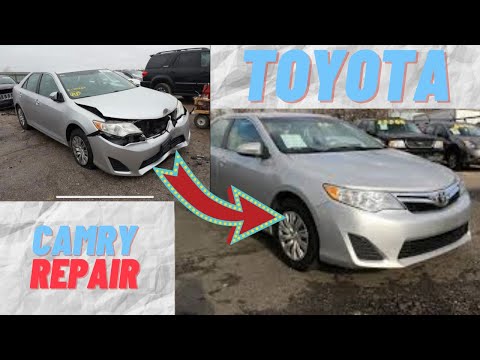
2019 Toyota Camry Front-End Collision Repair Guide
If you have been involved in a front-end collision with your 2019 Toyota Camry, you might be surprised when the initial estimate provided by your insurance company or a body shop increases significantly once the work begins.
In the world of modern collision repair, this isn't usually a sign of a shop trying to pad the bill. Instead, it reflects the technical reality of transitioning from a visual inspection to a comprehensive teardown. On a vehicle as technologically advanced as a 2019 Camry, what looks like a simple fender bender is often a complex electrical and structural repair.
The Visual vs. The Technical: Why First Impressions Are Wrong
The initial estimate you receive—often written in a parking lot or via photos uploaded to an app—is a preliminary document based only on what is visible without removing parts.
On a 2019 Camry, the headlight assembly is the perfect example of why these costs escalate. While the outer clear lens might look untouched, the plastic mounting tabs that secure the lamp to the radiator support are designed to be rigid. In an impact, these tabs are often the first things to snap.

Common hidden issues include:
- Broken Mounting Points: A headlight with broken tabs cannot be safely or securely aimed. This requires a full replacement of the housing, even if the lens itself is not cracked.
- Pinched Wiring: A wiring harness can be pulled or pinched behind the bumper cover, leading to intermittent electrical issues that aren't immediately obvious.
- Damaged Connectors: The plastic plugs that connect your lights to the car’s main electrical system can crack, leading to moisture intrusion and future electrical failure.
High-Tech Headlights: More Than Just a Bulb
Depending on your trim level (LE, SE, XLE, or XSE), the 2019 Camry headlights are far more than simple plastic buckets with bulbs. These assemblies are sophisticated electronic components that may incorporate:
- LED Drivers: Specialized electronics that manage power to the lighting elements.
- Leveling Motors: Components that adjust the height of the beam based on vehicle load.
- Integrated Modules: Electronics that communicate directly with the vehicle’s central computer.
If these internal electronics are jarred during an accident, the repair moves from a body part replacement to a mechanical and electrical diagnostic task.
The Supplement Process Explained
When a shop begins the teardown, they remove the bumper cover, grille, and damaged lamps to inspect the underlying structure. In insurance terms, the document used to update the cost is called a supplement.

The shop identifies hidden damage—such as a cracked front-end module, a bent radiator support, or a damaged radar sensor—and notifies the insurance adjuster. The adjuster must then approve the additional labor and parts. This is why you should never assume the first check you receive from an insurance company is the final cost of the repair. It is simply an entry point for the claim.
Why Your Camry Needs a Computer Checkup
The 2019 Toyota Camry is equipped with Toyota Safety Sense (TSS). This system relies on sensors and cameras—many of which are located in the front grille or behind the rearview mirror—to assist with emergency braking and lane keeping.
Even a minor bump that requires removing the front bumper or replacing a headlight may necessitate:
- A Pre-Repair Scan: To identify soft codes—electrical faults that indicate a system is malfunctioning even if there is no warning light on the dashboard.
- A Post-Repair Scan: To ensure all systems are communicating correctly after reassembly.
- ADAS Calibration: If a sensor was moved or replaced, it must be digitally recalibrated to ensure the car sees the road accurately.

If your estimate does not include these steps, the repair is technically incomplete according to manufacturer standards.
Parts Strategy: OEM vs. Aftermarket
Your insurance policy’s language heavily influences the final cost. Many policies allow for aftermarket or recycled (used) parts to keep premiums lower.
However, Toyota frequently issues position statements recommending Original Equipment Manufacturer (OEM) parts. This is particularly important for structural brackets and headlights. The fitment of these parts can affect the timing of airbag deployments or the accuracy of safety sensors.
Review your policy for an OEM Parts Choice endorsement. If you do not have it, and you insist on brand-new factory parts over the insurance company’s quality replacement parts, you may be responsible for the price difference, often referred to as a "betterment" or "out-of-pocket" cost.
What Should You Do After a Collision?
To ensure your Camry is returned to pre-accident condition, follow these practical steps:
- Demand a Full Teardown: Ensure the shop removes damaged components before they order parts. This reduces the chance of the car sitting in the shop for weeks waiting for a second or third shipment of hidden parts.
- Ask for the Scan Reports: A reputable shop should provide a printed report of the diagnostic scans (Pre and Post) to prove the safety systems are active and error-free.
- Inspect the Fitment: When you pick up the car, check the gaps. The spacing between the hood, the headlight, and the bumper should be uniform. Uneven gaps often indicate a missed mounting bracket or an inferior aftermarket part.
- Choose the Right Shop: While insurance companies pay the bill, you choose the shop. Select a facility that follows documented manufacturer procedures and understands that a 2019 Camry is a complex electronic device, not just a collection of metal panels.
Proper repairs may cost more and take longer because they require more technology and specialized labor. In the long run, ensuring the electrical and safety systems are verified is the only way to protect both your vehicle’s value and your safety on the road.



No Comments Yet
Be the first to comment on this article.