Curtis.Castiglione@ROzebra.com

2018 Toyota Camry Suspension Repair and Insurance Guide
If you drive your 2018 Toyota Camry into a deep pothole or clip a curb during a minor slide, the damage often extends far beyond a scuffed rim or a flat tire. Because the front suspension of a modern vehicle is a precision-engineered system, even a slight shift in geometry can lead to safety issues, accelerated tire wear, and expensive repairs.
Understanding how insurance interacts with mechanical repairs—and how a shop actually diagnoses a bent suspension—is critical to ensuring your vehicle is returned to its pre-accident condition.
Is Suspension Damage Covered by Insurance?
The short answer is: Usually, yes, provided you carry collision coverage.
Insurance companies generally categorize hitting a pothole or a stationary object (like a curb) as a collision event. If you have a collision policy, the damage is typically covered, subject to your deductible. However, there is a major distinction between a sudden impact and wear and tear.
- Claimable Loss: A specific event (hitting a pothole at 40 mph) that results in a bent control arm or a blown strut.
- Maintenance Issue: High-mileage bushings that have perished over time or struts that are leaking due to age. Insurance will not pay for these.
To get a claim approved, the damage must be tied directly to the impact. This is why documenting the incident—taking photos of the pothole and noting the date and time—is vital.

Why 2018 Camry Repair Estimates Can Be Complicated
When a 2018 Camry takes a hard hit to the front wheel, the impact energy travels through the tire and wheel into the steering knuckle, the control arms, the strut, and eventually the wheel bearing and subframe.
On this generation of the Camry, many suspension components are designed to bend or deform to absorb energy. While this is a safety feature intended to protect the vehicle's structural integrity, it means that parts which look perfectly fine to the naked eye may actually be out of specification by just a few millimeters.
A common mistake owners make is replacing only the visible damage, such as a bent wheel, without performing a professional mechanical diagnostic.
The Alignment Printout: Your Most Important Piece of Evidence
The most important tool in diagnosing suspension damage after an accident is the four-wheel alignment machine. If you or your insurance company are unsure if a component is damaged, the first step must be an alignment check.

A technician will compare your vehicle’s current measurements against Toyota’s factory specifications for:
- Camber: The inward or outward tilt of the tire.
- Caster: The angle of the steering axis.
- Toe: Whether the tires are pointing toward or away from each other.
In the insurance world, the alignment printout serves as evidence. If the technician cannot get the car into specification using the factory adjustment points, it is definitive proof that a mechanical component is bent. Insurance adjusters typically require this documentation before they will authorize the replacement of expensive items like steering racks, subframes, or aluminum knuckles.
Hidden Damage and the Supplement Process
It is very common for a repair facility to find hidden damage during the teardown process. This leads to what the industry calls a supplement—a request for additional funds sent to the insurance company after the original estimate was written.
Example Scenario:
- Initial Estimate: The shop identifies a bent strut and a ruined tire.
- The Repair: The shop replaces the strut and tire and puts the car on the alignment rack.
- The Discovery: The alignment is still out of spec. This indicates the steering knuckle (the part the strut bolts to) is also slightly distorted.
- The Supplement: The shop must now pause, contact the insurance adjuster, and get approval for the additional part and labor.
This is a normal part of the collision repair process, but it can extend the time your vehicle is in the shop.
Modern Tech: ADAS and Electronic Calibrations
The 2018 Toyota Camry is equipped with advanced safety technology, including steering angle sensors and Lane Departure Alert. These systems rely on the suspension being perfectly aligned.
If your suspension is bent, the steering wheel may no longer be centered. This sends incorrect data to the vehicle’s computer. Once the mechanical parts are replaced and the alignment is finalized, a technician often needs to perform a zero-point calibration of the steering angle sensor.
If this step is skipped, your traction control or lane-keep assist systems may not function correctly, and you may see warning lights on the dashboard. These calibrations are specialized labor operations that add to the final repair cost but are essential for safety.
Choosing Parts: OEM, Aftermarket, and Recycled
Insurance policies often allow for the use of alternative parts to keep costs down.
- Aftermarket: Parts made by a third-party company.
- Recycled: Used parts salvaged from a donor vehicle.
- OEM (Original Equipment Manufacturer): New parts made by Toyota.
For a 2018 Camry, using a recycled steering knuckle or control arm is common practice. However, for critical safety components like wheel bearings or steering racks, many experts recommend New Toyota (OEM) parts to ensure metal fatigue is not an issue. You should review your policy to see if you have an OEM parts endorsement or if you are required to use the parts the insurance company specifies.
What to Watch For After the Repair
Once you pick up your Camry, do not simply drive away. Perform your own road test and pay attention to the following:
- Steering Wheel Position: Is the wheel perfectly centered when the car is traveling straight?
- Pulling: Does the car drift to the left or right when you momentarily loosen your grip on the wheel?
- Vibration: Do you feel a shimmy in the steering wheel at highway speeds? This often indicates a wheel balance issue or a slightly bent rim.
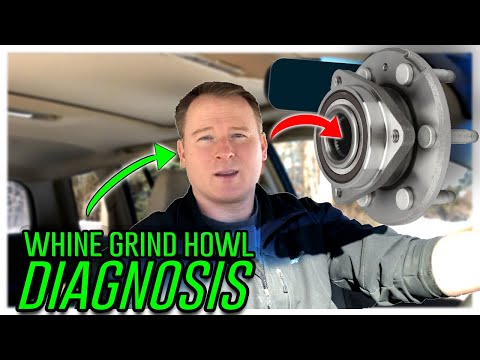
- Noises: Do you hear a humming or growling sound that gets louder with speed? This is a classic sign of a damaged wheel bearing, which sometimes doesn't start making noise until several hundred miles after the initial impact.
Summary of Recommendations
If you suspect suspension damage, insist on a post-repair alignment printout. This document is your proof that the vehicle has been restored to Toyota’s safety and handling specifications. If a disagreement arises between the shop and the insurer regarding what is bent, the alignment data is the final authority.
If your car doesn't feel right after a pothole hit, trust your gut and seek a professional inspection immediately. Suspension failure at high speeds can be catastrophic.



No Comments Yet
Be the first to comment on this article.