Curtis.Castiglione@ROzebra.com

2018 Nissan Rogue Curb Impact: Insurance and Repair Guide
Not every insurance claim involves a multi-car pileup. In fact, some of the most complex mechanical repairs begin with a simple, split-second encounter between a front tire and a concrete curb. For owners of a 2018 Nissan Rogue, what looks like a minor scuff on an alloy wheel can actually be the starting point for a multi-thousand-dollar insurance claim involving suspension geometry, steering components, and advanced electronic calibrations.
Understanding how a curb impact affects your vehicle—and how the insurance industry handles these repairs—is essential before you authorize a shop to begin work.
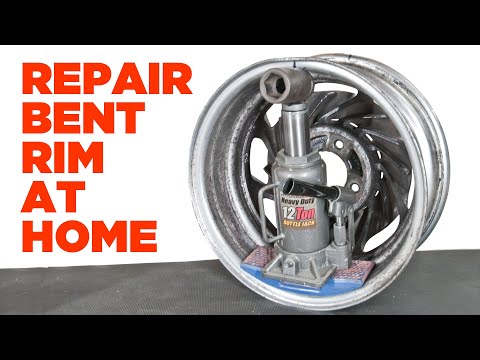
Does car insurance cover hitting a curb?
In most cases, yes. Hitting a curb is generally classified as a single-vehicle accident and is covered under the collision portion of your auto insurance policy.
However, because this is typically considered an at-fault incident, your deductible will apply. Before filing a claim for a 2018 Nissan Rogue, it is important to weigh the cost of your deductible against the potential repair. On a modern SUV, a bent wheel often hides damage to the steering knuckle, strut, or wheel bearing. What looks like a $500 wheel replacement can quickly escalate into a $3,000 mechanical repair.
Why did my insurance estimate change after the shop started working?
It is common for an initial insurance estimate to be much lower than the final bill. This happens because insurance adjusters often write a visual estimate based on the exterior of the vehicle. If they see a bent wheel, they will write to replace the wheel and perform an alignment.
Once the vehicle is at a repair facility and the wheel is removed, the teardown begins. The kinetic energy from hitting a curb does not just stop at the wheel; it travels through the suspension. Technicians often discover:
- Bent Struts: The vertical support of your suspension that absorbs road shock.
- Damaged Control Arms: The components that allow the hub to move up and down.
- Steering Knuckles: The heavy metal part that connects the wheel to the suspension and steering system.
When these hidden damages are found, the shop submits a supplement to the insurance company. This is a formal request for additional funds to cover the damage discovered during the diagnostic phase.

The Role of the Alignment in Diagnosis
A wheel alignment is often viewed as a final adjustment, but in the case of a curb impact, it is a critical diagnostic tool.
The 2018 Nissan Rogue has specific factory specifications for camber, caster, and toe. If a technician places your vehicle on an alignment rack and finds these measurements are significantly out of spec, it is a mathematical 'smoking gun' that a structural or mechanical component is physically bent.
A word of caution: One of the most common mistakes in curb-damage repairs is compensating for a bent part. If a strut is slightly bent, a technician might be able to force the other adjustments into a 'green' range on the computer. This is not a proper repair. A bent component is structurally compromised and will eventually lead to:
- Premature and uneven tire wear.
- Unpredictable handling during emergency maneuvers.
- Potential failure of the part under stress.
Always ask for a before-and-after alignment printout. If the 'before' numbers were red (out of spec) and the 'after' numbers are green (within spec), ensure the documentation explains which parts were replaced to achieve that correction.

Modern Technology and ADAS Calibrations
The 2018 Nissan Rogue is equipped with Advanced Driver Assistance Systems (ADAS), such as Forward Collision Warning and Lane Departure Warning. These systems rely on cameras and radar units that are sensitive to the vehicle's thrust angle—the direction the rear wheels point relative to the center of the car.
If your front suspension is damaged or your steering rack is moved even a few millimeters, these sensors may no longer 'see' the road accurately. Following a suspension repair, Nissan often requires a recalibration of these electronic systems. This requires specialized equipment and adds labor costs to the estimate, but it is vital for the safety systems to function as intended.
Parts Selection: OEM, Aftermarket, and Recycled
Your insurance policy language usually dictates the types of parts used for the repair. For a 2018 model, you will likely see three categories:
- OEM (Original Equipment Manufacturer): Parts made by Nissan. These are preferred for critical suspension components to ensure exact metal strength and fitment.
- Aftermarket: Parts made by a third party. These are common for wheels or cosmetic items.
- Recycled/LKQ (Like Kind and Quality): Used parts from a donor vehicle. Insurance companies may suggest a used steering knuckle or wheel to control costs.
As the owner, you have the right to discuss these choices. If your insurance only pays for an aftermarket part but you prefer OEM for your suspension, you can often choose to pay the price difference out of pocket.
Mechanical vs. Cosmetic Damage: The Hidden Danger
It is easy to focus on a shiny alloy wheel that has been gouged, but the mechanical damage is what affects your safety.
A common issue after a curb impact is a brinelled wheel bearing. This occurs when the impact forces the ball bearings into the metal races, creating tiny dents. You may not hear any noise the day you pick up your car, but three months later, you might notice a loud humming sound. If the initial impact was not documented and the wheel was not inspected by a professional, it may be difficult to get the insurance company to cover a wheel bearing replacement months after the claim is closed.
What should you do if you hit a curb?
If you have impacted a curb in your 2018 Nissan Rogue, follow these steps:
- Do not assume it is safe to drive: If your steering wheel is off-center or the car pulls to one side, the suspension geometry is compromised. Have the vehicle towed to be safe.
- Choose the right shop: Take the vehicle to a facility that handles both collision (body) and mechanical repairs. A shop that only paints bumpers may lack the diagnostic tools to assess a steering rack or ADAS sensors.
- Request documentation: Ensure you receive copies of the alignment measurements and a list of all parts replaced.
- Ask about Betterment: If your Rogue has high mileage and the shop replaces a worn tire with a brand-new one, the insurance company may ask you to pay a percentage of the tire cost. This is because the new part betters the car's condition compared to its state before the accident.
Repairing a curb impact correctly requires more than just a new wheel; it requires a systematic approach to diagnostics and a commitment to restoring the vehicle's mechanical integrity.
Written by Curtis Castiglione



No Comments Yet
Be the first to comment on this article.