Curtis.Castiglione@ROzebra.com

2018 GMC Sierra 2500HD Front-End Collision Repair Guide
By Curtis Castiglione
When a heavy-duty truck like the 2018 GMC Sierra 2500HD is involved in a front-end collision, the damage is rarely as simple as it looks. These vehicles are engineered for extreme work—towing thousands of pounds and hauling heavy payloads. To do that, they use oversized cooling systems, heavy-duty steering linkages, and rigid frames.
Because of this over-built nature, a 2500HD can absorb a significant amount of energy in an accident. While the truck might still be drivable, underlying mechanical systems may be compromised. Understanding the relationship between the physical damage and the insurance claim process is vital to ensuring your truck is returned to a safe, reliable condition.
Why did my initial insurance estimate change after the truck arrived at the shop?
It is common for a vehicle owner to receive an initial estimate from an insurance adjuster that seems low. This is usually a visual-only estimate. On a 2018 Sierra, the high ground clearance and massive chrome bumper often mask the destruction behind them.
Once the repair facility begins the teardown—the process of removing the bumper, grille, and trim—they often discover hidden damage. For example, the brackets holding the cooling system may be buckled, or the steering gear box may be leaking.
When the shop finds this damage, they submit a supplement. A supplement is an additional claim for repairs or parts not included in the original estimate. This is a standard part of collision repair. Insurance companies generally pay for documented damage required to return the vehicle to its pre-accident condition, but they cannot pay for it until the shop proves it is necessary through disassembly and inspection.
Why is the cooling system so expensive to repair on this truck?
If your Sierra 2500HD is equipped with the Duramax diesel engine, the front end houses what technicians call a cooling stack. Unlike a standard car with one or two radiators, this truck has several heat exchangers sandwiched together.
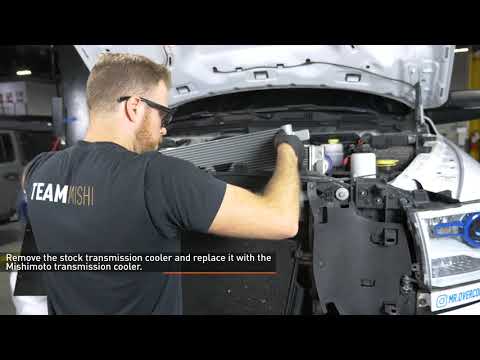
The stack typically includes:
- The engine radiator
- The air conditioning condenser
- The transmission oil cooler
- The charge air cooler (intercooler) for the turbocharger
A front-end hit that pushes the bumper back only two or three inches can pinch this entire stack. Even if you do not see coolant on the ground, the plastic mounting tabs or the radiator support (the frame that holds these units) can crack. If the stack is even slightly out of alignment, the cooling fans can rub against the shrouds, leading to a catastrophic failure 500 miles down the road while you are towing a trailer.
Does insurance cover a wheel alignment and steering inspection?
One of the most frequent questions owners ask is: 'The truck drives straight, so do I really need an alignment?'
The answer is yes. In a 2500HD, the steering components—the tie rods, pitman arm, and idler arm—are heavy-duty but not invincible. The force of a collision involving a 7,000-pound truck is immense. A component can be slightly bent or hairline-cracked without causing a noticeable pull in the steering wheel.

Most insurance policies will cover a professional four-wheel alignment if there is evidence of an impact to the wheels or suspension. You should ensure your shop performs a measured alignment on a specialized rack to verify that the caster, camber, and toe settings meet GMC factory specifications. A simple test drive by a technician is not a substitute for a diagnostic alignment.

Will my insurance pay for original GMC (OEM) parts?
Whether your repair uses Original Equipment Manufacturer (OEM) parts or Aftermarket/Recycled parts depends largely on your specific insurance policy and state laws.
- Like Kind and Quality (LKQ): Many policies allow insurers to quote non-OE parts to save costs.
- The Risk: On a heavy-duty truck, aftermarket cooling components or steering linkages can sometimes have fitment issues or fail to meet the cooling demands of a diesel engine under load.
If you want guaranteed GMC parts, check your policy for an OEM Endorsement. Without it, you may be responsible for the price difference between the insurance-approved part and the factory GMC part. Always consult your insurance company and repair facility to understand which parts are being utilized.
The Role of Technology: Sensors and ADAS
The 2018 Sierra 2500HD is a modern machine equipped with technology that affects repair procedures. Many models feature:
- Front Park Assist Sensors: Located in the bumper.
- Forward Collision Alert Cameras: Usually mounted near the rearview mirror but reliant on a straight frame and proper body alignment.
If these sensors or their mounting brackets are damaged, the vehicle safety systems may malfunction. After a collision, these systems often require calibration—a digital re-centering of the sensors—to ensure they see the road correctly.
What should I do if I am not satisfied with the repair?
If you pick up your truck and notice the steering feels loose, the truck pulls to one side, or there are new noises coming from the engine bay, contact the repair facility immediately. You have the right to a vehicle that is restored to a safe, pre-accident condition.
Practical Steps for Owners:
- Ask for Documentation: Request a copy of the final alignment report and a list of every part replaced, distinguishing between new, used, and aftermarket.
- Inspect the Gaps: Look at the space between the bumper, grille, and headlights. If the gaps are uneven, the underlying structure may still be misaligned.
- Check for Leaks: After a few days of driving, look under the front end for signs of transmission fluid or coolant.
Summary Checklist for 2500HD Owners
Before authorizing the final repair, ask your shop these three questions:
- Did you perform a full teardown of the cooling stack to check for hairline cracks?
- Was a four-wheel alignment performed on a machine, and can I have the printout?
- Are there any electronic sensors that require recalibration after the bumper was replaced?
A 2500HD is a significant investment. By ensuring your repair facility and insurance company address the hidden mechanical and cooling issues, you protect both the safety and the resale value of your truck.



No Comments Yet
Be the first to comment on this article.